If you share your home with a Siberian Husky, you already know two things to be true: they are incredibly expressive, and their fur gets everywhere. Grooming a Husky can feel like a part-time job, especially when they start “blowing” their coat and leaving tumbleweeds of fluff across your living room.
But with the right tools and techniques, maintaining that majestic coat is entirely manageable.
The Fluff Never Stops
Understanding the Double Coat
Before you grab a brush, it helps to know what you’re actually brushing. A Husky’s coat consists of two distinct layers working together:
- The Undercoat: A dense, soft, wooly layer right against the skin. It acts as thermal insulation, keeping the dog warm in the winter and cool in the summer.
- The Topcoat (Guard Hairs): Longer, coarser hairs that repel water, dirt, and harmful UV rays.
Crucial Rule: Never shave a Husky! Shaving destroys their natural ability to regulate their body temperature, exposes their skin to sunburn, and the coat rarely grows back correctly. You must manage the coat by removing dead fur, not cutting it off.
Your Grooming Arsenal
You don’t need a massive, expensive kit, but having the right tools is the difference between a 20-minute breeze and a frustrating chore.
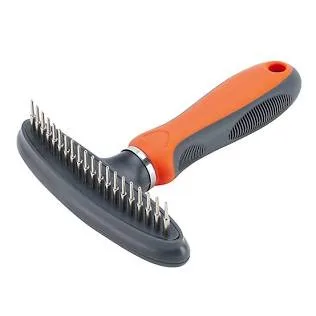
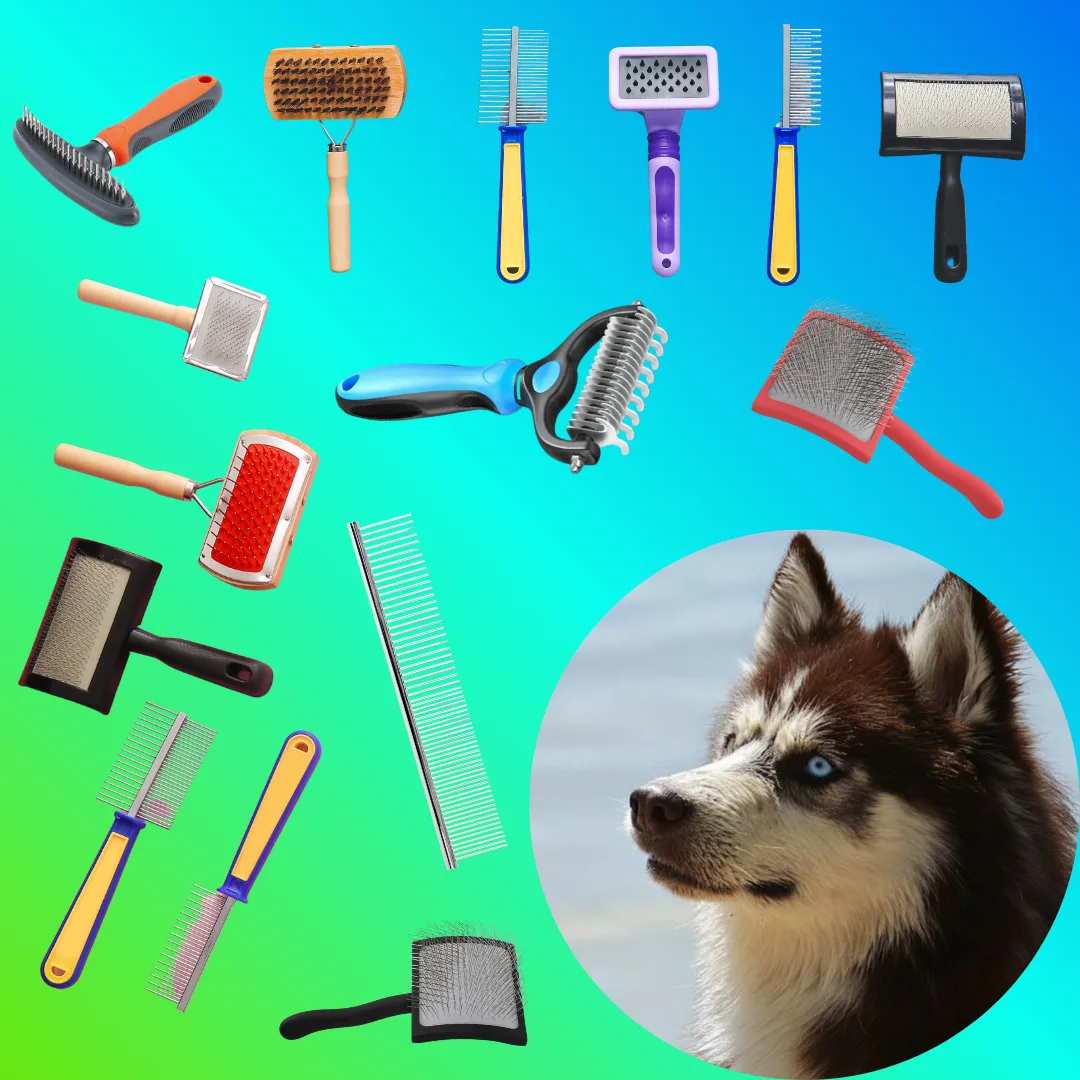
Undercoat Rake: This is your MVP. It has long, rounded metal teeth designed to reach past the guard hairs to gently pull out the dead, loose undercoat without cutting the healthy fur.
Slicker Brush: A flat brush with fine, short wire bristles. It’s excellent for smoothing the topcoat, removing surface dirt, and catching the loose hair the rake pulls up.
Metal “Greyhound” Comb: A stainless steel comb with wide and narrow teeth. This is your finishing tool to check for missed tangles right down to the skin.
The “Line Brushing” Method
If you just run a brush over the top of your dog’s back, you’re only smoothing the guard hairs and ignoring the dense undercoat where mats form. To actually get the dead hair out, you need to use a technique called line brushing.
1.Part the Hair:
Push the coat up to reveal the skin.
Start low on your dog (like the lower leg or belly). Use your non-dominant hand to push the dog’s coat upward, against the grain, so you can clearly see a line of exposed skin.
2.Brush the Line Downward:
Take your undercoat rake and gently pull down the small section of hair beneath the part. Brush outward from the root (skin level) to the tip.
3.Work Your Way Up:
Once that specific “line” is clear of loose fluff, move your holding hand up about an inch to expose a new line of skin. Repeat the downward brushing. Work systematically up the side of your dog.
4.Smooth and Check:
After you’ve line-brushed the entire body with the rake, go over the coat lightly with your slicker brush to grab surface fuzz and smooth the guard hairs. Finally, run your metal comb through to ensure it glides smoothly without catching.
Pro Tips for Shedding Season
Twice a year (usually spring and fall, or more often depending on the frequency of weather changes in your region such as Ohio), Huskies “blow” their undercoat, dropping massive clumps of fur to prepare for the changing seasons. When this happens:
- Bathe First, Brush Second: A warm bath loosens the dead undercoat incredibly well. Blow-dry them completely, and the brushing process will be twice as effective.
- Invest in a High-Velocity Dryer: If you have the budget, a professional dog blower is a game-changer. It literally blasts the loose undercoat right off the dog (best done outside!).
- Keep it Positive: Don’t try to tackle a full blowout in one sitting if your dog hates it. Do 15-minute sessions, offering plenty of high-value treats like peanut butter or small pieces of chicken.