Standard Poodles are famous for their elegant, curly coats, but that beauty comes with a serious maintenance requirement. Unlike dogs with fur that shed around the house, Poodles have hair that continuously grows. When they shed, the loose hair gets trapped in their tight curls, quickly twisting into painful mats close to the skin.
To keep your Poodle comfortable and their coat healthy, daily brushing is non-negotiable. Here is how to tackle it like a pro.
The Poodle Grooming Toolkit
You cannot properly brush a Standard Poodle with a standard pet store brush. You need tools designed specifically to penetrate dense, curly hair.
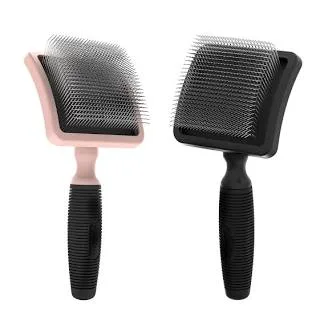
Long-pin slicker brushes are essential for curly coats.. Source: Kenchii Grooming
- Long-Pin Slicker Brush: Look for a slicker with a curved head and extra-long wire pins. Standard slicker pins are often too short to reach a Poodle’s skin, meaning you’ll only brush the top layer of hair while mats form underneath.
- Stainless Steel Greyhound Comb: A heavy-duty metal comb with both fine and coarse teeth. This is your “truth teller.” If the comb can’t glide from the skin to the tip of the hair, you aren’t done brushing.
- Brushing or Detangling Spray: Never brush a dry Poodle coat! Brushing dry, curly hair causes static, breakage, and split ends. Always lightly mist the coat with a lightweight conditioning spray before you begin to provide “slip” and protect the hair shaft.
The Technique: Line Brushing
Running a brush quickly over the top of the coat might make your dog look fluffy, but it ignores the root of the hair where mats actually start. To truly maintain a Poodle, you must use a technique called line brushing.
- 1.Part the Hair:Always start from the bottom up.
- Start at the bottom of the dog (like a lower leg or the belly). Use your non-dominant hand to push a section of the coat upward, against the grain, so you can clearly see a straight “line” of exposed skin.
- 2.Mist the Line:
- Lightly spritz the exposed line and the hair you are about to brush with your detangling spray. Do not soak the dog; a light mist is plenty.
- 3.Brush Downward:
- Using your long-pin slicker brush, gently pull the hair down and away from the skin. Use short, pat-and-pull strokes rather than long, dragging motions. Always brush from the root out to the tip.
- 4.The Comb Check:
- Once the section feels clear, run your stainless steel comb completely down to the skin and pull it outward. If the comb snags, do not rip it through the knot. Put the comb down and go back in with the slicker brush until the tangle is gone.
- 5.Move Up and Repeat:
- Move your holding hand up about an inch to expose a new line of skin, and repeat the process. Work systematically in sections until the entire dog has been brushed and combed.
Don’t Forget the “Friction Zones”
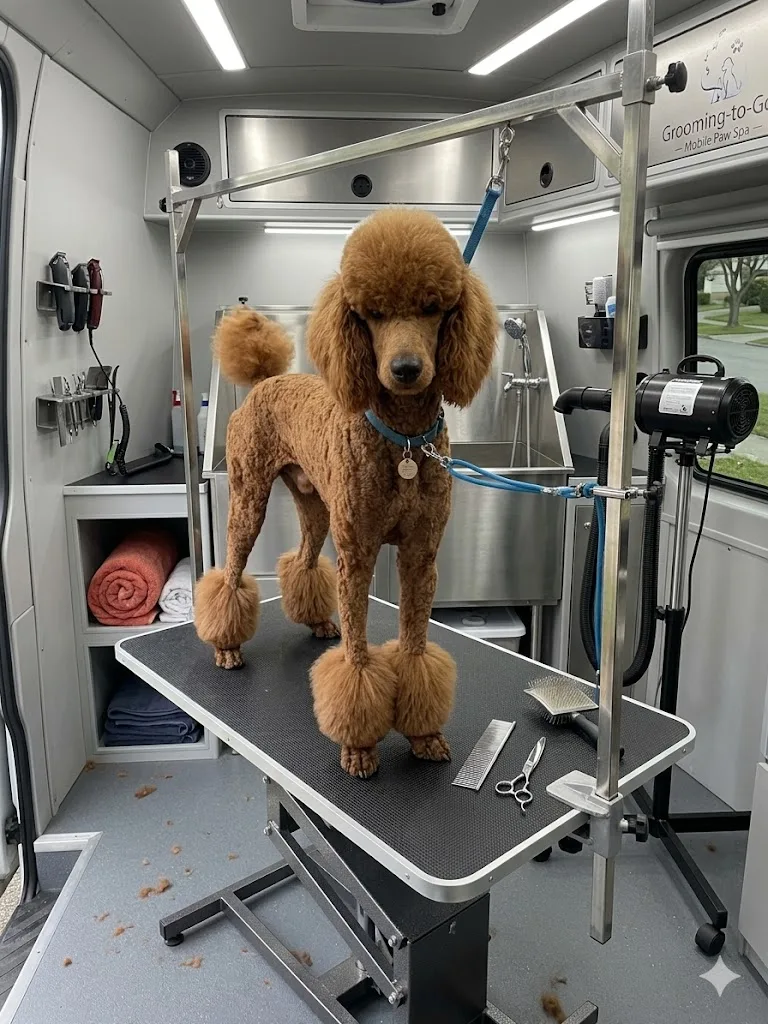
While you should systematically line-brush the entire dog, pay special attention to areas where the body naturally rubs together or against gear. These high-friction zones will mat much faster than the rest of the body:
- Behind the ears: Constant movement and scratching create tight knots here.
- The armpits: The friction of the front legs moving against the chest easily tangles the hair.
- The groin and inner thighs: Often missed during quick brushing sessions.
- Under the collar or harness: Take your dog’s collar off while brushing and thoroughly check the neck area.