Most dog owners never look at their dog’s paws until something goes wrong. The dog starts limping. The dog starts licking one paw obsessively. The dog winces on a hot sidewalk. That is when the foot suddenly matters.
Here is what I have learned from working on thousands of dog feet in the mobile van, and what every dog owner in Northwest Ohio should be doing at home between grooms.
🐾 The Anatomy of a Dog Paw
Your dog’s paw is not just a pad. It is a complex structure with a lot going on.
- The digital pads are the four little pads at the toes. They take the most direct impact when the dog walks, runs, or jumps.
- The metacarpal pad is the big heart-shaped pad in the center. It is the main shock absorber.
- The carpal pad is higher up on the front leg, just above the wrist. Most owners do not know it exists. It acts as a brake when the dog is coming down from a jump or running downhill.
- The dewclaw is the little thumb higher up on the inside of the leg. Front dewclaws usually attach. Rear dewclaws often do not, and they can catch and tear.
- The webbing between the toes is skin and connective tissue that spreads the foot out for traction.
- The nails, of course.
Every one of those parts can develop a problem. Most of those problems are easy to spot if you actually look.
🐾 What to Look For in a Weekly Paw Check
Pick a day. Once a week is plenty. Sit on the floor with your dog. Pick up one paw at a time. Look at the top, look at the bottom, look between the toes. Give yourself about 60 seconds per foot.
Here is what you are checking for:
- Cracked or dry pads. Common in winter, on hot pavement in summer, and on dogs who walk on rough surfaces. A little moisturizer made for dogs can help. Human lotion is not a great choice because dogs lick their feet.
- Cuts, scrapes, or puncture wounds. A dog can step on glass, a thorn, a piece of metal, a sharp rock. Punctures between the toes are easy to miss because the hair covers them. If you see limping, look here first.
- Torn nails. A broken or torn nail is one of the most common paw injuries. It is also extremely painful. The nail will not stop bleeding on its own until it is treated. If your dog is suddenly favoring one foot, check the nail.
- Foreign objects. Grass seeds (called grass awns) work their way into the webbing between the toes. So do small pebbles, bits of mulch, ticks, and burrs.
- Red, raw, or swollen skin between the toes. This is often a sign of allergies, a yeast overgrowth, or contact irritation. Dogs who lick their feet constantly are usually reacting to something.
- Lumps, bumps, or growths between the toes or on the pads. Anything new should be seen by your vet. Interdigital cysts are common in some breeds and need veterinary treatment.
- Discoloration of the nails. A dark streak down a single nail can be a sign of nail bed cancer. Any single-nail change should be checked by your vet.
- The dewclaw. On the front, this is a real nail and it needs trimming. On the rear, if the dog has them, they often do not wear down naturally and can curl back into the skin.
If you do this once a week, you will catch 90 percent of paw problems before they get serious.

🌡️ Hot Pavement Is a Real Threat
Here in Ohio, we get pavement in the 80s, 90s, and occasionally the 100s during summer. Asphalt gets hot enough to burn a dog’s pads in seconds. The “seven-second test” is simple: press the back of your hand to the pavement and hold it there. If you cannot keep it there for seven seconds, it is too hot for your dog to walk on.
The damage is real. A dog with burned pads will limp, lick their feet obsessively, and may bleed from the pads. Treatment takes weeks. Prevention takes a moment.
Walk your dog in the early morning or late evening during the summer. If you have to walk midday, stay on grass. There are also dog booties that work well for pavement walks, though most dogs take some training to accept them.
In the winter, the opposite problem shows up. Ice, salt, and chemical de-icers irritate paw pads. Rinse or wipe your dog’s feet after a walk in the winter. Booties help here too.
✂️ Trimming Nails Without the Drama
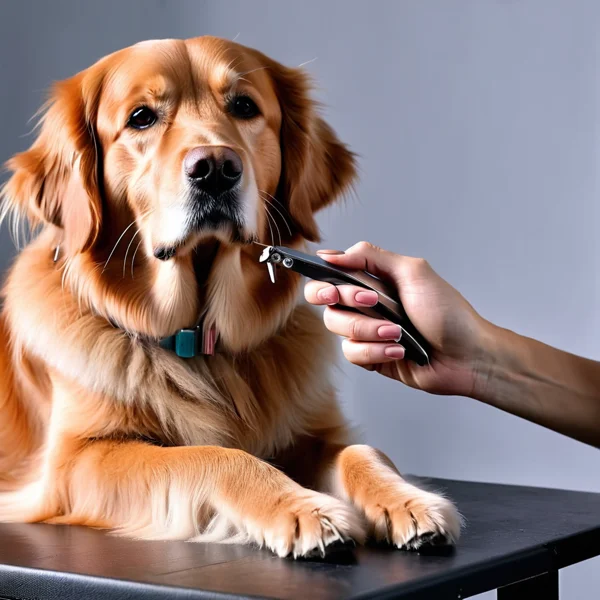
Most dog owners hate trimming nails. The dog hates it more. Here is how to make it easier.
- Touch the feet daily. Not to trim. Just to touch. Pick up the paw. Hold it. Touch the nails. Give a treat. Repeat. In a week or two, the dog stops pulling the foot away.
- Use a sharp clipper or a grinder. A dull clipper crushes the nail and causes pain. A grinder is a great alternative for dogs who hate the squeeze of a clipper.
- Clip the tip, not the quick. The quick is the pink part inside the nail. If your dog has clear or white nails, you can see it. If your dog has black nails, you are cutting blind, so clip tiny slivers at a time. When you see a black dot in the center of the cut end, stop. That is the quick.
- If you cut the quick, do not panic. It bleeds a lot. It looks worse than it is. Use styptic powder or cornstarch to stop the bleeding. Talk to your dog like they are a brave soldier. They will forgive you.
- Do a little at a time. Two or three nails a day is fine. You do not have to do all four feet in one sitting.
If you cannot keep up with nail trims at home, your groomer or vet can handle it. I trim and grind nails as part of every Full Groom at Vroom Grooms. The grinding smooths the cut edge so nails do not catch on carpet.
🧼 Hair Between the Pads
Some dogs have so much hair growing between their paw pads that it is hard to see the actual pad. This is most common in long-haired breeds like Poodles, Doodles, Shih Tzus, Schnauzers, and Cocker Spaniels. It is also a real problem.
That extra hair does three things you do not want:
- Traps moisture and dirt. Bacteria and yeast love the warm, dark, damp environment. Result: red, raw, smelly feet.
- Reduces traction. Long hair between the pads is slippery. Dogs with too much paw hair are more likely to slip on hardwood floors, jump awkwardly, and pull muscles.
- Collects burrs, grass seeds, and ice balls. The hair acts as Velcro for anything sharp or sticky.
Trimming the hair between the pads is part of a good Full Groom. At home, you can use curved safety scissors to carefully trim the hair even with the pad. Never shave down to bare skin. The hair is there to protect the foot.
🚨 When to See the Vet
Most paw issues are minor and can be handled at home or by your groomer. Some need a vet.
- A paw that is suddenly very swollen or very painful
- A nail that has been torn or is hanging
- Bleeding that does not stop after 10 minutes of pressure
- Any dark streak down a single nail
- A lump, bump, or growth that is new
- A cut that is more than a quarter inch deep
- A paw the dog will not let you touch
If you are not sure, take a picture and text it to your vet. Most clinics will tell you over the phone whether the dog needs to be seen today or can wait.
📌 The Wrap
Your dog’s feet take a beating every day. A weekly check, smart pavement choices, regular nail trims, and keeping the hair between the pads trimmed will prevent most of the common problems. A paw that is clean, dry, and free of matting is a healthy paw.
In the van, I check every foot on every dog I groom. If I see something new, I tell you before I do anything. If your dog is showing signs of a paw issue, mention it at booking so I can build extra time into the appointment.
Want to see what a paw check looks like in real time? Head over to vroomgrooms.com and click the Live button. We stream real appointments every week on Twitch at DogGroomerNicole. You will see the nail trim, the paw-pad tidy, the foot check, the whole thing. Real dogs, real feet, real talk.
Ready to book? The next step is the new client form on vroomgrooms.com. New clients are booking out a few weeks right now, and once you are on the schedule, you stay on it. Routine is built in. No chasing reminder texts. No last-minute cancellations from me.
Send the form, and let’s get your dog on the calendar.
Stay fresh and furry,
Nicole / Vroom Grooms LLC
Service area: Bowling Green, Haskins, Tontogany, Grand Rapids, Waterville, Monclova, Whitehouse, Maumee, Swanton, Holland, Perrysburg, Rossford. Limited availability for Toledo and Oregon. Proof of current vaccinations required at the time of service; clients are responsible for uploading and maintaining their own records. Mobile Dog Grooming. We come to you. No hook ups needed!