Every dog owner has been told their dog needs exercise. Most of them have no idea how much. The internet says “30 minutes twice a day.” The dog park says “all day every day.” The dog walker says “an hour is plenty.” None of those are wrong, exactly, but none of them are right for your specific dog, either.
Here is what I have learned from watching thousands of dogs come in and out of the mobile van, and what every dog owner in Northwest Ohio should know about how much exercise their dog really needs.
🐾 The Two Numbers That Matter
There are only two questions that determine how much exercise your dog needs:
- What breed or mix is the dog?
- How old is the dog?
That is it. Everything else is detail.
Breed matters because dogs were bred for specific jobs. A Border Collie was bred to work sheep all day. A Bulldog was bred to sit by the fire. The exercise needs of those two dogs are not even close to the same. Breed also predicts energy level, trainability, and what kind of exercise a dog enjoys.
Age matters because puppies, adults, and seniors are at very different points in their lives. A six-month-old puppy should not be running five miles. A 12-year-old Labrador is not going to do what a three-year-old one can do.
🐾 A Quick Guide by Breed Group
I am going to generalize here. Every dog is an individual. But the breed group is a good starting point.
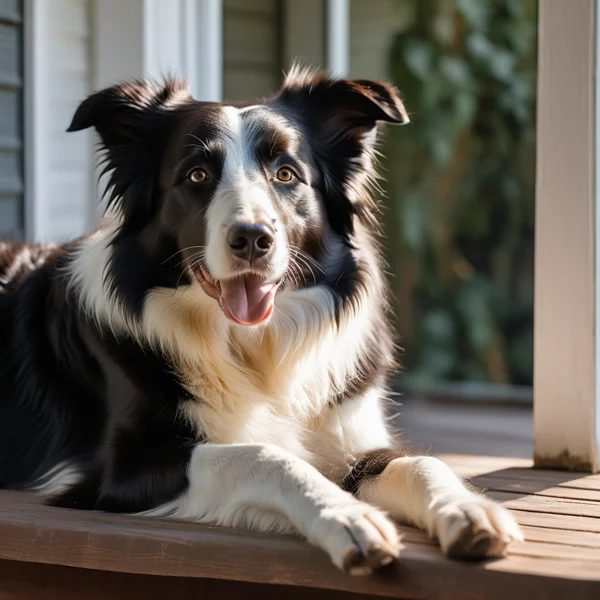
Working and herding breeds (Border Collie, Australian Shepherd, German Shepherd, Belgian Malinois, Siberian Husky, Rottweiler, Doberman). These dogs were bred to work for hours a day. They need 60 to 120 minutes of real exercise every day, ideally split into two sessions. Walks alone are not enough. They need to run, fetch, train, or do a job. Without it, they make their own job, and you will not like it.
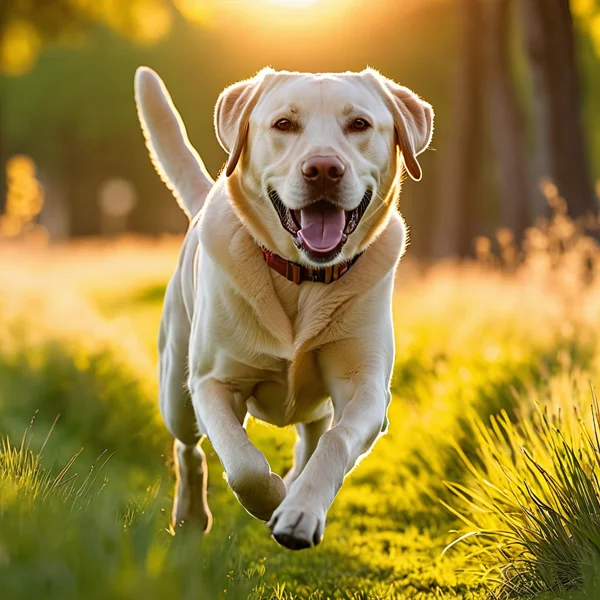
Sporting breeds (Labrador Retriever, Golden Retriever, Cocker Spaniel, English Springer Spaniel, Pointer). These dogs were bred to hunt alongside humans. They need 60 to 90 minutes of exercise a day, including some off-leash running or fetch. A tired Labrador is a happy Labrador.
Terriers (Jack Russell, Fox Terrier, Bull Terrier, Airedale, Boston Terrier, Scottish Terrier). Most terriers are bundles of energy wrapped in a small package. They need 45 to 90 minutes of exercise a day, but a lot of that can be intense play, training, or even a flirt pole in the backyard. The backyard alone is not enough. A bored terrier will dig, chew, and bark.
Hounds (Beagle, Basset Hound, Dachshund, Bloodhound, Greyhound, Whippet). Hounds are interesting. Scent hounds (Beagle, Basset) can run for hours when they are following a smell, but at home they are famously lazy. Sight hounds (Greyhound, Whippet) are sprinters, not distance runners. Most hounds do well with 30 to 60 minutes a day, with a few harder sessions a week for sprinters. The couch is also a form of exercise.
Toy breeds (Chihuahua, Yorkshire Terrier, Pomeranian, Maltese, Toy Poodle). Tiny dogs do not need hours of exercise. They need 20 to 45 minutes a day, often broken up into short walks and indoor play. The misconception is that small dogs do not need walks. They absolutely do, just shorter ones.
Brachycephalic breeds (Bulldog, Pug, French Bulldog, Boston Terrier, Pekingese). These dogs are limited by their anatomy. The flat face means they cannot pant efficiently. They overheat fast, they have breathing trouble, and strenuous exercise is dangerous. 20 to 45 minutes of low-impact exercise a day is plenty. Walk early in the morning or late in the evening in summer. Skip the midday walk when it is hot.
Giant breeds (Great Dane, Mastiff, Saint Bernard, Newfoundland, Bernese Mountain Dog). Slow-growing, slow-moving dogs. As puppies, they need very controlled exercise to protect their joints. As adults, 30 to 60 minutes a day of moderate walking. They are not athletes, and you should not try to make them.
Sporting dogs with low energy needs (Basset Hound, Bulldog, Shih Tzu, Cavalier King Charles Spaniel). Some breeds were bred to be companions, not workers. Their exercise needs are low to moderate. 20 to 45 minutes a day is plenty. Over-exercising a low-energy dog does not make them healthier. It stresses them.
🧠 The Two Kinds of Exercise
Most owners think of exercise as one thing: walking. Walking is fine. It is not enough by itself for most dogs.
There are two kinds of exercise, and most dogs need both.
Physical exercise is movement. Walks, runs, fetch, swimming, agility, dog park play. Anything that gets the body moving and the heart rate up.
Mental exercise is using the brain. Training, puzzle toys, sniff walks, hide-and-seek, scent games. Mental exercise tires a dog out faster than physical exercise, and it does not require the dog to be in perfect physical condition.
A dog who gets a 30-minute walk but no mental stimulation is still a bored dog. A dog who gets 15 minutes of training and a 15-minute walk is often more tired than a dog who got an hour of running.
For high-energy breeds, mental exercise is the secret weapon. A Border Collie who learned a new trick today is more tired than a Border Collie who ran for an hour.
🐶 The Puppy Rule
Here is the one rule that matters most for puppies.
Five minutes of structured exercise per month of age, twice a day.
A three-month-old puppy gets 15 minutes, twice a day. A six-month-old gets 30 minutes, twice a day. A nine-month-old gets 45 minutes, twice a day. Up to about a year, when most dogs are ready for adult exercise levels.
This rule exists for a reason. Puppies’ bones and joints are still developing. Forced exercise (running on pavement, long hikes, jumping off furniture) damages the growth plates. A dog who got too much exercise as a puppy can have joint problems for life. The damage is invisible at the time and obvious at age five.
Free play in the yard is not counted as “structured exercise.” A puppy running around the yard is self-regulating. They stop when they are tired. A forced walk or run is the problem.
👴 The Senior Shift
Around age seven or eight (five or six for giant breeds), dogs start slowing down. Most seniors still need daily exercise, but the type changes.
- Swap running for walking. Two short walks a day instead of one long one.
- Add more mental exercise. Senior dogs often enjoy training and puzzle work more than they used to. The mind stays sharper with use.
- Watch the weather. Senior dogs feel cold and heat more than they used to. A senior dog on a hot day needs a short walk in the early morning, not a midday hike.
- Watch the recovery. A senior dog who is stiff or sore the day after exercise is telling you it was too much.
🚨 Red Flags During Exercise
Some signs mean the dog is in trouble, not just tired. Stop the exercise and get the dog somewhere cool and quiet.
- Heavy panting that does not slow down within a minute or two of stopping. Brachycephalic dogs pant loudly. Excessive panting in any dog is a warning.
- Excessive drooling. Especially in breeds that do not normally drool. A sign of heat distress.
- Stumbling, weakness, or collapse. Emergency.
- Bright red gums or tongue. The tongue should be pink. Red or purple is heat stroke.
- Vomiting or diarrhea during or after exercise. A sign the dog was pushed too hard.
- Limping that does not go away after rest. A soft-tissue injury that needs a vet.
Heat stroke in a brachycephalic dog can be fatal. A flat-faced dog should not be doing strenuous exercise in temperatures above 75°F. Ever. If you have a brachycephalic dog, the rule is simple: if you are hot, they are in danger.
📌 The Wrap
How much exercise your dog needs depends on the breed and the age. Working and herding breeds need the most. Brachycephalic and toy breeds need the least. Puppies need controlled, age-appropriate exercise. Seniors need shorter, gentler sessions with more mental work.
A tired dog is a good dog. A bored dog is a problem. The right amount of exercise, in the right form, every day, is the closest thing to a magic bullet for behavior problems.
In the van, I see the dogs who do not get enough exercise (hyper, mouthy, hard to handle) and the dogs who get too much (stiff, sore, slow to recover). I can usually tell within the first few minutes of the groom. If your dog is one of these, mention it at booking so I can adjust my approach.
Want to see what an active dog looks like in real time? Head over to vroomgrooms.com and click the Live button. We stream real appointments every week on Twitch at DogGroomerNicole. You will see the dogs come in, see the energy levels, see the whole thing. Real dogs, real energy, real talk.
Ready to book? The next step is the new client form on vroomgrooms.com. New clients are booking out a few weeks right now, and once you are on the schedule, you stay on it. Routine is built in. No chasing reminder texts. No last-minute cancellations from me.
Send the form, and let’s get your dog on the calendar.
Stay fresh and furry,
Nicole / Vroom Grooms LLC
Service area: Bowling Green, Haskins, Tontogany, Grand Rapids, Waterville, Monclova, Whitehouse, Maumee, Swanton, Holland, Perrysburg, Rossford. Limited availability for Toledo and Oregon. Proof of current vaccinations required at the time of service; clients are responsible for uploading and maintaining their own records. Mobile Dog Grooming. We come to you. No hook ups needed!