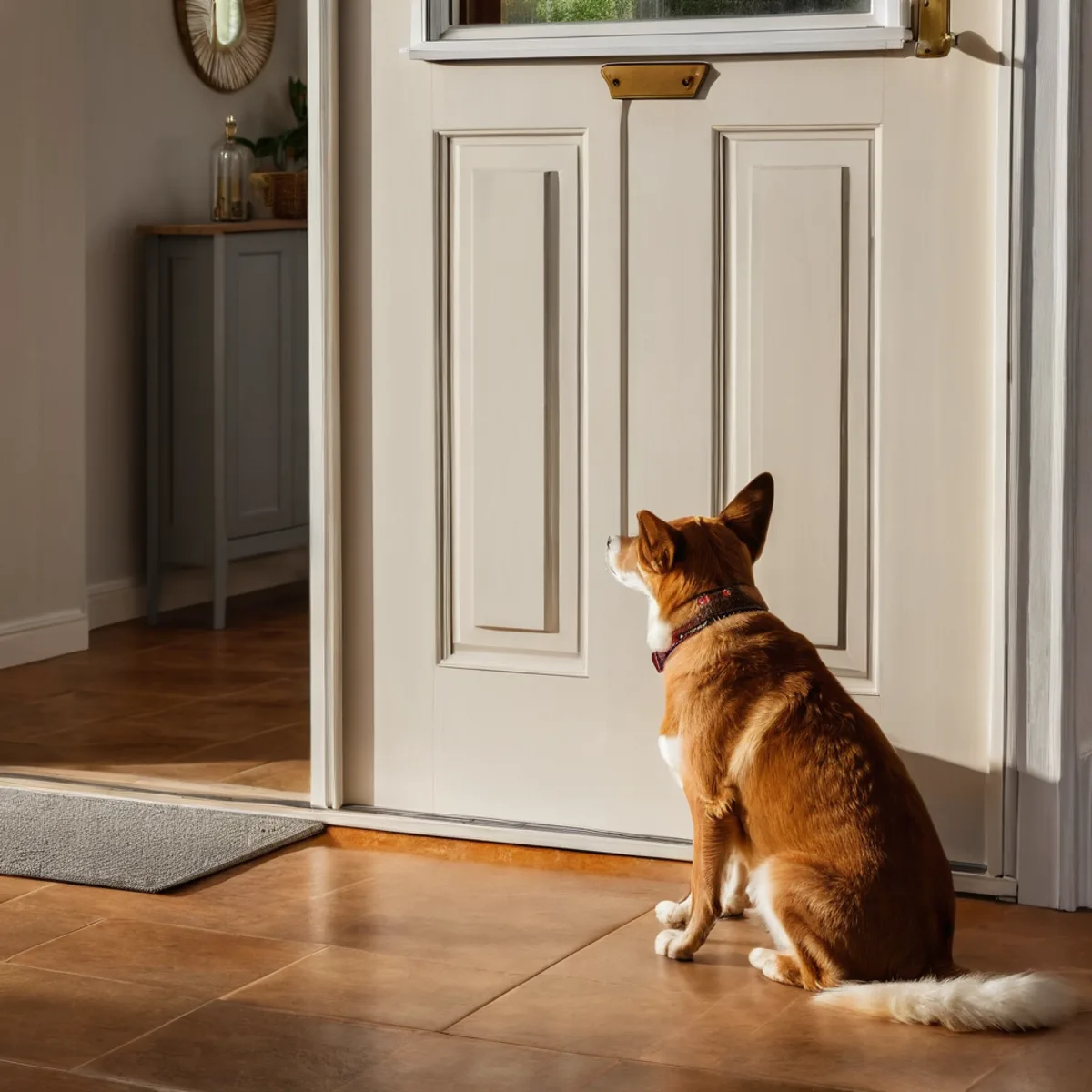
There is a story people tell about dogs. The dog waits by the window every day at the same time. The owner comes home. The dog is already at the door, tail going, like they knew. And the question is: do they know? Did they somehow track the time and predict the arrival?
The honest answer is complicated. Dogs do not have a concept of time the way we do. They do not know it is “3:47 PM” or “Tuesday.” But they absolutely have an internal sense of time passing, and they absolutely use it to predict when things are going to happen. So yes, your dog probably does know when you are coming home. They just know it in a completely different way than you would.
The Internal Clock
Dogs, like most animals, run on a circadian rhythm. Their bodies know when it is morning, when it is evening, and when things are supposed to happen. They get sleepy at night, they wake up around dawn, and their digestion, energy levels, and hormone cycles all follow a daily pattern. This is true even without external cues like light. Dogs in constant light or constant dark still show circadian patterns.
But that is the 24-hour clock. What about shorter intervals? How does a dog know that you have been gone for two hours versus six hours? The answer, based on the research, is scent.
The Scent Clock
I mentioned in the post about a dog’s nose that dogs can smell time. Here is how that works in more detail. Your scent in the house gradually fades over the hours. When you leave, the strongest concentration of you is at the door. As time passes, that scent spreads out, gets weaker, and dissipates. A dog with a good nose can smell the difference between “you left recently” and “you have been gone a long time.”
In one study, dogs showed distinctly different behaviors when their owners had been gone for 30 minutes versus 2 hours versus 6 hours. The longer the owner was gone, the more enthusiastically the dog greeted them on return. The dog was not just excited to see them. They were excited because the scent told them this was a long absence and a meaningful return.
The Routine Clock
Dogs are also incredibly good at learning routines. They learn that the sound of the alarm means you are about to get up. They learn that the jingling of car keys means you are leaving. They learn that the sound of the treat bag means food is coming. They learn that the garage door opening at a certain time means you are home. None of this requires a concept of clock time. It is pattern recognition. But the result is the same: your dog knows when things are about to happen.
This is also why dogs get anxious when their routine changes. If you are normally home at 5:00 and one day you are not, the dog does not understand that traffic made you late. They just know that the expected event did not happen, and that is scary. The same thing happens if you change your morning routine, your walk time, or your feeding schedule. The dog was tracking the pattern, and now the pattern is broken.
What This Means for Separation Anxiety
If your dog struggles when you leave, a lot of the issue is the time-cue problem. The dog is reading the “leaving” cues (keys, shoes, jacket) and predicting your absence. The longer the absence feels in their internal clock, the more distressed they get.
A few things that can help:
– Practice low-key departures. Pick up your keys 20 times in a row and do not leave. Put on your shoes and then sit on the couch. The cue becomes unreliable, so the anxiety does not get a chance to build.
– Leave a worn t-shirt or blanket with your scent on it. The dog can smell you, which is comforting.
– Keep arrivals and departures boring. No big hellos, no long goodbyes. The fewer emotional peaks around leaving and coming back, the smaller the contrast the dog is dealing with.
– Provide a high-value treat or a stuffed Kong right before you leave. The dog associates your leaving with something good happening, and the licking/chewing is calming in itself.
– For severe cases, talk to your vet or a certified animal behaviorist. There is no shame in needing help, and there are medications and behavior plans that can make a real difference.
Why Some Dogs Wait by the Door
The dogs who wait by the door are usually doing a combination of things. They have learned the routine (car in the driveway, footsteps on the porch, the sound of the lock). They are tracking the scent clock. And they have a strong bond with the person they are waiting for, which is what makes the wait worth it.
If your dog is the one waiting by the door, you are doing something right. They are not just waiting for dinner or a walk. They are waiting for you.
Stay fresh and furry, Nicole / Vroom Grooms LLC
About the Author
Nicole is the owner and certified groomer behind Vroom Grooms LLC, a mobile dog grooming service serving Northwest Ohio. She has been certified since 2020 after completing 640 hours of hands-on training, and works with a lot of dogs who struggle with being left alone. You can catch her live on Twitch at DogGroomerNIcole, where she streams real appointments and answers questions about dog behavior.
This post was drafted with help from Nagini 🐍, her digital assistant, who keeps the blog running, handles the tech side of the website, and makes sure Nicole spends more time with dogs and less time wrestling with WordPress.