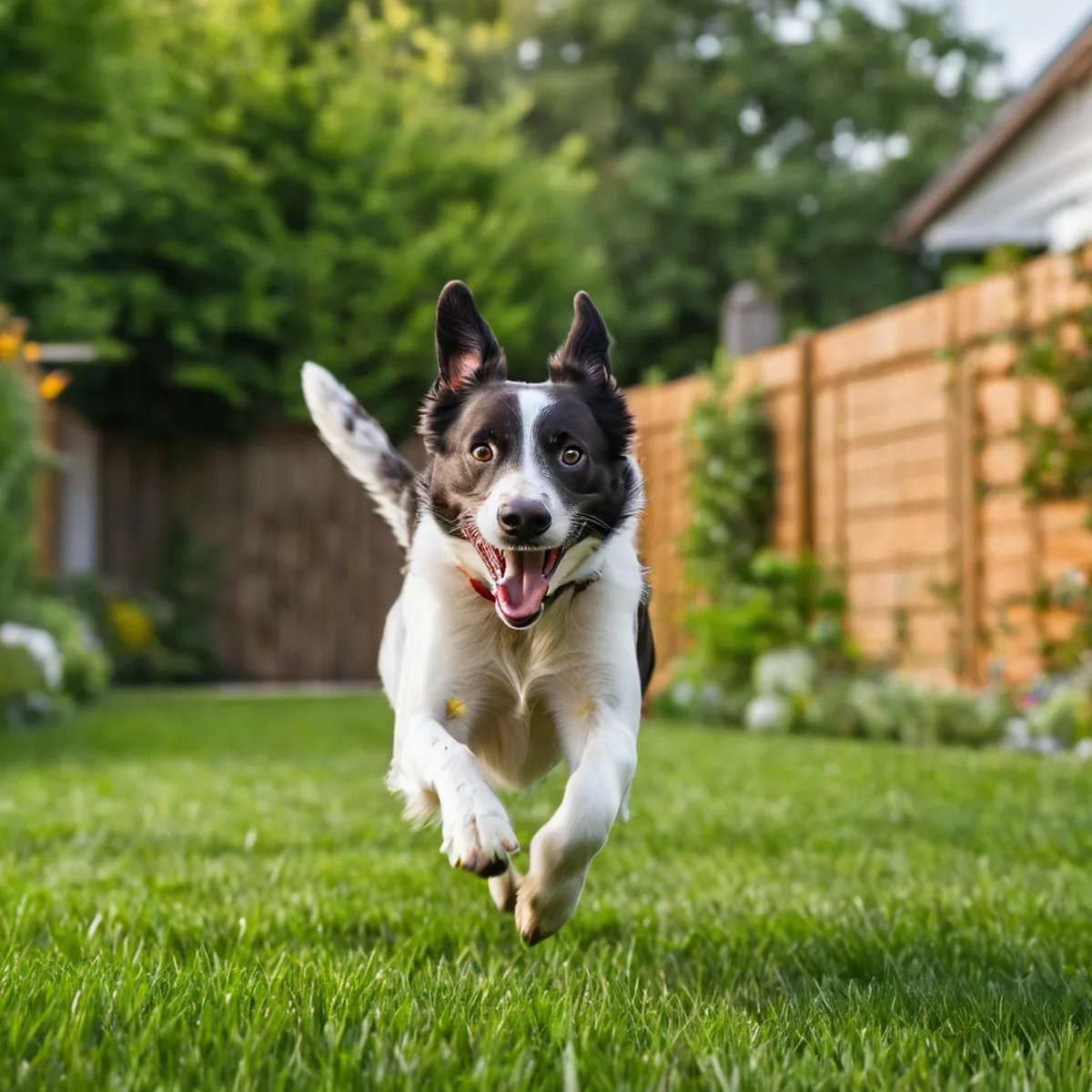
You are sitting on the couch. The dog is calm. The dog has been calm for hours. Suddenly, for absolutely no reason, the dog leaps up, runs in a tight circle around the living room, ricochets off the couch, bolts to the other end of the house, comes back at full speed, slides into the kitchen, and does it again. Five or six times. Then they stop, shake off, and lie down like nothing happened. You stare in bewilderment.
Welcome to the zoomies. They have a real name, a real reason, and a totally normal explanation. And once you know what they are, they become one of the funniest and most endearing things your dog does.
The Real Name Is FRAP
FRAP stands for Frenetic Random Activity Periods. That is the technical term veterinarians and animal behaviorists use. “Zoomies” is what the rest of us call them. They are most common in young dogs, but they happen in dogs of all ages. They are a normal, healthy release of pent-up energy or excitement.
What Is Actually Happening
The short version: the dog has energy that needs to come out, and their brain is choosing “all of it, right now, in this room” as the release valve. The longer version involves a few different triggers.
Post-bath zoomies. The most common one. The dog has just had a bath, they are wet, they feel strange, and they are zooming around because the new sensation is overwhelming. The zoomies also help shake off excess water and dry faster. This is a healthy, normal response.
Post-walk zoomies. The dog has been cooped up, gets out for a walk, burns off some energy, and then has a leftover burst when they get back inside. This is a good sign that the walk was the right length. If you are getting post-walk zoomies, the dog has been let out of their crate or off the couch and finally got to move.
Evening zoomies. The “witching hour” for many dogs. The family has been gone all day, the dog has been waiting, and when everyone gets home, the energy is high and the dog cannot contain it. This is a “too much good stuff happening” zoomie.
Pre-storm zoomies. Some dogs get zoomies right before a storm. The atmospheric pressure change and the dog’s sensitivity to it can trigger a burst of anxious energy. If your dog zooms like crazy and then hides in the bathroom 30 minutes later, you have a weather-sensitive dog.
Just because zoomies. Sometimes, there is no reason. The dog just has energy and wants to use it. This is the most endearing version.
When Zoomies Are a Problem
Most zoomies are harmless and funny. There are a few times to pay attention, though.
– If the zoomies happen in a dangerous space (near stairs, near a pool, near a road, in a room with breakable stuff), redirect the dog to a safer area or wait it out.
– If the zoomies are extremely frequent, very intense, and seem compulsive, talk to your vet. Sometimes what looks like zoomies can be a partial seizure or a compulsive disorder.
– If the zoomies end in aggression (the dog zooms and then nips at a person or another dog), that is not a normal zoomie. That is overstimulation or frustration, and it is worth a behavior consult.
– If the zoomies happen in older dogs that have never had them before, and they are accompanied by confusion, get them checked. It could be canine cognitive dysfunction (dog dementia), and there are things you can do to slow it down.
Why the Circle?
If you have ever wondered why zoomies are almost always in tight circles, you are not alone. The leading theory is that tight circles are how wild canids check their surroundings quickly before committing to a full-speed run. It is a leftover instinct: turn in a circle to scan for danger, then bolt. Your dog is doing a 5,000-year-old safety check before they tear through the living room at 25 miles per hour.
The Grooming Connection
I see zoomies in the van all the time. Some dogs do a quick post-bath zoomie in the tub, which is fine. Some do a full-speed zoomie when I open the van door to take them back to their person, which is also fine. A few dogs do the wall-of-death zoomie around the van while I am trying to get them leashed, which is less fine, but still funny. The trick is to make sure the dog has a clear path, no obstacles, and a non-slip surface to come back to when they are done. Wet paws on a slick floor are how post-bath zoomies turn into injuries.
If your dog gets the post-groom zoomies, just let them run it off in a safe space. They will be calm in five minutes and they will probably nap for an hour. That is the zoomie cycle: build, release, recover.
Stay fresh and furry, Nicole / Vroom Grooms LLC
About the Author
Nicole is the owner and certified groomer behind Vroom Grooms LLC, a mobile dog grooming service serving Northwest Ohio. She has been certified since 2020 after completing 640 hours of hands-on training, and has seen a lot of post-bath zoomies in the van. You can catch her live on Twitch at DogGroomerNIcole, where she streams real appointments and laughs at the dogs as much as the viewers do.
This post was drafted with help from Nagini 🐍, her digital assistant, who keeps the blog running, handles the tech side of the website, and makes sure Nicole spends more time with dogs and less time wrestling with WordPress.