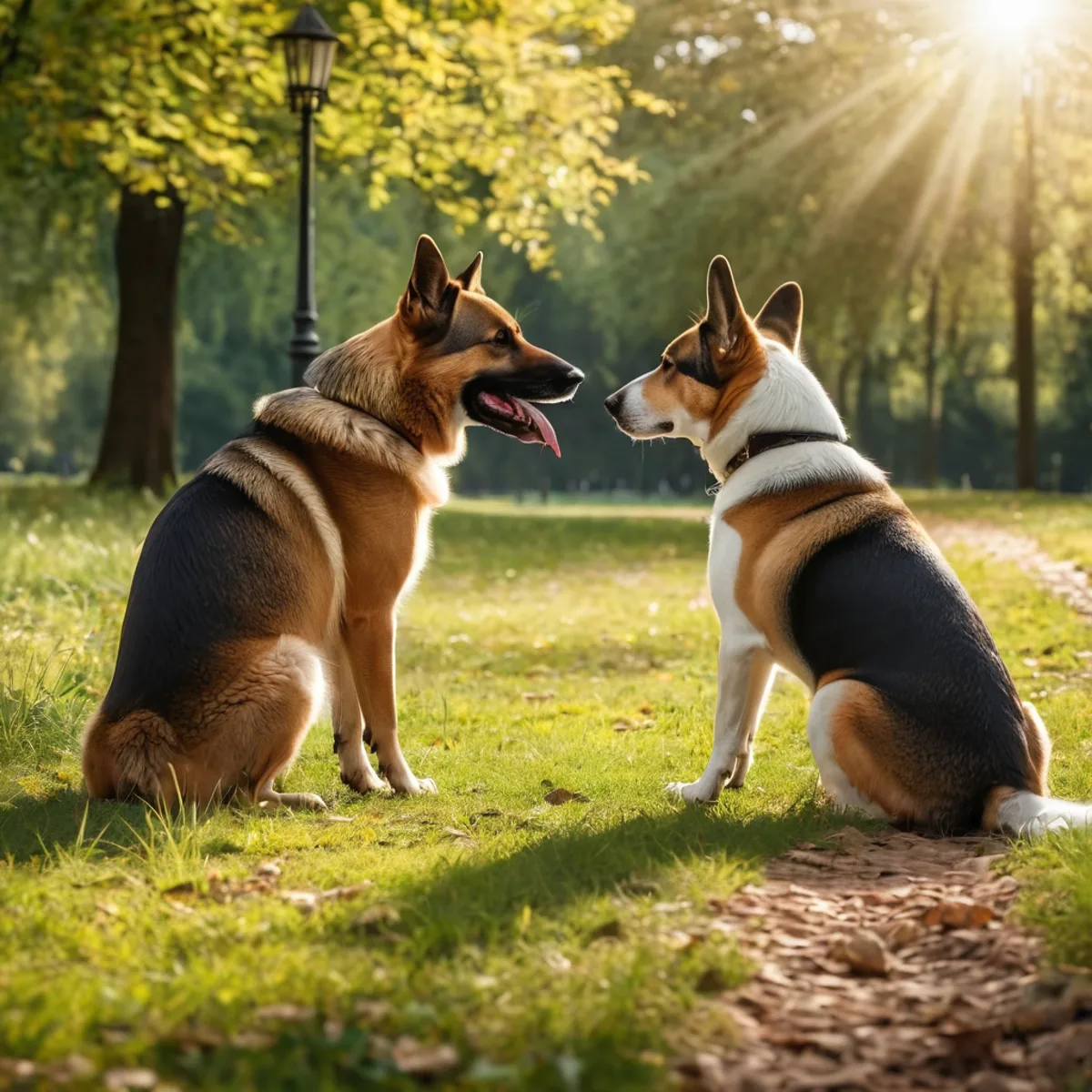
Two dogs meet on the sidewalk. They approach each other cautiously, tails up, body loose. They circle once, two times, three times. Then they go in for the rear. Both dogs freeze in place, tails raised, while one dog gets a thorough sniff of the other’s back end. The human on the end of the leash is mortified. The dogs seem completely fine with it.
What is happening here is actually a sophisticated chemical conversation. Your dog is not being weird. They are reading a novel. And the other dog is learning more from this greeting than we could learn in an hour of small talk.
The Nose Knows (Especially the Butt)
I covered this in the post about a dog’s nose, but it is worth repeating here: a dog’s sense of smell is in a different universe than ours. When your dog sniffs another dog’s rear, they are picking up an enormous amount of information from the anal glands, which sit on either side of the anus and produce a unique chemical signature for every dog.
These anal gland secretions contain information about:
– The other dog’s sex
– The other dog’s age
– The other dog’s reproductive status (in heat, neutered, spayed)
– The other dog’s health
– The other dog’s diet
– The other dog’s emotional state (stressed, calm, excited, fearful)
– The other dog’s identity (essentially, their “name” in chemical form)
– What the other dog has been eating and where they have been
That is a lot of information from a single sniff. To put it in human terms, imagine if you could tell everything about a stranger from one handshake: their job, their mood, what they had for breakfast, whether they were healthy, and whether you had met them before. That is what your dog is doing at the dog park.
The Introductory Order
You may have noticed that dogs do not always sniff in the same way. There is usually a polite order to it. One dog will offer to be sniffed first (stand still, tail up, allow the other dog to approach). Then they will swap. The “sniffer” gets to gather information, and the “scented” gets to do the same in return.
If both dogs try to sniff at the same time, the greeting can get awkward. If one dog tries to skip the sniff and go straight to face-to-face, the other dog may snap or back away. Skipping the sniff is rude in dog language, the same way walking up to a stranger and starting a personal question would be rude in human language.
Why the Rear and Not the Face?
The face has scent glands, but the rear has the most concentrated source of identifying information (the anal glands). Dogs are practical. They are going to go for the highest-value data source first. It is not about being rude. It is about being efficient.
Also, face-to-face greetings in dog language are a sign of confrontation. Two dogs going nose-to-nose is the start of either a play session or a fight, depending on body language. Approaching from behind or the side, with a casual sniff, is a much more relaxed way to say “hi, I am not a threat.”
What About Dogs Who Do Not Want to Be Sniffed?
Some dogs do not enjoy the greeting ritual. They might be shy, anxious, undersocialized, or just not in the mood. If your dog tries to hide behind your legs, tuck their tail, or move away when another dog approaches, that is a polite “no thank you” in dog language. Do not force it. Let your dog set the pace for greetings.
If your dog is the one trying to sniff a dog that does not want to be sniffed, call them back. It is good manners, and it prevents the kind of misunderstanding that turns into a scuffle.
The Grooming Connection
In the van, I am constantly in the sniffing zone. Dogs sniff me, sniff the van, sniff the equipment, sniff the treats. The van smells like every dog who has been in here before, which is either interesting or stressful to the new arrival, depending on the dog. I work hard to keep the van smelling neutral. I wipe down surfaces, I use unscented products, and I do not wear strong perfume. The cleaner the air in the van, the more relaxed the dog is on the first sniff.
If your dog is reactive on walks (lunging, barking, freaking out at other dogs), the sniff-and-greet ritual might actually help. A controlled greeting where the dogs get to read each other properly is a confidence-builder. Forced “say hi nicely” encounters where the dogs cannot sniff and just have to tolerate each other up close are a stress-builder. If your dog needs help with reactivity, talk to a certified force-free trainer in your area. There are ways to work on this that do not involve flooding or punishment.
Stay fresh and furry, Nicole / Vroom Grooms LLC
About the Author
Nicole is the owner and certified groomer behind Vroom Grooms LLC, a mobile dog grooming service serving Northwest Ohio. She has been certified since 2020 after completing 640 hours of hands-on training, and has watched a lot of dog greetings on the route. You can catch her live on Twitch at DogGroomerNIcole, where she streams real appointments and talks about what she notices about each dog.
This post was drafted with help from Nagini 🐍, her digital assistant, who keeps the blog running, handles the tech side of the website, and makes sure Nicole spends more time with dogs and less time wrestling with WordPress.