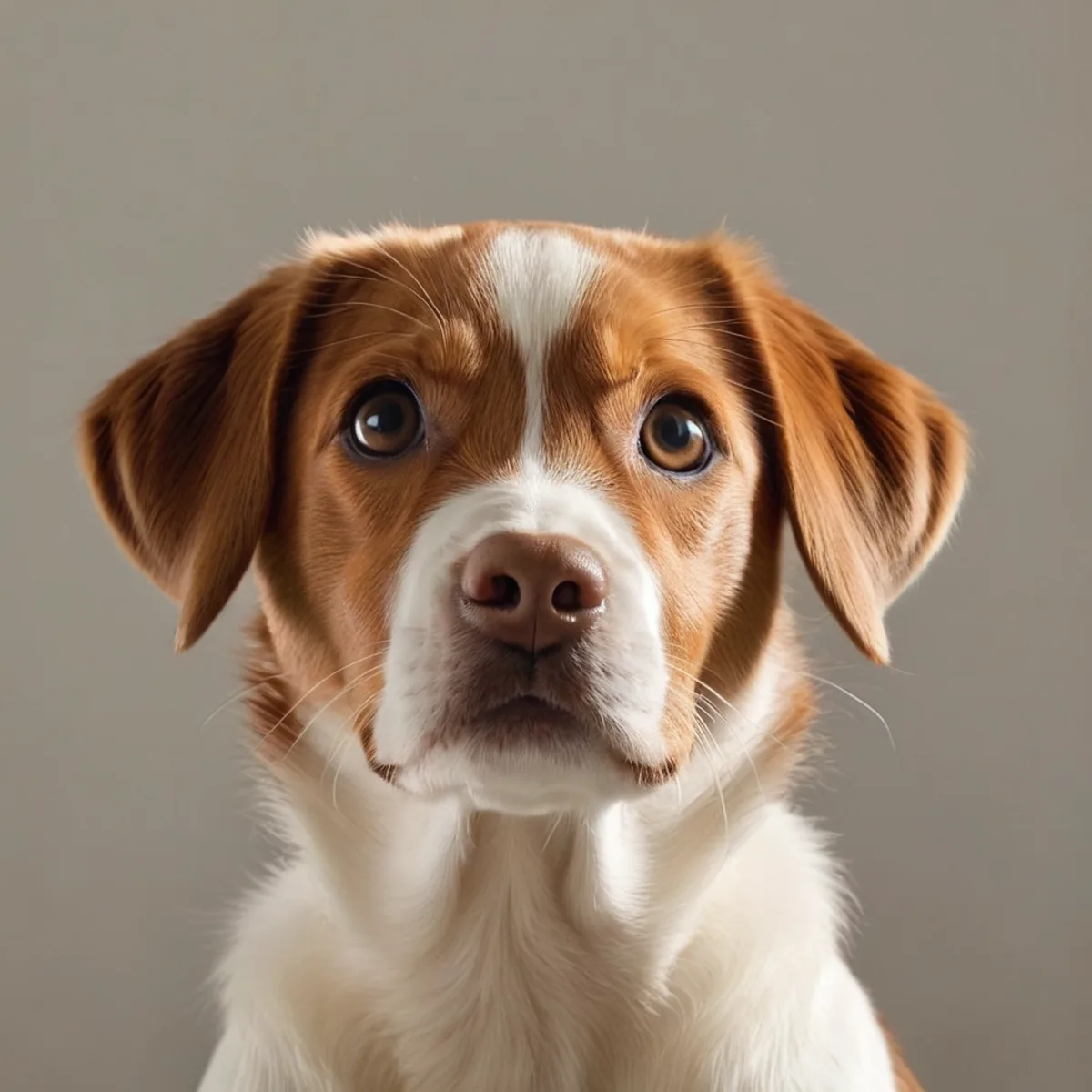
The head tilt. You know the one. You say something in a slightly higher pitch, or you make a weird sound, or you hold up a treat, and your dog cocks their head to the side like they are a confused little philosopher trying to figure out what you just said. It is one of the most endearing things a dog does, and it is also doing some real work in the dog’s brain.
There are a few reasons dogs do it, and the real answer is probably a combination of all of them.
It Helps Them Hear Better
Dogs have mobile ear flaps (pinnae) that can rotate, tilt, and perk up to capture sound. By tilting their head, a dog is repositioning their ear flaps to pinpoint the source of a sound. This is especially true for sounds that come from above or in front of them.
Think of it like cupping your hand behind your ear. You are physically changing the shape of your ear to gather more sound. A dog tilting their head is doing the same thing, just with a much more mobile ear and a much better sense of hearing to begin with.
This is also why dogs with floppy or heavy ears (Basset Hounds, Cocker Spaniels, Bloodhounds) sometimes seem to tilt more than dogs with upright ears. Their ear flaps block and absorb sound more, so they have to work harder to position them for the best reception.
It Helps Them See Better
Here is a fun one that a lot of people do not know. Dogs with longer muzzles can have their nose partially block their lower field of vision. When they tilt their head, they are adjusting the angle of their eyes to get a better look at whatever is in front of them, especially the lower part of your face where your expressions live.
Researchers have actually tested this. Dogs with shorter muzzles (Pugs, French Bulldogs) tilt their heads less than dogs with longer muzzles (Greyhounds, Collies, German Shepherds). The longer-muzzled dogs have a real visual reason to tilt, and they do it more often.
It Is a Sign of Focused Attention
The head tilt usually happens when the dog is paying close attention to something: a sound, a word, a person, an object. The dog is processing. They are trying to figure out what the sound or sight means and whether it is relevant. You will often see it when you say a word the dog knows (“walk,” “treat,” “outside,” their name) or when you make a sound that is novel and interesting.
The head tilt is the dog’s version of leaning in. They are interested. They are engaged. They are trying to understand.
It Can Be a Social Signal
Dogs also tilt their heads at humans because they have learned that it gets a reaction. Most humans find the head tilt adorable, and they respond with positive attention, treats, praise, or laughter. The dog learns: head tilt equals good things happen. So they do it more.
This is not a cynical manipulation. It is just a dog being a dog. They repeat behaviors that get rewarded, and the head tilt is a behavior that gets rewarded a lot.
Breeds That Do It More
Some breeds seem to be champion head tilters. In my experience:
– Cavalier King Charles Spaniels are professional head tilters. They do it constantly, and it is impossibly cute.
– Golden Retrievers and Labrador Retrievers are right up there.
– Pit Bulls and Pit mixes do it a lot, often combined with a soft eye and a slow tail wag.
– German Shepherds do it when they are really focused on something.
– Corgis tilt with their whole upper body, which is hilarious.
– Greyhounds and other sighthounds do it less often, possibly because their build makes the head tilt less comfortable or visible.
The dogs that do not tilt much are usually the brachycephalic (flat-faced) breeds. Their head shape just does not lend itself to the same dramatic tilt.
When the Head Tilt Is a Concern
Most head tilts are normal, endearing, and harmless. But there are a few cases where it can signal a problem.
– Constant head tilt to one side. If the dog is holding their head tilted and it is not in response to a sound or a treat, it can be a sign of an ear infection, vestibular disease, or a neurological issue. Worth a vet visit.
– Head tilt plus loss of balance, walking in circles, or eye flicking. This is a vestibular episode, and it is a vet visit right away. The good news is that vestibular issues in dogs often resolve with supportive care.
– Head tilt plus head shaking or pawing at the ear. Probably an ear infection. The vet can confirm and prescribe the right treatment.
– Sudden head tilt in an older dog with no other explanation. Could be a stroke or other neurological event. Vet, immediately.
If your dog just does the cute head tilt when you say “walk” or make a kissy sound, that is the good version. Enjoy it.
The Grooming Connection
The head tilt shows up a lot in the van, usually when I am talking to a new dog or offering a treat. It is one of my favorite things to see, because it means the dog is engaged, curious, and processing. A dog that is shutting down (from fear, stress, or being overwhelmed) does not tilt. They shut down, go still, or look away.
When I see the head tilt, I know the dog is in a good headspace and we are going to have a good groom. When I do not see it, I slow down and figure out what the dog needs before we keep going. The head tilt is a small thing, but it is one of the most useful signals a dog can give me.
Stay fresh and furry, Nicole / Vroom Grooms LLC
About the Author
Nicole is the owner and certified groomer behind Vroom Grooms LLC, a mobile dog grooming service serving Northwest Ohio. She has been certified since 2020 after completing 640 hours of hands-on training, and has seen a lot of head tilts in the van. You can catch her live on Twitch at DogGroomerNIcole, where she streams real appointments and laughs at the dogs as much as the viewers do.
This post was drafted with help from Nagini 🐍, her digital assistant, who keeps the blog running, handles the tech side of the website, and makes sure Nicole spends more time with dogs and less time wrestling with WordPress.