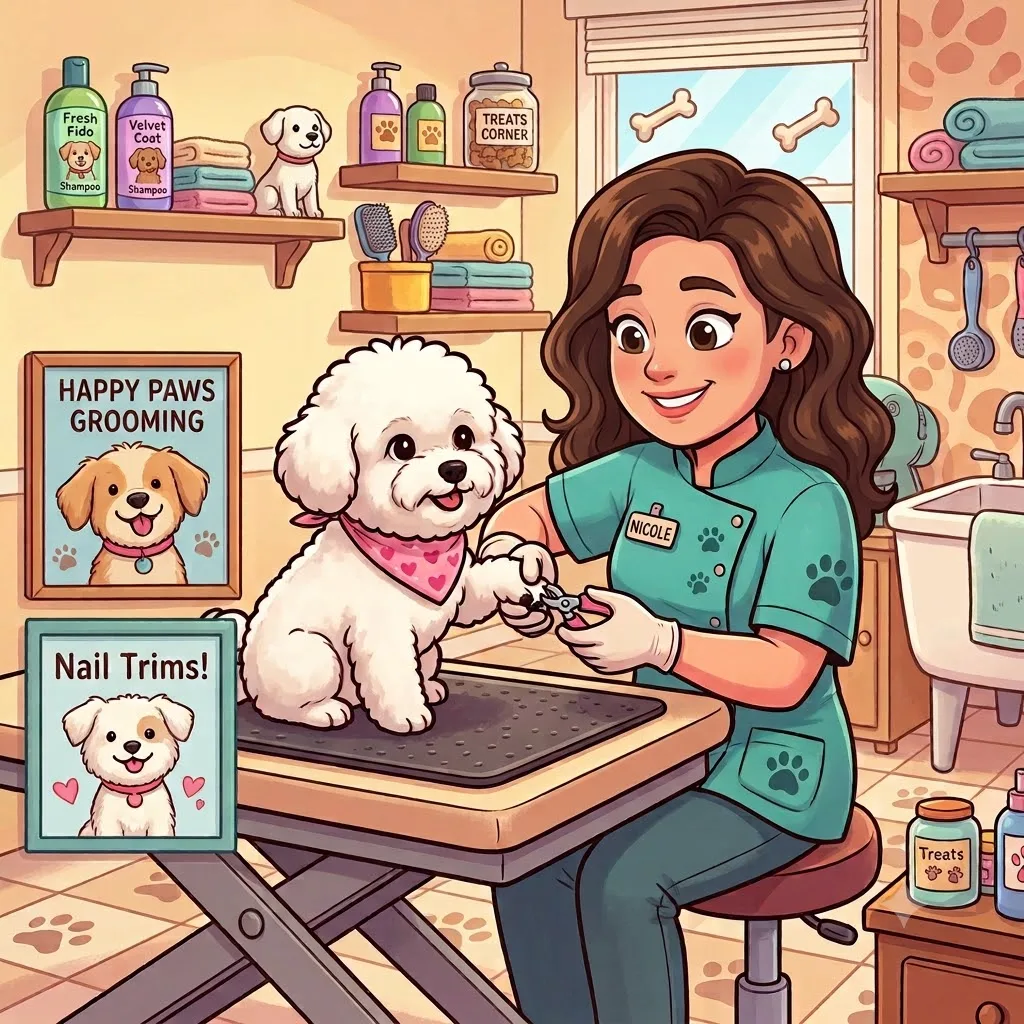
Let me tell you about something I see almost every week: a dog that comes in for a groom with nails so long they are curled under the paw pad. The dog is in pain. The dog has been walking on its nails for months, maybe years. The owner had no idea, or they knew but did not know what to do about it, or they tried and the dog would not let them. Whatever the reason, the dog has been suffering needlessly, and a 5-minute nail trim could have prevented all of it.
Keeping your dog’s nails at a healthy length is one of the most important things you can do for them, whether you do it at home or have a professional handle it. The trim itself is non-negotiable, but who does it is your call. Let me explain what happens when nails get overlooked, and why this matters regardless of how you choose to handle it.
What Happens When Nails Get Too Long
A dog’s nail has a quick, which is the blood vessel and nerve that runs partway down the nail. In light-colored nails, you can see the quick as a pink line. In dark-colored nails, you cannot see it at all, which makes trimming trickier. When nails get overgrown, the quick grows with them. The longer the nail gets, the longer the quick gets, which means the next trim has to be even shorter to get the nail back to a healthy length. It is a vicious cycle.
When a dog walks on overgrown nails, several bad things happen:
– The toes are pushed out of alignment, which affects the entire leg and shoulder structure
– The nail can curl into the paw pad, causing pain, infection, and sometimes requiring a vet visit to remove
– The dog compensates by changing its gait, which can lead to back, hip, and joint issues
– The dog is in constant low-grade pain, which can show up as irritability, reluctance to move, or behavior changes
I have seen dogs come into the van with nails so long they clicked on the floor like tap shoes. Those dogs were walking wrong, sitting wrong, and were generally less happy than they should have been. After a proper trim and some time to adjust, the difference in how they move is dramatic.
How Often to Trim
The right answer is: as often as needed to keep the nails short enough that they do not touch the ground when the dog is standing. For most dogs, that is every 3 to 4 weeks. Some dogs with fast-growing nails need trims every 2 weeks. Some active dogs who walk a lot on pavement wear their nails down naturally and only need trims every 6 to 8 weeks.
If you can hear your dog’s nails clicking on the floor when they walk, the nails are too long. That is the easiest test.
The At-Home Trim
If you are going to trim your dog’s nails at home, you need:
– A good pair of dog nail clippers (scissor-style or guillotine-style, your preference)
– Styptic powder or cornstarch, in case you cut the quick
– A treat for the dog
– Patience
The technique: hold the paw firmly but gently, identify where the quick ends (look for the pink in light nails, or trim small amounts at a time in dark nails), and clip at a 45-degree angle just below the quick. If you cut the quick, it bleeds and it hurts. Apply styptic powder and give the dog a break. It is not a catastrophe, but you want to avoid it.
For dogs that hate having their paws handled, the gradual desensitization approach works best. Touch the paw, treat. Touch the paw and lift a toe, treat. Touch the paw and press on the toe to extend the nail, treat. Work up to actually clipping, one nail at a time, over days or weeks. Some dogs will never let you trim all 16 nails in one sitting, and that is fine. Two or three nails a day is progress.
The Dremel Alternative
Many professional groomers (myself included) prefer a rotary nail grinder (Dremel tool) over clippers. The grinder sands the nail down smoothly, which reduces the risk of cutting the quick and leaves a cleaner finish. It does make a noise and a vibration, so some dogs need desensitization to it, but most dogs tolerate it well once they are used to it.
If you are interested in grinding nails at home, a pet-specific nail grinder is a good investment. They are quieter and lower-speed than a Dremel, which makes them easier for dogs to accept.
What About Dewclaws?
Dewclaws are the extra toes on the inside of the front legs, and sometimes on the back legs. They do not touch the ground, so they do not wear down naturally. They need to be trimmed just like the other nails. Dewclaws that get too long can curl back into the leg, causing pain and infection. They can also get caught on things and torn, which is a real injury.
Check your dog’s dewclaws every time you trim the other nails. If you are not sure whether your dog has dewclaws on the back legs, look. Some breeds have them, some do not, and some have them but they were removed at the breeder.
When to Leave It to the Pros
If your dog has dark nails, hates having their paws touched, has a history of quick-cutting, or has medical conditions that affect the nails, leave the nail trim to your groomer or vet. We have the tools, the experience, and the steady hand. A professional nail trim costs very little and saves a lot of potential drama.
Most professional grooms include a nail trim as part of the service, so if your dog is on a regular schedule, the nails stay under control. The dogs I worry about are the ones who come in once a year, or never, and whose nails have gotten out of hand.
The Bottom Line
Nail trims are not cosmetic. They are a health issue. Keeping your dog’s nails at the right length prevents pain, prevents injury, and keeps the dog moving comfortably. Whether you do it at home or have it done professionally, just do it. Regularly.
Stay fresh and furry, Nicole / Vroom Grooms LLC
About the Author
Nicole is the owner and certified groomer behind Vroom Grooms LLC, a mobile dog grooming service serving Northwest Ohio. She has been certified since 2020 after completing 640 hours of hands-on training, and trims nails on every dog in the van. You can catch her live on Twitch at DogGroomerNIcole, where she streams real appointments and shows how she handles the squirmy ones.
This post was drafted with help from Nagini 🐍, her digital assistant, who keeps the blog running, handles the tech side of the website, and makes sure Nicole spends more time with dogs and less time wrestling with WordPress.