Ear infections are one of the most common reasons dogs end up at the vet. They are also one of the most preventable problems if you know what to look for. The earlier you catch an ear infection, the easier and cheaper it is to treat. A mild infection caught early might be a $50 vet visit and a week of ear drops. A severe infection left for months might be a $500 vet visit, oral antibiotics, multiple follow-ups, and a dog that has been in pain the whole time. Here is how to spot the early signs.
The Early Warning Signs
Dogs are good at hiding discomfort, so you have to pay attention. The early signs of an ear infection are subtle, and they can look like normal dog behavior if you are not looking for them.
Head shaking. Every dog shakes their head after a bath or when they have an itch. But if your dog is shaking their head more than usual, or shaking and then scratching at the ear, that is worth paying attention to.
Scratching at the ear. Occasional ear scratching is normal. Persistent scratching, especially scratching that breaks the skin or causes the dog to whimper, is not.
Rubbing the ear on furniture or the floor. If your dog is pressing their ear against the couch, the carpet, or your leg and rubbing, that is a sign of ear discomfort.
The ear smells different. Healthy dog ears do not smell like much. Infected ears often have a distinctive smell, described as yeasty, sweet, musty, or just “off.” If you can smell something when you are close to your dog’s ear, that is a sign something is going on.
Visible discharge. Healthy ears have a small amount of light-colored wax. Infected ears have brown, black, or yellow discharge, often in larger amounts. The discharge can be waxy, crusty, or pus-like.
Redness inside the ear flap. Healthy ear flaps are pink. Infected ear flaps are red, especially deep in the canal.
Sensitivity to touch. If your dog pulls away, yelps, or snaps when you touch their ear, that is a sign of pain. Ear infections hurt.
Head tilting. A persistent head tilt to one side can be a sign of an ear infection, especially a middle ear infection. It can also be a sign of other neurological issues, so it is worth a vet visit either way.
What Causes Ear Infections
Ear infections happen when the normal environment of the ear canal gets disrupted. The most common causes:
– Moisture trapped in the ear (from swimming, bathing, or just humid weather)
– Allergies (food allergies, environmental allergies, both)
– Ear mites (more common in puppies and cats, but dogs can get them)
– Foreign objects (grass awns, seeds, foxtails)
– Hormonal imbalances (thyroid issues, Cushing’s disease)
– Autoimmune conditions
– Over-cleaning (yes, cleaning too often can cause infections)
– Anatomical issues (narrow ear canals, floppy ears, excessive hair in the canals)
Some breeds are more prone to ear infections than others. Basset Hounds, Cocker Spaniels, Cavaliers, Bloodhounds, and other floppy-eared breeds are at the top of the list. Poodles and Doodles can get hair growing deep in the ear canal, which traps moisture and debris.
The Different Types of Ear Infections
Not all ear infections are the same. The three main types are:
Otitis externa. Infection of the outer ear canal. This is the most common type and the easiest to treat. Usually responds well to topical ear drops.
Otitis media. Infection of the middle ear. More serious, often requires oral antibiotics, and can cause head tilting, loss of balance, and facial nerve issues.
Otitis interna. Infection of the inner ear. The most serious type, can affect hearing and balance. Requires aggressive treatment.
Catching an infection while it is still in the outer ear saves a lot of trouble.
The At-Home Check
Once a week, take a look inside your dog’s ears. Here is what to do:
1. Lift the ear flap and look inside. Healthy ear flaps are pink, clean, and odor-free.
2. Smell the ear. If there is a smell, that is a sign something is off.
3. Look down into the canal as far as you can see. Note any discharge, redness, or swelling.
4. Touch the base of the ear and massage gently. The dog should not react in pain.
If anything looks or smells off, call your vet. A quick phone call and a photo can often tell the vet whether the dog needs to come in.
When to See the Vet
See the vet as soon as possible if you notice:
– Persistent head shaking or scratching
– Bad smell from the ear
– Discharge of any color
– Redness or swelling
– Pain when the ear is touched
– Head tilting
– Loss of balance
– Any combination of the above
Do not try to treat an ear infection at home without a vet’s diagnosis. Different types of infections (bacterial, yeast, mites) require different treatments. Using the wrong ear drops can make things worse. A vet needs to look at a sample under the microscope to know what they are dealing with.
Prevention
The good news is that most ear infections are preventable. Here is what works:
– Dry the ears after swimming or bathing
– Clean the ears regularly (but not too often) with a dog-specific ear cleaner
– Address allergies if your dog has them
– Keep the hair inside the ear canal trimmed (some breeds benefit, some do not, ask your groomer or vet)
– Check the ears weekly for early warning signs
– See the vet at the first sign of trouble
The Grooming Connection
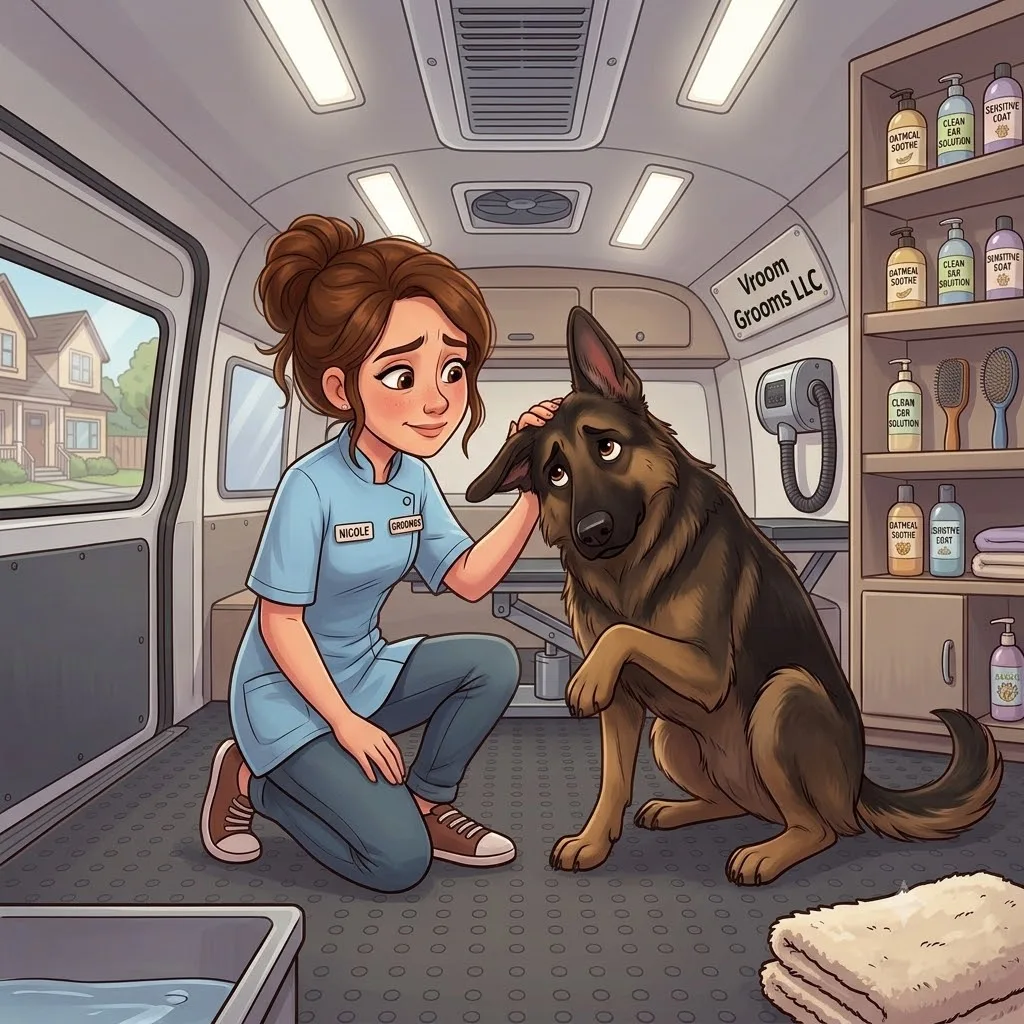
I check ears on every dog that comes in for a Full Groom. I am looking for the early warning signs, and I flag anything I see to the owner. I have sent many dogs to the vet for ear issues that the owner did not know about, and the owner is always grateful it was caught early.
If your dog is prone to ear infections, talk to me about the right ear care routine. Some dogs benefit from ear cleaning at the groom, plus at-home cleaning in between. Some dogs need hair plucked from the ear canal (this is breed-specific and should be done by someone who knows what they are doing). Your groomer and your vet can put together a plan that keeps your dog’s ears healthy.
Stay fresh and furry, Nicole / Vroom Grooms LLC
About the Author
Nicole is the owner and certified groomer behind Vroom Grooms LLC, a mobile dog grooming service serving Northwest Ohio. She has been certified since 2020 after completing 640 hours of hands-on training, and checks ears on every dog in the van. You can catch her live on Twitch at DogGroomerNIcole, where she streams real appointments and points out things she notices about each dog’s ears.
This post was drafted with help from Nagini 🐍, her digital assistant, who keeps the blog running, handles the tech side of the website, and makes sure Nicole spends more time with dogs and less time wrestling with WordPress.