This is the topic that nobody wants to talk about, but every dog owner needs to know about. Anal glands. Yes, we are going there. It is one of the most common reasons dogs end up at the groomer or the vet, and it is one of the most preventable problems if you know what to look for. Let me explain what anal glands are, why they sometimes need help, and how to tell when your dog is having a problem.
What Are Anal Glands
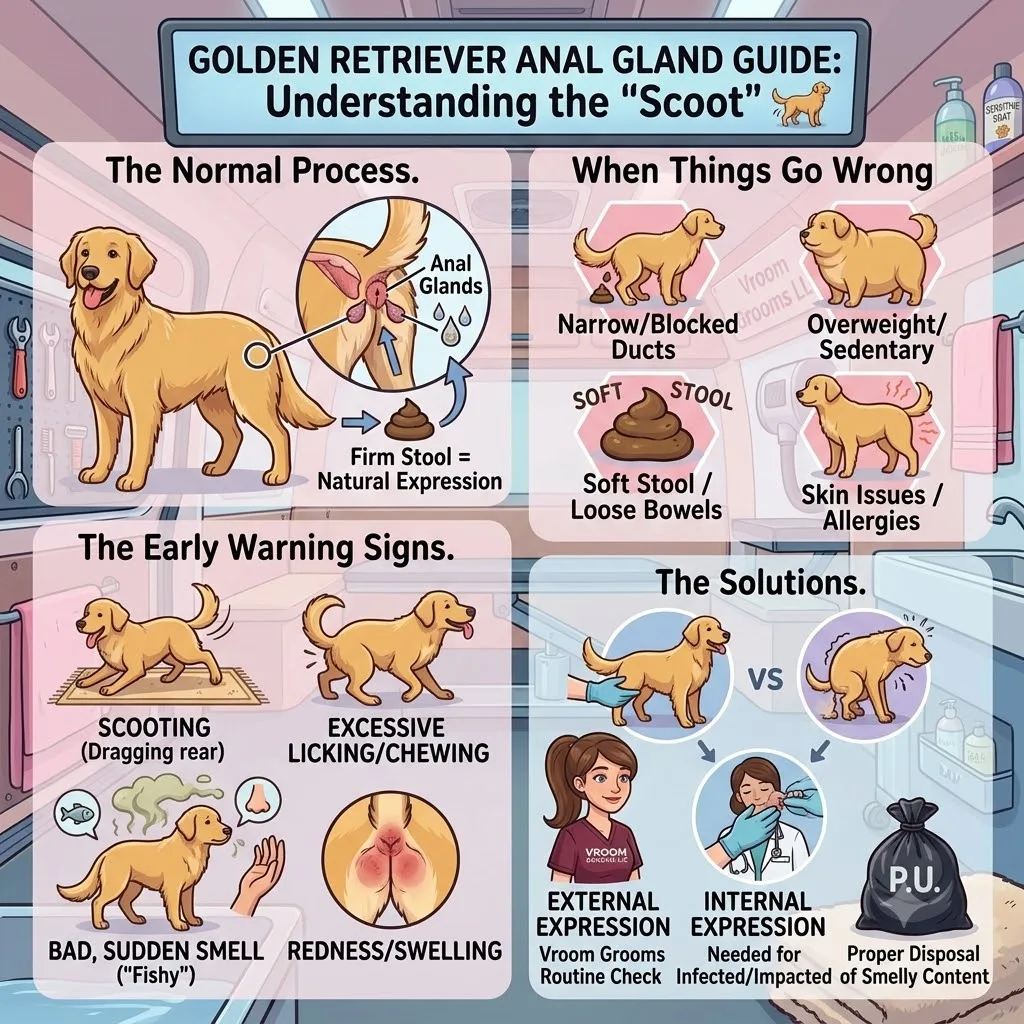
Anal glands (also called anal sacs) are two small pouches located on either side of the dog’s anus, at roughly the 4 o’clock and 8 o’clock positions. They produce a smelly, oily substance that is unique to each dog. In the wild, this substance is used for territorial marking. When a dog poops, the pressure of the stool passing over the glands usually expresses them naturally, leaving a tiny bit of scent on the poop that other dogs can identify.
That is the normal process. The glands fill up gradually, the dog poops, the glands get expressed, the cycle repeats. The dog never knows it is happening, and the owner never knows it is happening, and everyone is happy.
When Things Go Wrong
Sometimes the anal glands do not empty properly on their own. This can happen for several reasons:
– The stool is too soft to put pressure on the glands (often related to diet or digestive issues)
– The gland ducts are too narrow or get blocked
– The gland contents are too thick to flow normally
– The dog is overweight and the glands are in an awkward position
– The dog has chronic skin issues or allergies that affect the anal area
– The dog is sedentary and the muscles around the glands are weak
– The dog has a conformation issue that affects the gland position
When the glands do not empty, they fill up. The dog feels pressure and discomfort. The anal area becomes itchy or painful. The dog starts doing things to try to relieve the discomfort, which is usually the first sign the owner notices.
The Signs Your Dog Needs Help
The classic signs of full or impacted anal glands:
– Scooting. The dog drags their rear end across the floor. This is the most well-known sign, and it is the dog trying to express the glands themselves.
– Excessive licking or chewing at the rear. The dog is trying to relieve the pressure and itching.
– A sudden bad smell. Full anal glands have a distinctive, extremely unpleasant smell. If your dog suddenly smells terrible, check the glands.
– Straining to poop. If the glands are very full, they can put pressure on the rectum and make it hard to pass stool.
– Yelping when pooping. Pain during bowel movements is a sign the glands may be impacted or infected.
– Visible swelling or redness around the anus. The glands can become visibly swollen, especially in short-coated breeds where you can see the area clearly.
– Sitting down abruptly. Some dogs will suddenly sit down hard, as if something bit them. This can be a sign of acute anal gland discomfort.
If your dog is showing any of these signs, the glands probably need to be expressed.
The Expression Itself
There are two main ways to express anal glands, and either can be done on a regular basis or as recommended by your vet:
External expression. The groomer or vet applies pressure to the outside of the glands, pushing the contents out. This is the technique I use in the van at Vroom Grooms, and it works for most dogs whose glands are just full but not impacted. We can help with external expression as part of your dog’s regular grooming schedule.
Internal expression. The vet inserts a gloved finger into the rectum and expresses the glands from the inside. This is more thorough and is necessary for impacted or infected glands. It should be done by a vet or a trained professional.
External expression is part of the Full Groom service at Vroom Grooms. We can help with this on a regular basis if your dog needs it, or as recommended by your vet. If your vet suggests external expression on a schedule that does not line up with your dog’s regular grooming appointments, we can work with you to find a rhythm that keeps your dog comfortable. Some dogs benefit from a more frequent schedule than the standard 4 to 6 week grooming cycle, and we can accommodate that.
A note on our policy: I will not do an external anal gland expression without a recommendation from your vet. The reason is simple: if the glands are not being expressed naturally, there is usually an underlying reason, and expressing them without understanding that reason can cause more issues than it helps. It can push infected material deeper, irritate already-inflamed tissue, or mask a problem that needs medical attention. If your dog is showing signs of anal gland issues, the first step is a vet visit to rule out infection, impaction, or other medical causes. Once your vet has assessed the situation and recommends regular expression, I am happy to help with that as part of your dog’s grooming routine. This is not me being difficult. It is me protecting your dog from a procedure that, done at the wrong time, can do more harm than good.
What About Doing It at Home?
Some dogs need their anal glands expressed on a regular basis, and for those dogs, your vet may recommend doing it at home in between professional grooming or vet visits. If your vet suggests an at-home routine, here is what to know:
– The smell is genuinely terrible, and the fluid can end up on you, the dog, the floor, and the wall. It is not glamorous work, but it is manageable once you get the hang of it.
– If the glands are impacted or infected, you can cause more harm than good by pressing too hard or in the wrong place.
– If you do not express them fully, you can leave material behind that makes the next time worse.
If your vet recommends at-home expression, ask them to show you the technique in person before you try it on your own. They can walk you through it the first time, make sure you are doing it correctly, and tell you the right pressure and positioning for your specific dog. This is a case where the vet’s guidance matters more than anything you read online, because every dog’s anatomy is a little different. Once you have been shown the technique, regular at-home expression is a manageable routine for most owners.
When to See the Vet
See the vet if your dog is showing any of these:
– Visible swelling, redness, or a lump near the anus (could be an abscess)
– Blood or pus coming from the anal area
– Severe pain when the rear is touched
– Scooting or straining that does not resolve after expression
– Repeated issues with full glands (may indicate an underlying problem)
– Any sudden change in your dog’s bathroom habits
Anal gland abscesses are not uncommon, and they need to be treated by a vet. They are painful, they can rupture, and they can lead to serious infection if left untreated.
The Prevention Side
The good news is that many anal gland issues are preventable:
– Feed a high-quality diet with enough fiber to produce firm stools
– Make sure your dog gets regular exercise, which helps the muscles around the glands
– Maintain a healthy weight (overweight dogs are at higher risk)
– Have the glands expressed regularly if your dog tends to have issues
– Address any underlying allergies or digestive issues
– Watch for the early signs and address them before they become problems
The Grooming Connection
I include anal gland expression as part of every Full Groom at Vroom Grooms. Most dogs never need it more often than that, and the routine expression prevents most issues. If your dog needs more frequent expression, or if you have a small dog (Chihuahuas, Toy Poodles, and other small breeds are notorious for anal gland issues), we can adjust the schedule.
If I notice anything concerning while expressing the glands (blood, pus, extreme pain, hard lumps), I flag it to the owner and recommend a vet visit. Better to catch an issue early than to deal with an abscess later.
Stay fresh and furry, Nicole / Vroom Grooms LLC
About the Author
Nicole is the owner and certified groomer behind Vroom Grooms LLC, a mobile dog grooming service serving Northwest Ohio. She has been certified since 2020 after completing 640 hours of hands-on training, and includes anal gland expression as part of every Full Groom. You can catch her live on Twitch at DogGroomerNIcole, where she streams real appointments and talks about the practical parts of dog care that nobody else covers.
This post was drafted with help from Nagini 🐍, her digital assistant, who keeps the blog running, handles the tech side of the website, and makes sure Nicole spends more time with dogs and less time wrestling with WordPress.