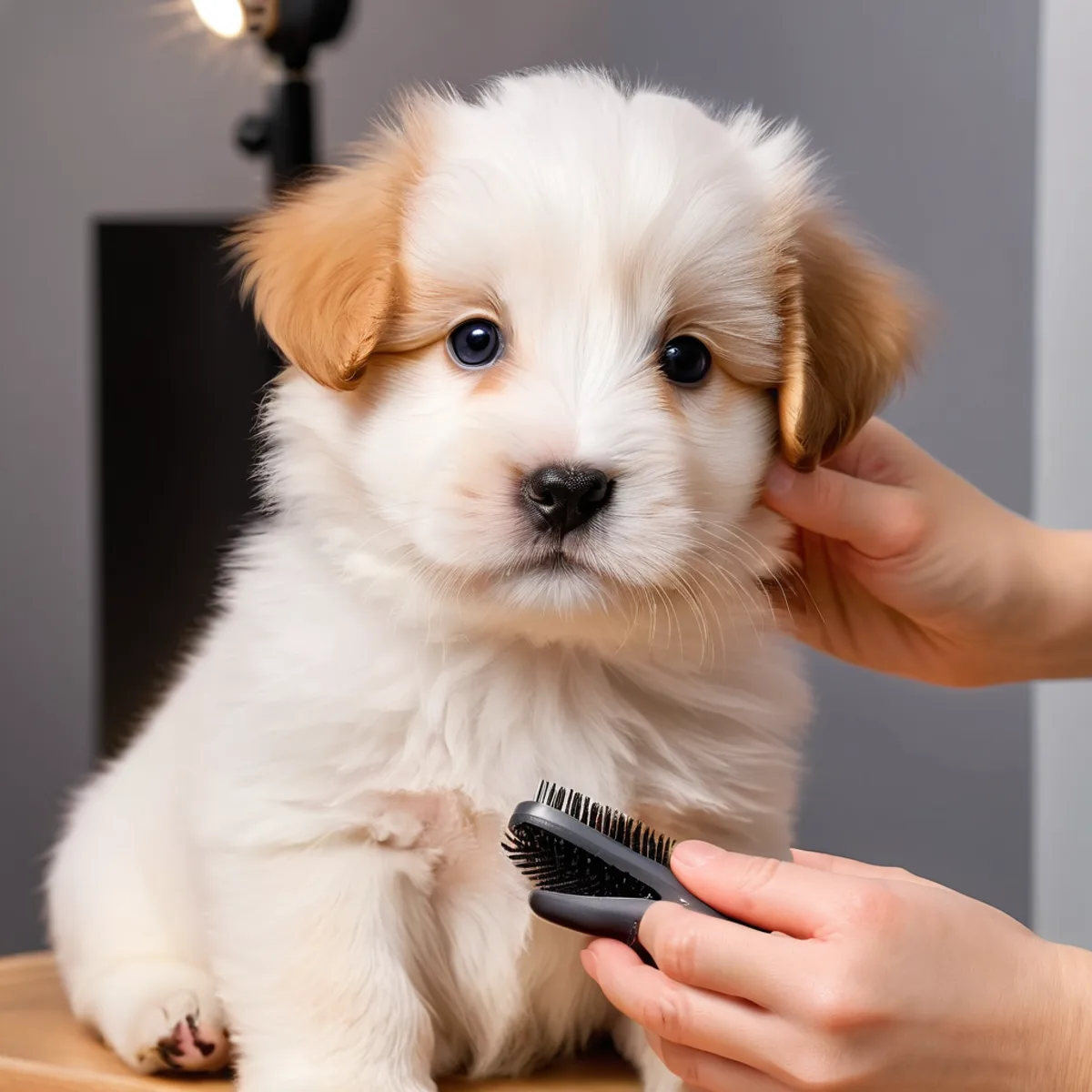
Bringing a new puppy home is exciting. There is so much to think about: vaccinations, food, crate training, potty training, socialization. Grooming is often at the bottom of the list, and then suddenly the puppy is 6 months old and desperately needs a groom, and nobody has touched their paws or their ears or their tail, and the first groom turns into a wrestling match that sets everyone back.
Here is how to set your puppy (or your newly adopted adult dog) up for a successful first groom, starting from day one.
The Three Habits to Build at Home
The work that makes a first groom easy happens at home, in the days and weeks before the appointment. There are three habits to build: touch, sound, and short sessions.
Touch. Every day, handle your dog’s paws, ears, tail, and tummy. Pick up each paw, look at the nails, press gently on the pads. Lift the ear flaps, look inside, rub the base of the ears. Run your hands over the body, the tail, the rear, the belly. Pair every touch with a small treat. You are teaching the dog that being handled is a good thing, and that people touching sensitive areas is not a threat.
Sound. Grooming involves sounds dogs do not hear in everyday life. Hair dryers. Clippers. Water running from a shower head or a sprayer. The hum of a high-velocity dryer. Introduce these sounds gradually, at low volume, paired with treats. You do not need a professional dryer. A hair dryer on its lowest setting, across the room, is a good start. A clipper running on a towel nearby is another good start. The goal is not to make the dog comfortable with the sounds right away. The goal is to make the sounds familiar so they are not a big event when the dog hears them for real.
Short sessions. Two minutes of paw handling today is worth more than a 15-minute wrestling match once a week. Keep the at-home sessions short, positive, and frequent. End on a good note, before the dog gets tired or fussy. You are building a habit, not training for a marathon.
When to Schedule the First Groom
The short answer is: earlier than you think. Most puppies are ready for a brief “first groom” experience around 10 to 12 weeks, after their first or second round of vaccinations. This is not a full groom. It is a “get to know the groomer” visit. A quick brush, a gentle bath, a light blow dry, a paw touch, an ear check. Fifteen to thirty minutes, max. The goal is exposure, not transformation.
If your puppy is older and has never been groomed, that is okay. You can start the at-home work now and schedule the first groom when you have done enough preparation to make it a positive experience. There is no deadline, but the longer you wait, the more work it is.
What to Tell the Groomer
Communication is the single most important part of a successful first groom. Before the appointment, tell your groomer:
– Your dog’s age and breed (or best guess if adopted)
– Any health issues, allergies, or medications
– Any behavioral quirks (reactive to other dogs, anxious in the car, hates having paws touched)
– What you have been working on at home
– What your expectations are (a full groom? Just a bath and brush? Introduction only?)
– What you want the finished result to look like
If you have been doing the at-home work, tell the groomer what your dog is comfortable with. If your dog lets you handle their paws but not their ears, the groomer needs to know that. The more information you can give, the better the groomer can tailor the appointment to your dog.
The Day of the Appointment
On the day of the appointment:
– Take your dog out to potty right before the groomer arrives
– Have the dog on a leash or in a small area so they are not bouncing off the walls when the van pulls up
– Keep your own energy calm. Dogs read their owners. If you are nervous, the dog is nervous.
– If your puppy has had any recent vaccines, the 48-hour wait rule applies. Plan the first groom accordingly.
– Have treats available. Your groomer will likely have their own, but a few high-value treats from home can help.
When the groomer arrives, let the groomer take the lead. We know how to approach a new dog. We know how to read body language. We know how to start slow. The best thing you can do is hand off the dog calmly and let us work.
What to Expect From the First Visit
A good first groom visit is more about exposure than results. We are not going to get a perfect poodle clip on a 12-week-old Labradoodle. We are going to do what the dog can handle, build positive associations, and set the stage for the next visit.
For a young puppy, the first visit might be:
– A brief meet-and-greet
– A short brush
– A quick paw and ear touch
– Maybe a bath and blow dry if the puppy is calm
– A treat and a “good job”
That is a success. The puppy walked away thinking “that was not so bad.” The next visit, we add a little more. The visit after that, a little more. Over time, the dog learns to tolerate (and many dogs learn to enjoy) the full grooming process.
What If the First Groom Does Not Go Well
Sometimes, despite the best preparation, the first groom does not go as planned. The puppy is overwhelmed, the adult dog is reactive, something happens that sets everyone back. It happens. Do not give up.
If the first groom does not go well, talk to your groomer about it. A good groomer will be honest about what happened, what they would do differently next time, and how to get the dog back on track. Sometimes the answer is a shorter, more frequent visit schedule. Sometimes the answer is more at-home desensitization work. Sometimes the answer is medication from the vet to help the dog relax.
The goal is a dog that is comfortable being groomed for life, not a perfect first visit. Be patient, be consistent, and trust the process.
The Grooming Connection
I love first groom visits. They are my favorite appointments, honestly. I get to meet a new dog, see their personality, and set the stage for years of positive grooming experiences. The dogs that come in for a brief introduction at 12 weeks are the dogs that hop into the van at 5 years old like they own the place. That is the goal. That is the win.
If you have a new puppy or a newly adopted dog and you want to set them up for grooming success, reach out. I am happy to talk through the timing, the expectations, and how to prepare at home.
Stay fresh and furry, Nicole / Vroom Grooms LLC
About the Author
Nicole is the owner and certified groomer behind Vroom Grooms LLC, a mobile dog grooming service serving Northwest Ohio. She has been certified since 2020 after completing 640 hours of hands-on training, and works with a lot of puppies and newly adopted dogs in their first-groom visits. You can catch her live on Twitch at DogGroomerNIcole, where she streams real appointments and shows how she approaches a new dog.
This post was drafted with help from Nagini 🐍, her digital assistant, who keeps the blog running, handles the tech side of the website, and makes sure Nicole spends more time with dogs and less time wrestling with WordPress.