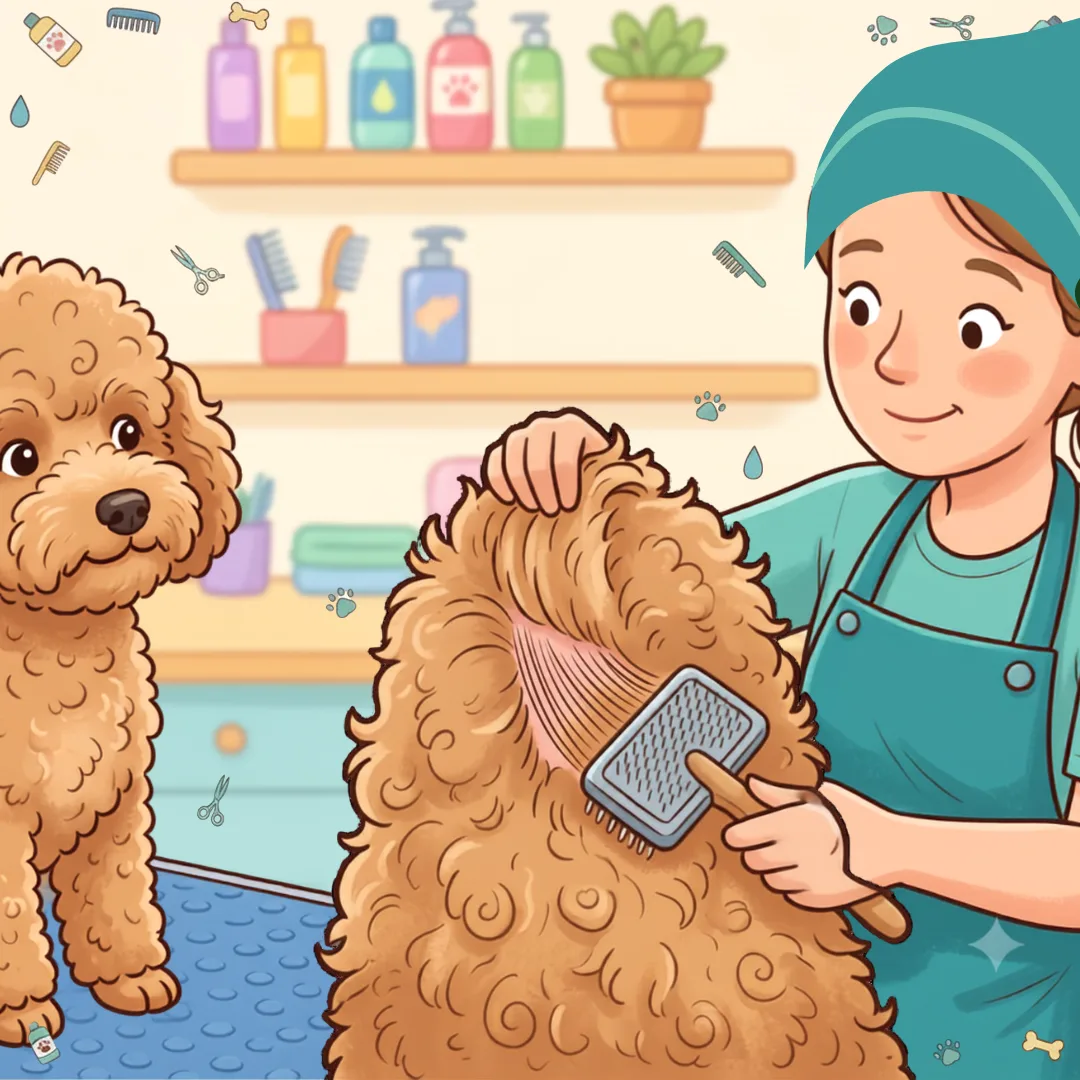
Matting is the single most common preventable problem I see in the van. It is also one of the most painful, one of the most expensive to fix, and one of the easiest to prevent. If you have a long, curly, or fine-coated dog, you need to understand matting, because at some point, you are going to deal with it. Let me walk you through what matting is, how it happens, why it matters, and what to do about it.
What Is Matting
A mat is a tangled clump of hair that has fused together into a solid mass. It is not just a tangle you can brush out. It is hair on hair on hair, packed together so tightly that it forms a felt-like sheet. Mats can be small (the size of a pea) or large (covering entire sections of the dog). They can be loose (just starting) or tight (welded to the skin).
Mats form when loose hair gets trapped in the coat and is not removed. Every dog sheds a little every day. That loose hair needs to come out, either through brushing or through natural shedding. If it does not come out, it gets caught in the surrounding coat, tangles, and starts the matting process. Once a small tangle forms, it catches more hair, gets bigger, and gets tighter. Over time, what started as a small tangle becomes a solid mat.
Why Mats Are a Problem
Mats are not just a cosmetic issue. They are a health and welfare issue. Here is why:
– They pull on the skin. A tight mat is constantly pulling on the skin underneath it. The skin gets irritated, inflamed, and sore. Dogs with extensive matting are in chronic low-grade pain.
– They trap moisture and bacteria. The warm, moist environment under a mat is a perfect breeding ground for bacteria and yeast. Skin infections under mats are common and painful.
– They hide skin problems. Mats cover the skin, so you cannot see hot spots, cuts, lumps, parasites, or other issues until the mat is removed. By then, the underlying problem has often gotten worse.
– They restrict movement. Severe matting can restrict the dog’s movement, especially when the mats are under the legs, behind the elbows, or around the rear. The dog cannot walk normally.
– They can cause skin tearing. A mat that has grown close to the skin can actually tear the skin when it is removed, especially if the dog is being brushed and the mat is being pulled. This is why mats need to be cut off, not brushed out.
– They affect temperature regulation. A matted coat cannot insulate or cool properly. Dogs with severe matting are at higher risk for both heat stroke and hypothermia.
Where Mats Form First
Mats do not form randomly. They form in specific high-friction areas:
– Behind the ears. The ear flap rubs against the head, creating friction.
– Under the armpits. The leg moves against the body constantly.
– In the “armpits” of the front legs. Same reason.
– On the pants (back legs and rear). The dog sits on this area, and it rubs against everything.
– Between the back legs. Friction from walking.
– On the chest and ruff. The dog’s collar or harness creates friction here.
– Between the toes. Hair between the paw pads can mat and form painful clumps.
– Under the tail. Friction from the tail and from sitting.
Check these areas first when you are brushing your dog. They are the warning zones.
The Breeds at Highest Risk
Any dog with a continuously growing, fine, or curly coat is at high risk for matting. The breeds I see with the most matting issues:
– Doodles (Goldendoodles, Labradoodles, Bernedoodles, etc.)
– Poodles and Poodle mixes
– Bichon Frises
– Shih Tzus
– Maltese
– Yorkshire Terriers
– Havanese
– Afghan Hounds
– Lhasa Apsos
– Coton de Tulear
– Old English Sheepdogs
– Bearded Collies
– Soft Coated Wheaten Terriers
Double-coated breeds and short-coated breeds are at lower risk, but they can still mat in the high-friction areas, especially behind the ears and in the pants.
How to Prevent Matting
The good news is that matting is almost entirely preventable. The key is regular brushing:
– Daily brushing is ideal for high-risk breeds
– Every other day is the minimum for most long, curly, or fine coats
– Weekly is enough for lower-risk coats
– Use the right tools (see the brushing post for details)
– Brush all the way to the skin, not just the top layer
– Pay extra attention to the high-friction areas
– Comb through after brushing to catch tangles the brush missed
A 5-minute daily brush is worth hours of de-matting work at the groomer. This is one of the most important things you can do for your long-coated dog.
How to Handle Mats at Home
If you catch a mat early (small, soft, just starting to form), you may be able to work it out with your fingers or a detangling spray. Hold the hair at the base of the mat (close to the skin) to avoid pulling, and gently tease the mat apart from the tip toward the base. Work slowly, in small sections, and stop if the dog is in pain.
If the mat is tight, large, or close to the skin, do not try to brush it out. You will hurt the dog, and you may damage the skin. Leave it for the groomer. We have the tools (mat splitters, clipper blades) to remove mats safely and with minimal discomfort.
The Cost of Matting
This is the part nobody wants to talk about. If a dog comes in severely matted, the groom takes longer, the work is harder, and the cost goes up. In some cases, severe matting requires the dog to be shaved down to the skin, which may not be the look the owner wanted. In rare cases, severe matting requires sedation at the vet to remove safely.
The math: a regular full groom every 6 weeks at a standard rate, versus a severe de-matting groom that takes 3 hours and costs 2 to 3 times the standard rate. The regular groom is cheaper, easier on the dog, and results in a better look. Every time.
The Bottom Line
Matting is preventable. Daily brushing, the right tools, and attention to the high-friction areas will keep your dog mat-free and comfortable. If you are not sure whether you are brushing effectively, ask your groomer to show you the right technique. We would much rather spend 5 minutes teaching you to brush than 3 hours de-matting your dog.
Stay fresh and furry, Nicole / Vroom Grooms LLC
About the Author
Nicole is the owner and certified groomer behind Vroom Grooms LLC, a mobile dog grooming service serving Northwest Ohio. She has been certified since 2020 after completing 640 hours of hands-on training, and deals with matting on a regular basis. You can catch her live on Twitch at DogGroomerNIcole, where she streams real appointments and shows how she handles matted coats.
This post was drafted with help from Nagini 🐍, her digital assistant, who keeps the blog running, handles the tech side of the website, and makes sure Nicole spends more time with dogs and less time wrestling with WordPress.