Callie is a dog I look forward to seeing on my route. She is an Australian Shepherd and Lab mix, which means she has the smarts of one breed and the heart of the other, all wrapped up in a marbled coat that genuinely does not look real the first time you see it.
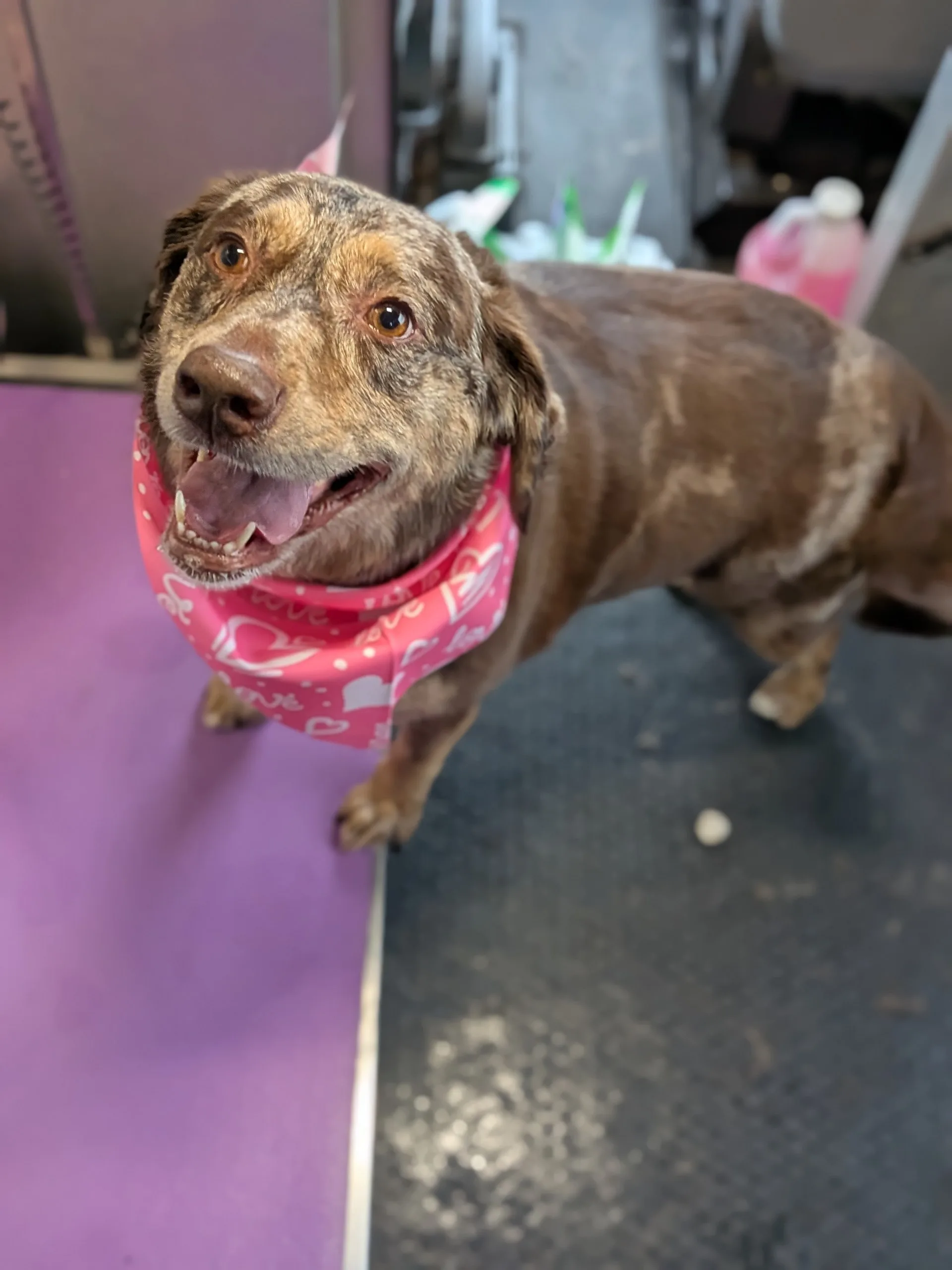
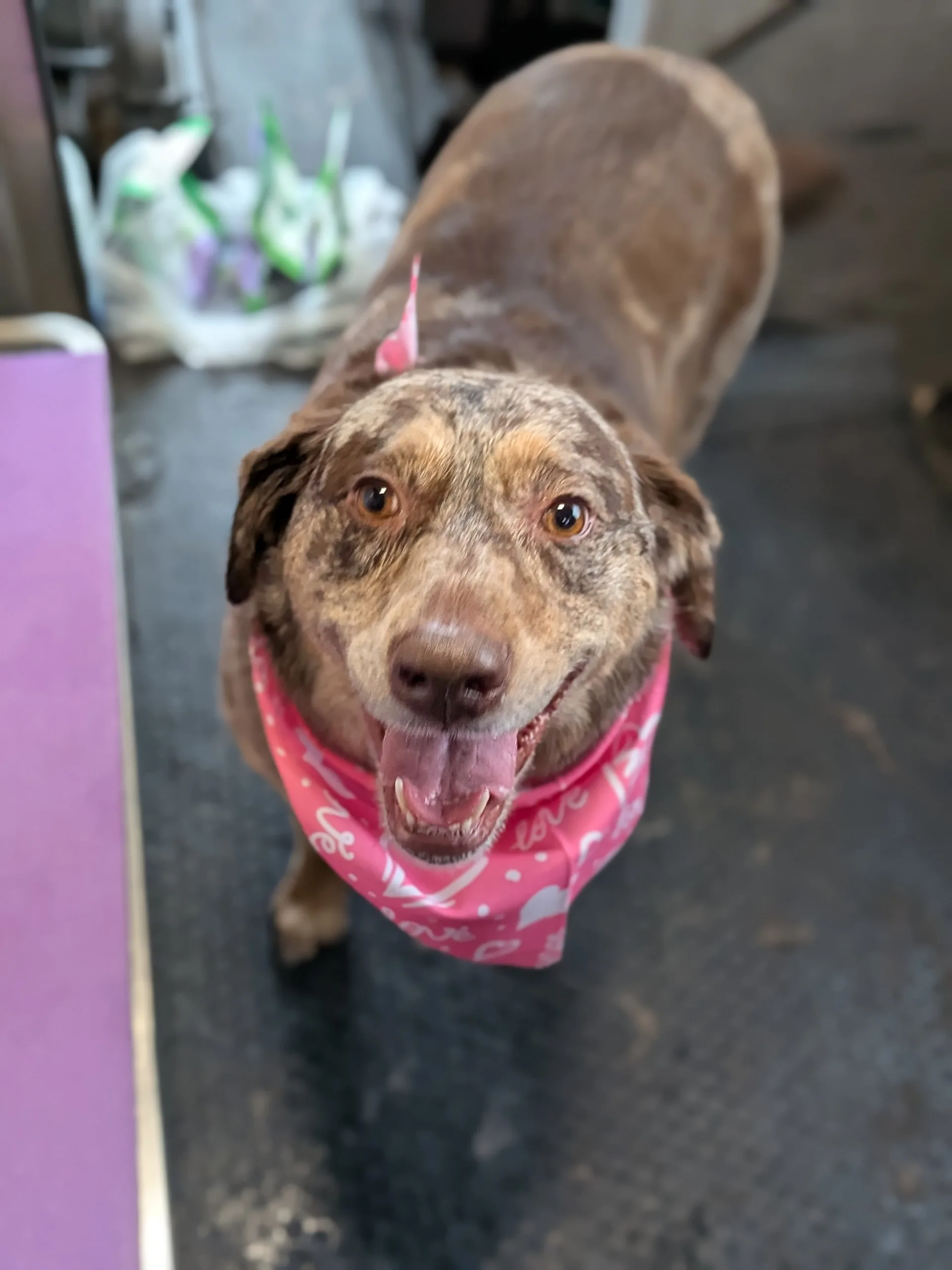
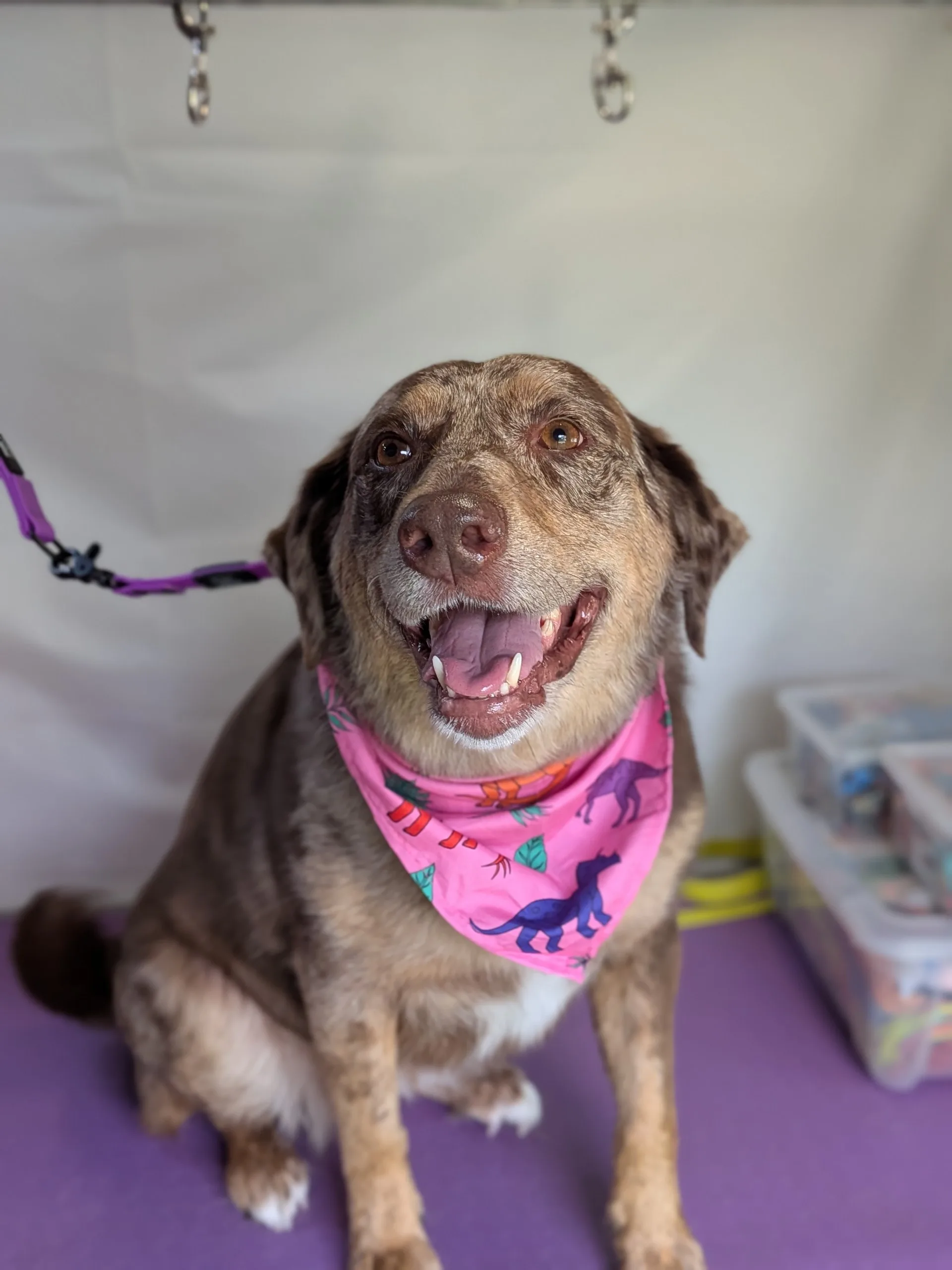
The marbling on Callie’s coat is one of those things where you can stare at it for a while and still find new patterns. It runs through her whole body in soft, irregular patches of brown, tan, and cream. When she is wet, the colors deepen. When she is dry and freshly groomed, they pop. Either way, every time I take her out of the van, the marbling is the first thing I see.
What I Love About Callie
Callie is one of those dogs who is easy to have in the van. She is calm on the table. She is cooperative in the tub. She does not fuss at the dryer. She lets me do my work and then she leans against me for a minute before hopping out.
That is not the whole story with her, of course. She has plenty of energy when she is home. But on the grooming table she is a working professional. I appreciate that.
Grooming Notes for Marbled Coats
Marbled coats are beautiful and they do not need any special handling beyond what I would do for any dog with a similar coat type and length. The pattern itself is just a color variation. What matters for the groom is the coat length and texture underneath, not the marbling.
For a short coated Lab type dog like Callie, that means a bath, a blow out on a lower dryer setting, a thorough brush out, and a trim on the paw pads. That is it. Short coats do not get haircuts. The coat is left at its natural length. A good brush out is what brings out the marbling, not a clipper.
When to Schedule Your Next Appointment
I get asked this all the time, and the honest answer is that every dog needs to be on a rotation. The question is just which one.
Most of the dogs I see fall into one of three schedules. Every four weeks for dogs that get dirty fast, hold onto a lot of debris, or are in the middle of a heavy shed. Every six weeks for the average family dog, which is the most common rotation I book. Every eight weeks for dogs that are easy keepers at home, whose families are keeping up with brushing between visits, and who do not get into things they should not get into.
The right rotation depends on the coat, the lifestyle, and what is going on with the dog that month. A Lab type dog like Callie who has been out rolling in the yard all week is going to need a bath sooner than a Lab type dog who has been hanging out on the couch. A dog with a thicker double coat or a curly coat is usually on a four or six week rotation because matting sets in faster and the coat holds onto dirt and odor. A dog whose family brushes them every few days at home can stretch to eight weeks.
What every dog can use is a nail trim every two weeks. Nails grow back fast, and keeping them short prevents the toes from splaying, prevents the quick from growing too long, and keeps the dog comfortable on hard floors. A quick file or grind between grooms is a great habit.
Since I am a mobile groomer, you do not have to drive anywhere or drop your dog off. You schedule me to come to your driveway. Most families book the next appointment while I am still there, and we work out the right rotation together based on how the last groom held up.
What an Appointment With Callie Looks Like
I pull up in the van and meet Callie’s family outside for the hand off. Callie hops up the step into the van on her own. She picks a spot, she settles, and she lets me work.
Bath first, then a blow out with the high velocity dryer on a lower setting. A short Lab type coat does not take long to dry. Then the brush out, and a trim on the paw pads. That is it. Short coated Lab type dogs do not get haircuts. The coat is left natural length. The marbling is the whole point and shaving or clipping would hide it.
When she is done I put a bandana on her. Vroom Grooms supplies the bandanas, and we always have a fun one picked out. She comes out wearing it, gets a few pets, and trots over to her family like she owns the place.
Why I Genuinely Like Grooming Marbled Coats
Marbled coats are a treat to groom. Every dog with a marbled pattern is a little different. The patches land in different places, the contrast is different, and the way the colors shift in the light is different from one dog to the next. I never get bored of seeing it.
Callie’s marbling is especially striking. When she is dry and her coat is brushed out and she turns her head at the right angle in the afternoon light, the pattern looks like someone painted it on. It is the kind of detail that keeps the work interesting.
A Note on Merle Dogs
Merle is a striking coat pattern and it has become popular. If you are considering a merle puppy, please work with a breeder who is doing genetic testing. Two merle parents can produce double-merle puppies with serious health issues. A good breeder will not breed merle to merle.
Most merle dogs, like Callie, are perfectly healthy and live normal lives. They just need a little extra attention to their skin and eyes.
Watch on the Live Stream
I stream most of my grooms on Twitch at DogGroomerNicole. If you want to see Callie’s coat up close in real time, she has been on the stream. The marbling looks even better on camera.
Real grooming, real dogs, real community.
About the Author
Nicole is the owner and certified groomer behind Vroom Grooms LLC, a mobile dog grooming service serving Northwest Ohio. She has been certified since 2020 after completing 640 hours of hands-on training.
This post was drafted with help from Nagini 🐍, her digital assistant, who keeps the blog running, handles the tech side of the website, and makes sure Nicole spends more time with dogs and less time wrestling with WordPress.