A tail is not decoration, and it is not merely a mood meter. It is the end of the spine doing at least three jobs at once.
It Starts as the Spine
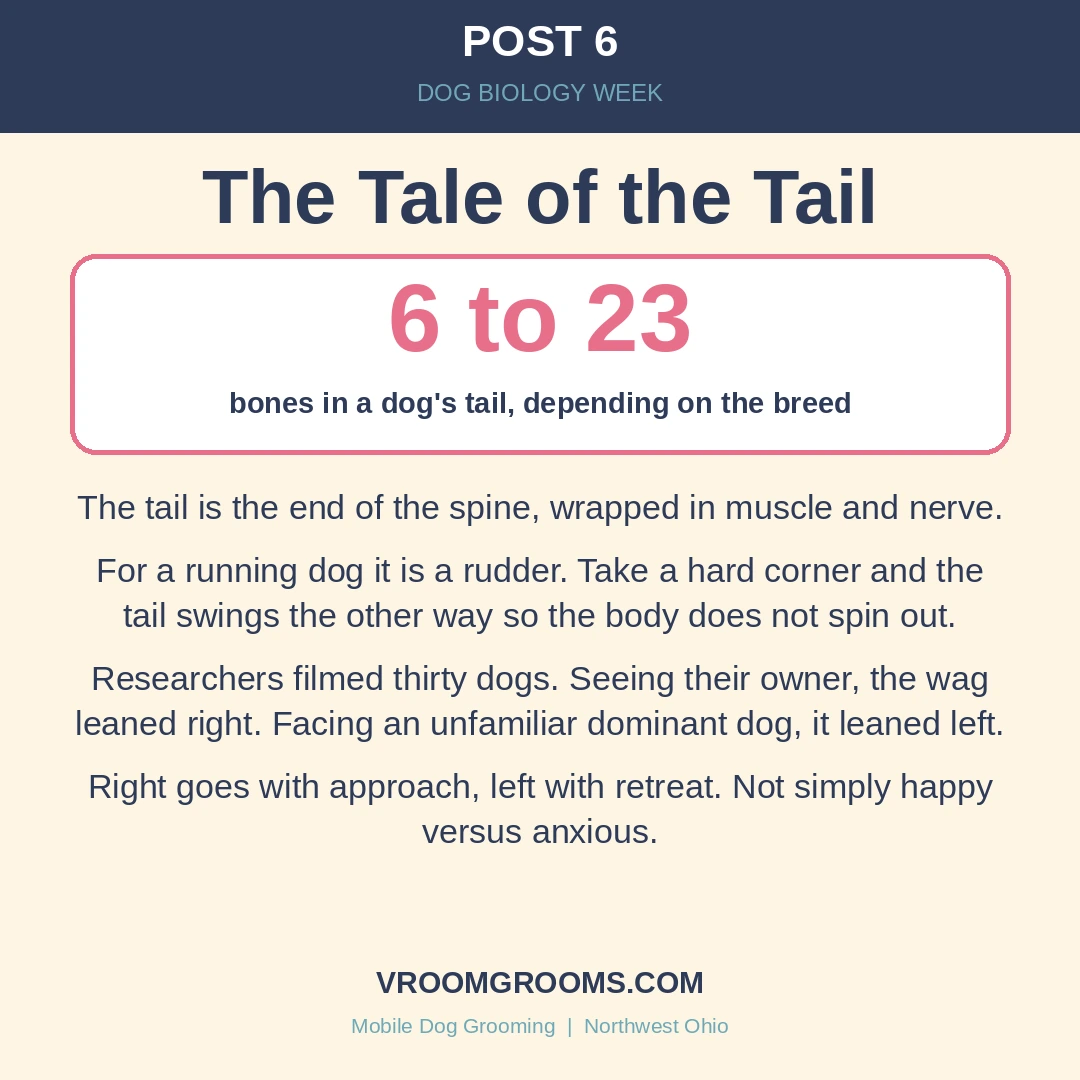
A dog’s tail is the back end of the vertebral column, made up of anywhere from six to twenty-three small bones depending on the breed, wrapped in muscle and nerve.
Because it is an extension of the spine, injuries to the tail are not cosmetic. A dog who stops wagging entirely, or holds the tail stiff and low, is telling you something worth paying attention to.
A Rudder at Speed
For a running or working dog, the tail acts as a counterweight. Take a hard corner at full speed and the tail swings in the opposite direction to keep the body from spinning out. Watch a dog sprinting a tight circle and you can see it happening in real time.
The Direction of the Wag Is Not Just Happy Versus Anxious
Researchers filmed thirty dogs looking at different things and measured which side the wag leaned toward. Seeing their owner, an unfamiliar person, or a cat, the tail swung further to the right. Left alone, or facing an unfamiliar dominant dog, it swung further to the left.
The cleanest reading is not happy versus anxious. It is approach versus withdrawal — the dog leaning toward something, or away from it. That fits the data better than the simple version, because the left bias also showed up when dogs were tested completely alone with no stimulus at all.
What This Means in My Van
I read tails all day long. It is one of the most useful skills a pet parent can build, and it costs nothing to learn.
A loose, full-body wag is a dog who is comfortable. A stiff, high flag is a dog who is not. And a tail that stops moving altogether is worth noticing. That reading tells me when to slow down, when to offer a break, and when a dog is telling me they have had enough.
Learning that language is the difference between handling a dog and working with one. 🐕🦺
Last in the series: the collarbone your dog does not really have, and why it matters for their harness.
About the Author
Nicole is the owner and certified groomer behind Vroom Grooms LLC, a mobile dog grooming service serving Northwest Ohio. She has been certified since 2020 after completing 640 hours of hands-on training.
This post was drafted with help from Nagini 🐍, her digital assistant, who keeps the blog running, handles the tech side of the website, and makes sure Nicole spends more time with dogs and less time wrestling with WordPress.
Sources