People bring me a matted dog all the time and say the same thing: “I tried to brush it out, I just could not get it.” I believe them. The problem is not their technique. The problem is that they were given bad instructions by every video that says you can brush a mat out if you are patient enough.
A Mat Is Not a Tangle
A tangle is hair wrapped around itself. A mat is different. A mat is felted: the hair has interlocked into a dense, solid mass that is anchored to the skin underneath.
Once fiber felts, there is no path through it. You cannot separate felted hair with a brush because the fibers are not wrapped, they are locked. Brushing a mat does not open it up. It breaks hair, and it pulls on the skin the mat is sitting on.
Why Brushing a Mat Hurts
That is the part people do not see. When you drag a brush or comb through a mat, the mat does not move freely. It is attached to skin, and skin does not stretch.
I have seen dogs come in with bruising under a mat, and I have seen the skin around a tight mat get raw and inflamed. A dog that screams when you touch a mat is not being dramatic. That hurts.
This is also why I will not sit there and fight a mat for an hour to save the coat. The coat is not worth hurting your dog over.
How Mats Form in the First Place
Mats are made of three things: dead coat that has not been removed, friction, and moisture.
Dead coat is the raw material. Every dog sheds or blows coat, and if it stays in the coat it starts to interlock. Friction is the trigger, and it comes from collars, harnesses, the ground, and the dog’s own movement. Moisture is the accelerant, and it is why the spots that mat first are usually the armpits, behind the ears, the groin, and under the collar: those are the places that stay damp.
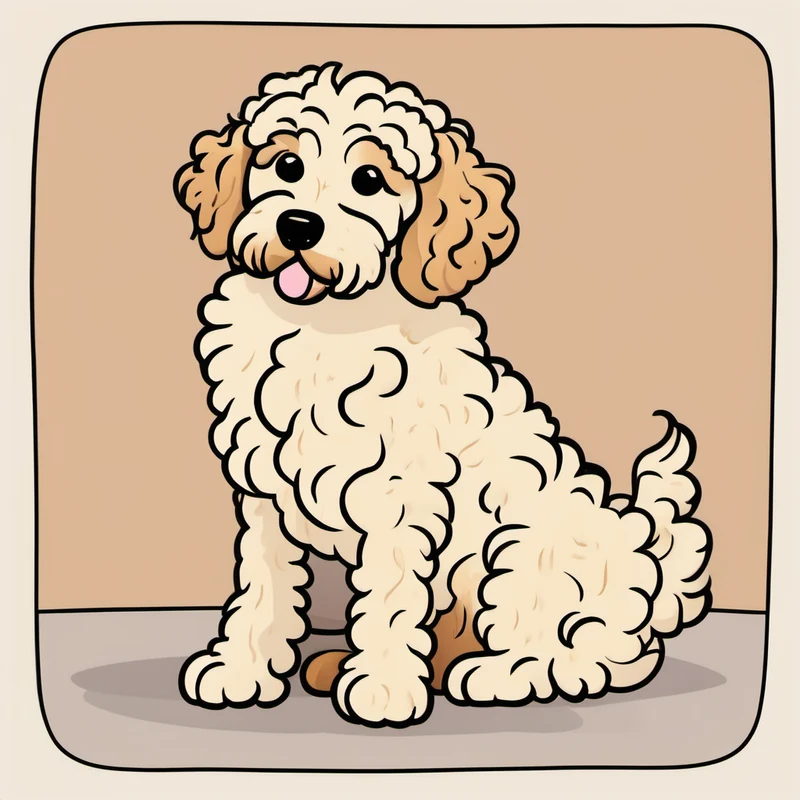
Short-coated dogs rarely mat badly. Long, fine, dense, or curly coats mat readily. Doodle crosses and anything with a poodle-type coat are in a different category entirely.
What Actually Works
Prevention, and then honesty.
For prevention: brush down to the skin, in sections, not across the top of the coat. A metal comb is your test. If the comb glides through, you are clear. If it catches anywhere, there is a mat forming there and you found it early, which is the only moment it is genuinely easy to deal with.
For a mat that already exists: conditioner and water can loosen a light one. A heavy one, especially one sitting tight against skin, cannot be saved. In that case the honest answer is a shave, and I will tell you that plainly rather than sell you an hour of a dog in pain.
My rule is simple. Humanity over vanity. A short, healthy, comfortable dog beats a beautiful coat on a dog that is miserable. ✂️
About the Author
Nicole is the owner and certified groomer behind Vroom Grooms LLC, a mobile dog grooming service serving Northwest Ohio. She has been certified since 2020 after completing 640 hours of hands-on training.
This post was drafted with help from Nagini 🐍, her digital assistant, who keeps the blog running, handles the tech side of the website, and makes sure Nicole spends more time with dogs and less time wrestling with WordPress.
Sources