Every October I tell clients the same thing, and every January somebody texts me a photo of a mat the size of a walnut and asks where it came from. The answer is almost always the same: it came from winter, and it started in November when the coat was still fine.
Winter is the hardest season on a coat, and it has nothing to do with the cold. It is the wet.
Why Winter Knots Coats
Three things happen at once, and they compound.
Wet and dry cycles. A dog goes out into snow, the coat gets damp, then they come inside where the heat is on and it dries. Then out again. Then in again. Each wet-dry cycle tightens the coat slightly. Hair that gets wet and dries repeatedly under friction will felt, and felting is the point at which brushing stops being able to fix it.
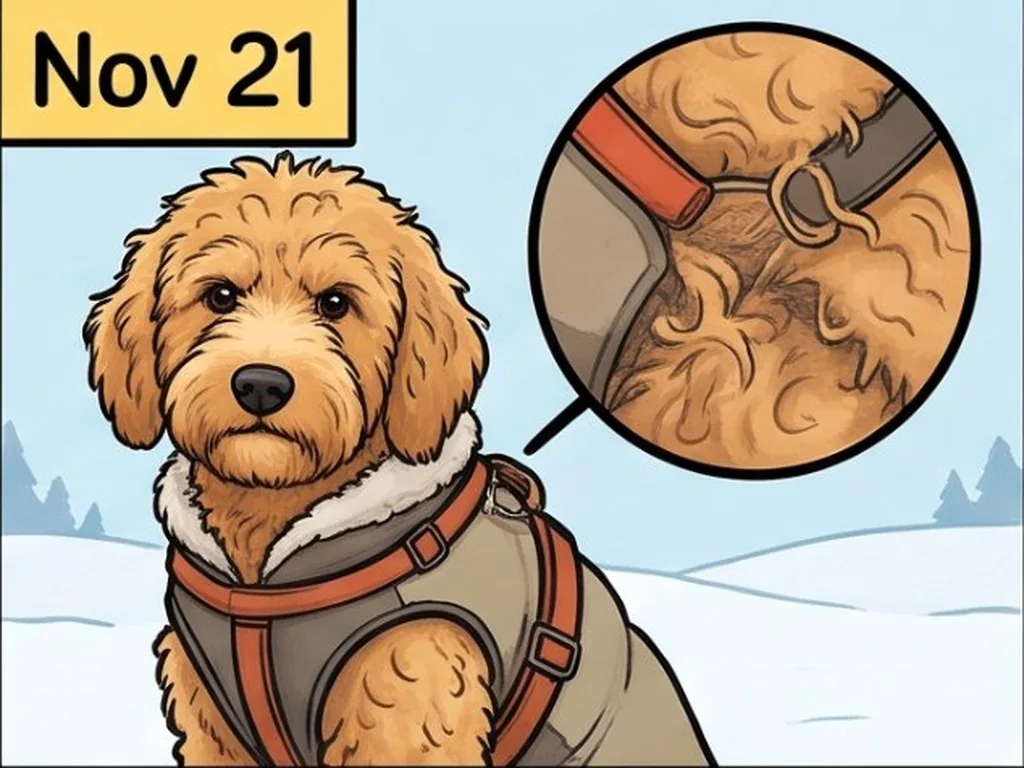
Friction from gear. This is the one people never think about. A harness strap sitting across the chest, a coat with a belly band, a collar that never comes off — all of those rub the same patch of hair hundreds of times a week. Friction plus moisture is how wool becomes felt. Your dog is not a sheep, but the mechanism is the same one.
Indoor heat and static. Dry indoor air makes the coat brittle and full of static, which makes the hair rough up and catch on itself rather than lying flat. A coat that would normally slide past itself starts grabbing.
Put those together and you get the worst matting pattern of the year, in exactly the places nobody looks.
Where They Hide
Behind the ears. Always first. The hair there is finer, it is constantly moving against the ear leather, and it is the spot people brush the least because the dog objects.
Under the harness. Every point of contact. Chest, under the front legs, and the strap line across the back. If your dog wears a harness every day, those spots need attention or they will mat, every single winter.
The armpits and the groin. High friction, thin skin, and the places a dog will not let you near without a negotiation. Mats form here fast and they hurt when the leg moves.
Under the collar. A collar that never comes off creates a ring of felted hair at the neck. I find this on almost every dog that wears one 24/7.
The tail base and the britches. Longer hair, more movement, and everything that comes off the back end lands there.
None of these are visible from across the room. A coat can look perfectly smooth on top and be matted underneath, and by the time it is visible on the surface, it has been building for weeks.
The Mistake Nearly Everyone Makes
The instinct, when you find a mat, is to brush harder. Work at it. Get it out.
Do not do that. A mat is not tangled hair sitting on top of the skin. It is felted hair pulled tight against the skin, and brushing at it from the outside drives it tighter and pulls on the skin underneath. Dogs who are otherwise calm will snap at a mat being yanked, and they are right to. It hurts.
The other instinct is to wash the dog, thinking a bath will loosen it. It does the opposite. Water tightens a mat. A bath on a matted coat takes a knot and turns it into a felted brick, and then it dries against the skin where it stays damp and starts to irritate.
If you find a mat, the honest answer is that it gets cut out or shaved out. That is the Humanity over Vanity part of this job, and it is the part I explain to people most often. I would rather have a dog with a short patch than a dog in pain for two hours while I pretend to save a centimetre of coat.
What Actually Prevents It
Brush the areas that matter, not the areas that look nice. The back is easy and it is also the part that never mats. Behind the ears, under the harness, the armpits, the collar line, and the britches are the parts that need doing.
Use a comb, not just a brush. A slicker brush will glide over the top of a coat and leave a mat untouched underneath it. A metal comb will stop dead at a knot, which is how you find out it is there. If the comb will not pass through, the coat is not done, no matter how good it looks.
Take the harness and collar off when the dog is in for the evening. Not forever — just long enough for the hair underneath to be brushed and to dry properly. That single habit prevents most of the matting I see.
Dry the dog properly when they come in wet. Not just a towel over the top. Get the undercoat dry, especially behind the ears and under the harness. A dog that goes to bed damp is a dog that wakes up with tighter knots.
And book the winter groom a little earlier than you think you need it. The coat that is manageable in early December is a shave-down in mid-January. It is the same coat and the same dog. The only difference is six weeks.
The Wrap
Winter mats are made of wet, friction, and time. Dry the coat properly, take the gear off, comb the places that actually mat instead of the places that look nice, and none of this happens. Skip those three things and it will, every year, in the same spots.
A mat is much easier to prevent than it is to remove. That is the whole post, really. 🧣
About the Author
Nicole is the owner and certified groomer behind Vroom Grooms LLC, a mobile dog grooming service serving Northwest Ohio. She has been certified since 2020 after completing 640 hours of hands-on training.
This post was drafted with help from Nagini 🐍, her digital assistant, who keeps the blog running, handles the tech side of the website, and makes sure Nicole spends more time with dogs and less time wrestling with WordPress.
Sources