I clean teeth or apply dental spray on every full groom. What I cannot do is brush your dog’s teeth for them, and that is the only thing that actually changes the trajectory of dental disease.
Here is the uncomfortable part: by the time most owners notice a problem, the issue has been developing for years. Bad breath is not the beginning. Bad breath is usually several years in.
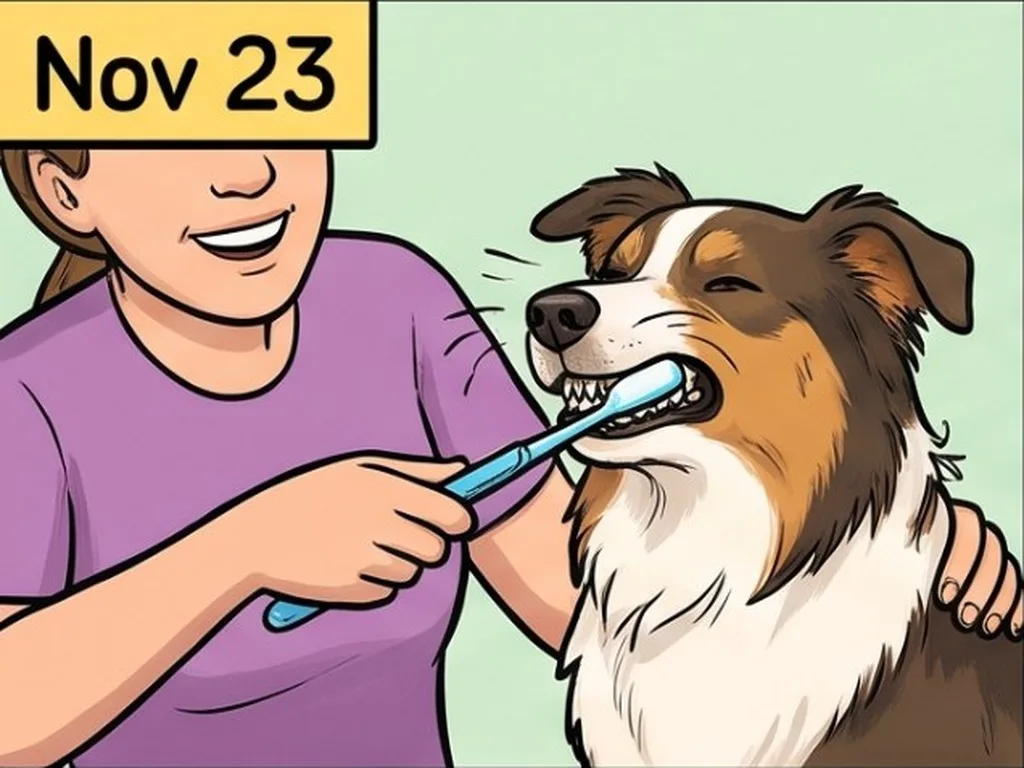
What Actually Happens in a Dog’s Mouth
Food, saliva, and bacteria form a soft film on the tooth — plaque — within about a day. Plaque is removable. Brushing removes it.
If plaque is not removed, minerals in saliva harden it into tartar within a few days. Tartar is mineralised and bonded to the tooth. You cannot brush tartar off. No toothbrush, no chew, no dental treat removes it. It has to be scaled off, and where I live that means a veterinarian, under anaesthesia.
Then tartar sits at the gumline and the gum tissue responds the way gum tissue always responds to a chronic irritant — it becomes inflamed. That is gingivitis, and at this stage it is still reversible with regular brushing.
Left alone, the inflammation goes below the gumline into the tissue and bone holding the tooth. That is periodontal disease. It is not reversible. Bone that is lost does not grow back. Teeth loosen, then come out, and the bacteria involved have been linked to changes in the heart, kidneys, and liver.
The whole sequence starts with a film that a toothbrush could have removed in twenty seconds a day.
Why It Has to Be the Right Toothpaste
Human toothpaste is not safe for dogs. It usually contains fluoride, which dogs swallow rather than spit, and sweeteners — especially xylitol, which is genuinely dangerous and can be in “sugar free” products. Do not use yours on your dog, and do not use just water if you can get the real thing, because the enzymes are doing part of the work.
Dog toothpaste is formulated to be swallowed. That is the entire point. It comes in flavours dogs find tolerable — poultry, malt, peanut butter — which matters, because a dog who hates the process will not cooperate for long no matter how good your technique is.
The Progressive Introduction
Do not start with a brush. Most failed toothbrushing habits fail in the first week because the first step was too big.
Step one: put a little toothpaste on your finger and let the dog lick it. That is it. Do that for a few days, until the dog sees the tube and gets interested.
Step two: put toothpaste on a finger and run that finger along the outside of the upper teeth and gumline. Not inside — you only need the outside surfaces. The tongue handles the inside.
Step three: switch to a finger brush, which sits over your fingertip and is softer and less intimidating than a real brush.
Step four: a proper dog toothbrush — a small head, or a long-handled one for a big dog where your hand needs to reach.
If the dog backs off at any step, you went too fast and the answer is to go back one, not to hold them still. Holding a dog down to brush their teeth teaches the dog that the toothbrush is something to be forced through, and you will lose that argument eventually.
The Technique
Brush the outside of the teeth, where they meet the gum, at about a forty-five degree angle so the bristles get slightly under the gumline. Small circles. Do not scrub — gentle and thorough does the job. The inside surfaces of the teeth are reached by the tongue and the salivary flow, so you can skip them without guilt.
Start at the back and work forward. The back teeth are where the worst tartar sits and the place a dog is least likely to object, because they cannot see what you are doing.
Twenty to thirty seconds total is a realistic target. You are not aiming for a dentist’s clean. You are aiming for interruption of plaque formation.
How Often
Daily is the ideal, because it matches plaque’s formation timeline. Three or four times a week is genuinely meaningful and is where I would put a realistic goal for a busy household. Once a week is better than nothing but is close to the floor of usefulness.
Frequency beats intensity, every time. Two minutes once a week is not the same as twenty seconds every day, and the daily version is the one that works.
What I See in the Van
I look at the gumline on every dog. The first thing is colour — pale pink is healthy, a red line along the gum edge is inflammation. The second thing is the tartar line, the yellow-brown deposit where the tooth meets the gum. If that line is thick and hard, brushing has not been happening and a vet scale and polish is the conversation to have.
I also see the difference between a dog whose teeth are being brushed and one whose teeth are being given dental chews instead. Chews help, but they are not a substitute. They cover part of the tooth, unevenly, and a lot of them are high enough in calories that the dental benefit gets cancelled out by the weight gain.
What I will not do is tell you a product will fix a mouth that needs a vet. If there is heavy tartar, bleeding gums, or a loose tooth, that is a veterinary dental appointment. I can keep a healthy mouth healthier. I cannot cure a diseased one.
The Wrap
Get dog toothpaste, not yours. Start with a finger and a lick of paste, not a brush. Brush the outside surfaces, small circles, at the gumline, for twenty seconds. Aim for daily and accept three times a week.
And if the tartar is already hard, book the vet first. Brushing protects a mouth that has been cleaned. It does not undo what has already set. 🦷
About the Author
Nicole is the owner and certified groomer behind Vroom Grooms LLC, a mobile dog grooming service serving Northwest Ohio. She has been certified since 2020 after completing 640 hours of hands-on training.
This post was drafted with help from Nagini 🐍, her digital assistant, who keeps the blog running, handles the tech side of the website, and makes sure Nicole spends more time with dogs and less time wrestling with WordPress.
Sources