If your dog has already eaten something on this list, call your veterinarian or an animal poison control line now. Do not wait for symptoms, and do not induce vomiting unless a vet tells you to.
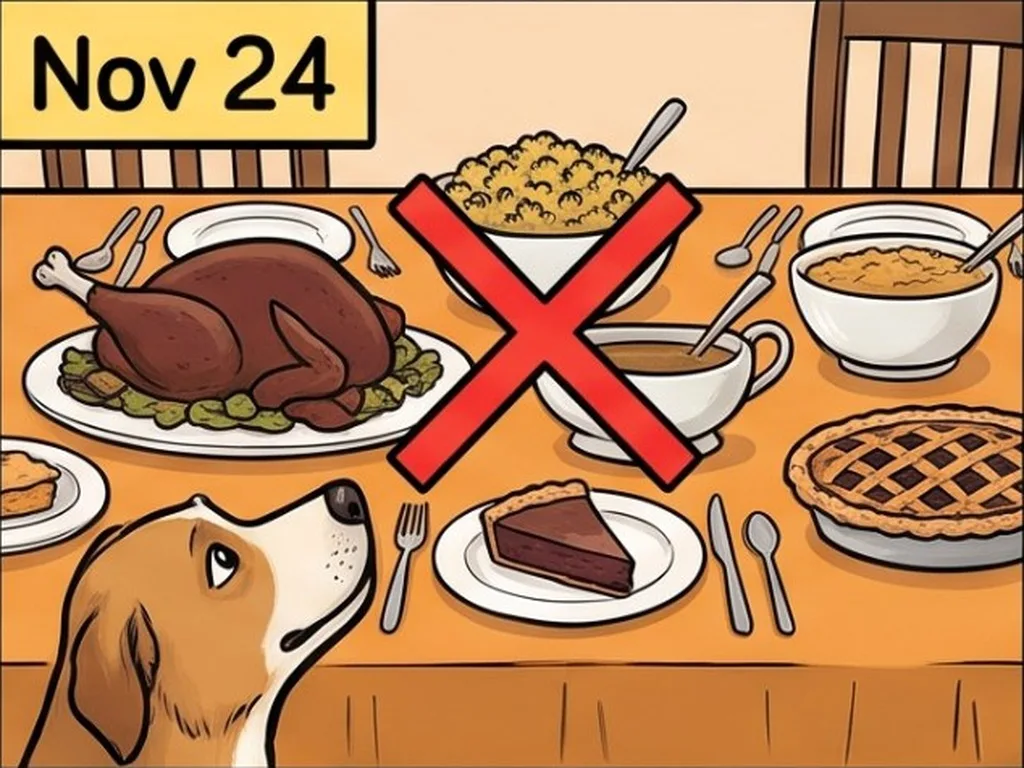
That out of the way — Thanksgiving is the single most dangerous food day of the year for dogs, and it is not because people are careless. It is because the food itself is unusually rich, the house is unusually chaotic, and there are unusually many people willing to slip something under the table.
Here is what actually causes the problems.
The Bones
Turkey bones are the classic, and the risk is real for two separate reasons. Cooked poultry bones splinter, and the splinters are sharp. They can lodge in the mouth, the throat, or the oesophagus, and they can perforate bowel. The second reason is size — a turkey carcass produces fragments small enough to swallow and big enough to obstruct.
This applies to the carcass, the wings, the neck, and anything that has been sitting on a platter. It also applies to the trash bag, which is why the trash needs to go out before the guests leave, not after.
The Fat
This is the one that sends more dogs to the emergency clinic than bones do, and it gets far less attention.
Turkey skin, pan drippings, gravy, butter, and the fat that renders into the bottom of the roasting pan are all extremely high in fat. A dog’s pancreas is not built for a sudden fat load. The result is pancreatitis — inflammation of the pancreas — and it is painful, it is serious, and it can be life-threatening.
The cruel part is the timing. A dog can eat the skin at two in the afternoon and be fine at dinner. The vomiting and the hunched, uncomfortable posture often start twelve to twenty-four hours later, which is why so many people do not connect it to the holiday at all.
Do not pour pan drippings anywhere a dog can reach. Do not let anyone “just give him the skin, he likes it.”
The Actual Toxins
Onions, garlic, leeks, shallots, and chives. All in the allium family. They damage red blood cells and cause anaemia, and the effect is cumulative over a couple of days rather than immediate. Onion powder is more concentrated than fresh onion, which makes stuffing and gravies a real risk. Symptoms can take several days to appear.
Grapes and raisins. Kidney injury, and the amount that causes it is unpredictable — some dogs seem to react to very little. Raisins turn up in stuffing, in breads, in salads, and on cheese boards. This is the one where the food is genuinely benign-looking.
Xylitol. A sweetener in sugar-free gum, some peanut butters, breath mints, and sugar-free desserts. It causes a dangerous drop in blood sugar within minutes to hours, and liver damage in some dogs. Check the peanut butter label if you are using it for a treat or a stuffed toy.
Chocolate. Still a problem on Thanksgiving, mostly via desserts, baking chocolate, and the candy dish. Dark and baking chocolate are the worst per ounce.
Macadamia nuts. Weakness, tremors, and hind limb incoordination, usually within twelve hours and usually recovering, but frightening while it happens.
Raw yeast dough. It rises in the stomach, which causes painful distension, and it produces ethanol as it ferments. A dog can present as drunk, and alcohol toxicity in a dog is not funny.
Alcohol. Including the dregs in glasses left at dog height, which is a real and recurring problem at parties.
The Non-Food Problems
Kitchen twine. The string that trussed the bird, the netting around a roast, the plastic wrap. String and twine are linear foreign bodies, and a linear foreign body in a dog’s intestine is a surgical emergency. It does not always pass.
Toothpicks, skewers, and foil. Foil that has had food on it smells like food and gets chewed, and it can cause obstruction or punctures.
Corn cobs. Very appealing, completely indigestible, and a well-documented obstruction.
And the trash bag itself, which combines most of the above into one accessible package at nose height.
How to Run the Day
Tell your guests in advance. Not a general “don’t feed the dog” — that gets ignored. A specific sentence: “Please don’t feed him anything. He’s on a diet and it makes him sick.” Most people comply with a specific instruction and ignore a vague one.
Put the dog somewhere calm during the meal with something to do — a frozen stuffed toy, a long-lasting chew, a puzzle feeder. A dog with a job is not under the table. A bored dog is.
Take the trash out before you sit down to eat, not after. The most dangerous window is the hour when everyone is at the table and the kitchen is unattended.
Keep food off low surfaces and out of reach. A coffee table at nose height is a buffet.
If You Do Not Know What They Ate
This happens constantly, and it is not a failure. The dog got into the kitchen while twelve people were talking, and nobody saw it happen.
What the vet needs is not a perfect answer. It is the closest you can get. What was on the counters. What was in the trash. What was left on the table. Roughly what time the dog was unattended. Whether they are showing anything now.
Then say what the dog is doing: vomiting, pacing, drooling, refusing food, standing hunched. Behaviour is a symptom, and it is often more useful in the first ten minutes than a guess about quantity.
Do not wait for the full picture to become a phone call. The vet would rather hear “something happened and I am not sure what” at two in the afternoon than a complete account at midnight, and the dog is better off for the earlier call either way.
The Wrap
No bones, no skin, no drippings, no onions or garlic, no grapes or raisins, no xylitol, no alcohol, no dough. Watch the twine and the trash. And if something does get eaten, call the vet instead of watching and waiting.
One rich meal is not worth a night at the emergency clinic. Your dog will be just as happy with their normal dinner and a plain piece of turkey. 🦃
About the Author
Nicole is the owner and certified groomer behind Vroom Grooms LLC, a mobile dog grooming service serving Northwest Ohio. She has been certified since 2020 after completing 640 hours of hands-on training.
This post was drafted with help from Nagini 🐍, her digital assistant, who keeps the blog running, handles the tech side of the website, and makes sure Nicole spends more time with dogs and less time wrestling with WordPress.
Sources