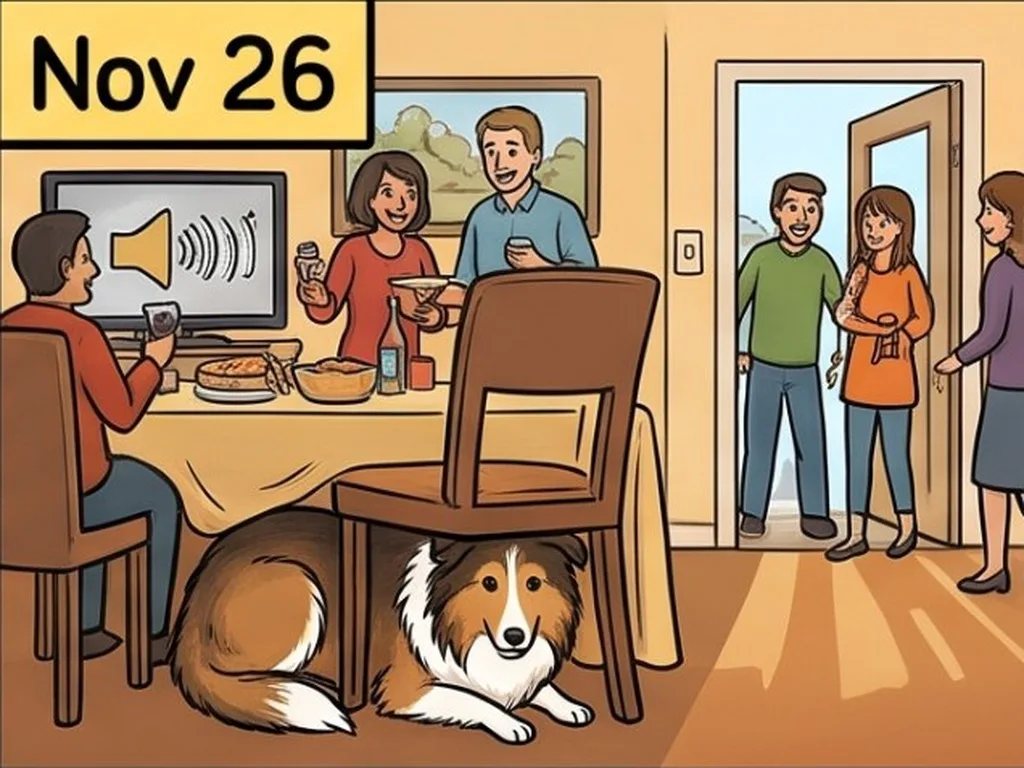
Every Thanksgiving, the same thing happens in a lot of houses. The dog is fine for the first hour. Then more people arrive, the noise goes up, someone hugs someone, the door keeps opening, and by the time the plates come out the dog is under the table with their tail tucked and nobody has looked at them in two hours.
That dog is not being antisocial. That dog is overwhelmed, and the day gets much easier for everyone if you plan for it the way you plan the meal.
The Three Things That Actually Stress a Dog
The noise. A house full of people talking, laughing, and moving is louder than it feels to you, because you are contributing to it and human hearing filters it. Dogs hear a wider frequency range and they are much more sensitive to sudden sound. Add a game on the television, a blender, or somebody’s chair scraping and the background level is genuinely high.
The movement. Dogs track motion, especially unfamiliar motion. Twelve people who do not live there, moving unpredictably, reaching over the dog, standing in the dog’s normal paths. Every one of those is a small adjustment the dog is making without a break.
Routine collapse. Their walk happens late or not at all. Their meals are at the wrong time. Their person is busy. The whole scaffolding of the day is gone, and dogs are more attached to routine than people usually realize.
Set Up a Room First
Before anyone arrives, make one room the dog’s. Not a crate in the middle of the party — a room with a door, ideally in the quietest part of the house.
In it: a bed, water, something to chew, and something familiar that smells like home. A radio or white noise machine if the house gets loud. A sign on the door so guests do not wander in.
Then use it before the dog needs it. The mistake is waiting for the dog to look miserable and then moving them. Put them in for a break at the point where you would want one — before the food, not during the meltdown. A dog who has been rested in a quiet room for an hour will often come back out calm and social.
An open-door policy is better than a closed one if the dog is comfortable. Let the dog choose to leave when they have had enough. A dog who can retreat is a dog who is usually willing to stay.
The Door Problem
Thanksgiving is a high-risk day for lost dogs, and it is not only the classic “bolted out the door” scenario. It is guests who do not know the house leaving a gate open, a side door propped for air, a car door left ajar while unloading dishes.
Have a plan. Keep the dog in the back room or on a leash while people are arriving and leaving — those are the high-traffic windows. Check the fence and gates the day before. Make sure the dog’s tag and microchip details are current, because the single most useful thing for a lost dog is a phone number someone can see.
And tell guests. A short sentence when they arrive is enough: “Don’t let him out, he bolts.” People comply with specific information.
What to Tell the Guests
Give people three instructions and they will remember them. More than that and they remember none.
Do not feed the dog. Do not let the dog out. Leave the dog alone when they are in their bed.
The last one is the hardest for guests, because everybody wants to pet the dog. A dog who gets petted by twelve strangers over four hours is a dog who is being handled nonstop. If someone genuinely wants to say hello, have them sit down, look away, and let the dog come to them. If the dog does not come, the dog has said no politely and the answer is fine.
Watch for These
Lip licking with no food around. Yawning repeatedly. Whale eye — head turned away but eyes on you. A rigid, frozen posture. Panting when it is not hot. Ears flat. Tail tucked.
Any of those means the dog is done and needs the quiet room. Not because they are being dramatic, but because a dog whose subtle signals are ignored has only loud ones left, and a growl at a child under the table is how a holiday ends badly.
Do not scold a dog for growling. Move the dog out and let them decompress. The growl was the warning and it did its job.
Keep the Routine Where You Can
The walk still happens. Maybe it is shorter, maybe it is earlier, but it happens — and it should happen before the guests arrive, not after. A tired dog who has been sniffed and peed and walked is a dog with a much higher tolerance for a noisy house.
Meals at the normal time. If the table is at four, feed the dog at their normal hour, even if that is awkward. A hungry dog plus a table full of food plus a house full of sympathetic guests is the exact combination you are trying to avoid.
The Wrap
Set up a quiet room and use it early. Guard the doors during arrivals. Give guests three short instructions. Watch the quiet signals and act on them before they become loud ones. Keep the walk and the meals where they belong.
The best Thanksgiving for a dog is a boring one. Give them that, and everyone else can have their chaos. 🦃
About the Author
Nicole is the owner and certified groomer behind Vroom Grooms LLC, a mobile dog grooming service serving Northwest Ohio. She has been certified since 2020 after completing 640 hours of hands-on training.
This post was drafted with help from Nagini 🐍, her digital assistant, who keeps the blog running, handles the tech side of the website, and makes sure Nicole spends more time with dogs and less time wrestling with WordPress.
Sources