Black Friday at an emergency clinic looks the same every year. It is not broken bones or chocolate. It is dogs who ate well yesterday and are now vomiting, restless, and standing with their back arched and their belly looking uncomfortable.
This is pancreatitis, and it is the most common serious Thanksgiving injury I hear about. It is worth understanding, because the timing makes it very easy to miss.
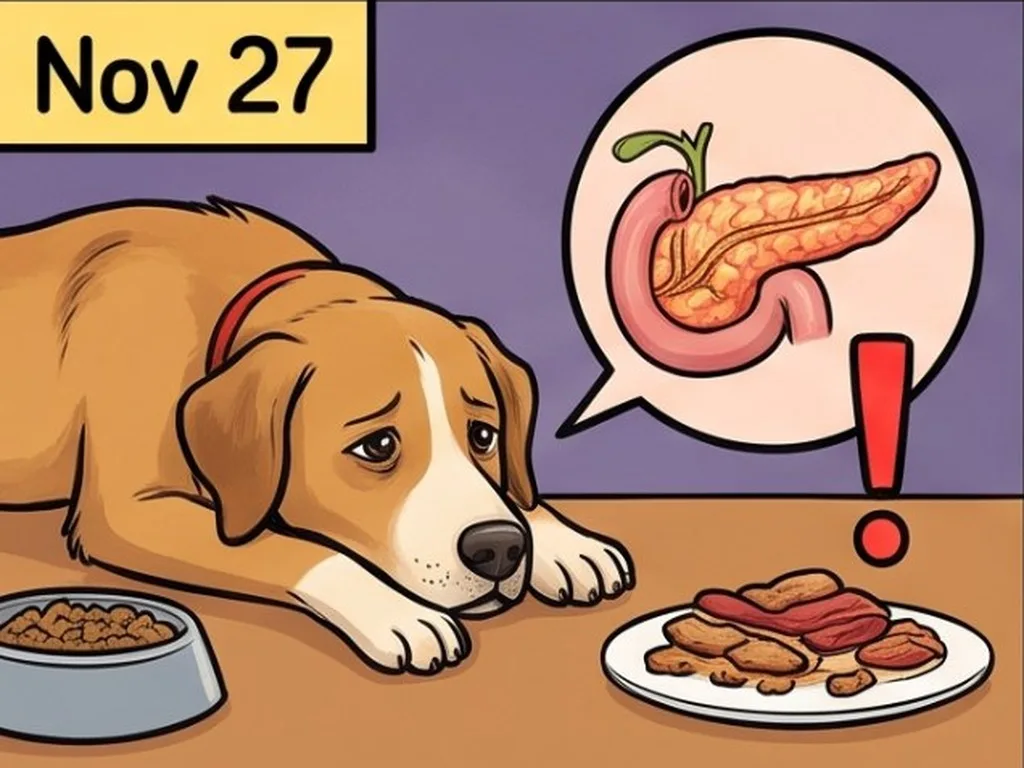
What the Pancreas Does
The pancreas sits tucked against the small intestine and does two jobs. It produces digestive enzymes, and it produces insulin. Those enzymes are meant to activate inside the intestine, not inside the pancreas.
When the pancreas becomes inflamed, those enzymes activate early and start digesting pancreatic tissue itself. That is pancreatitis. It hurts far more than a stomach ache, it can cause leakage of fluid into the abdomen, and in severe cases it affects the kidneys, liver, and clotting.
In dogs, the single most common trigger is a sudden high-fat meal. Not a consistently fatty diet — a sudden one. A dog who has eaten the same kibble for six years and then eats turkey skin is exactly the profile.
Why the Timing Catches People
The dog eats at two in the afternoon. At six they are walking around looking normal. Everyone goes home. At some point in the night or the next morning, the dog starts vomiting.
Symptoms typically develop twelve to twenty-four hours later, sometimes up to forty-eight. That is why the day after Thanksgiving is the dangerous one, and it is why people do not connect it to the pan drippings they poured out three feet from the dog.
So if your dog got into something rich yesterday, you are not out of the woods because they seem fine today. Watch them.
The Signs
Vomiting, especially repeated vomiting or vomiting after water.
Abdominal pain. A dog with pancreatitis often stands with the back arched, belly tucked, elbows out. They may resist being picked up or having their belly touched. They may not want to lie flat and may sit rather than lie down.
Restlessness. Pacing, unable to settle, changing position repeatedly. This is often discomfort rather than agitation.
Not eating, or refusing even favoured food.
Diarrhea, sometimes with blood.
Lethargy, or in severe cases, collapse or shock.
Any combination of these a day after a rich meal is a vet call, not a watch-and-see. Pancreatitis is diagnosed with bloodwork and sometimes ultrasound, and the treatment involves fluids, pain control, and withholding food for a period — none of which can be done at home.
Do not give human pain medication. Never give ibuprofen or acetaminophen. Both are toxic to dogs, and a dog in abdominal pain is exactly who a well-meaning owner reaches for the medicine cabinet for.
What Raises the Risk
Some dogs are at much higher risk than others. Small, middle-aged dogs are overrepresented. Schnauzers have a breed predisposition. Any dog with a previous episode is at high risk of another. Dogs who already have a diagnosis of diabetes, hyperthyroidism, or Cushing’s are also more vulnerable.
If your dog is in one of those groups, the threshold is not “a bit of skin.” The threshold is none. That is worth telling every guest before they sit down.
Preventing the Next One
No table scraps. Not because the dog does not want them, but because one rich meal can cost more than a year of normal food and a night of watching a dog in pain.
No pan drippings anywhere accessible. Not poured in the sink if the sink is low, not into an open trash, not on a plate left on the counter.
If you want to give your dog a Thanksgiving bite, plain cooked white meat with no skin and no seasoning, in a small piece. That is it. The fat is where the whole problem lives.
And keep their normal food going. A holiday does not need to be a food event for the dog. Routine food is the thing that keeps the pancreas quiet.
What the Vet Actually Does
People often delay because they assume there is nothing to be done, or that the visit will be a bill with no outcome. It is worth knowing what the appointment looks like.
Diagnosis starts with bloodwork, including a specific pancreatic enzyme test, and often an ultrasound to look at the organ directly. Treatment is largely supportive but it is not nothing: intravenous fluids to correct the dehydration that vomiting causes, pain control, anti-nausea medication, and in more serious cases hospitalization with monitoring of kidney values and electrolytes.
Food is usually withheld for a period and then reintroduced gradually with a low-fat diet, which is the part owners manage at home afterward. Dogs that recover often stay on a restricted-fat diet long term, because a second episode is easier to trigger than the first one was.
None of this is doable at home, which is the point. The reason to call is not that the vet has a magic cure. It is that a dog with pancreatitis can deteriorate quickly, and the intervention that matters most is early.
The Wrap
The danger of Thanksgiving food is not the day it is eaten. It is the twelve to twenty-four hours after, when the dog starts vomiting and nobody remembers what got dropped. No fat, no skin, no drippings, and if the symptoms start, call the vet rather than waiting for it to pass.
A night of watching a dog pace the floor is not a good end to a good holiday. Keep the plate boring. 🦃
About the Author
Nicole is the owner and certified groomer behind Vroom Grooms LLC, a mobile dog grooming service serving Northwest Ohio. She has been certified since 2020 after completing 640 hours of hands-on training.
This post was drafted with help from Nagini 🐍, her digital assistant, who keeps the blog running, handles the tech side of the website, and makes sure Nicole spends more time with dogs and less time wrestling with WordPress.
Sources