Food and treats are the two things every dog owner buys the most of and knows the least about. The bag has a picture of a happy dog. The kibble looks brown. The ingredient list is 30 words long, half of which are unpronounceable. Most people grab whatever is on sale, dump it in the bowl, and move on.
A few things every dog owner should know about food and treats, what the labels actually mean, and how diet affects what I see on your dog at the grooming table.
🐾 What to Feed
I am not a vet, and I am not going to tell you which specific food to buy. Your vet should be the one making that call, especially if your dog has a health issue. But I will tell you the questions to ask.
Is it AAFCO complete and balanced? Look on the bag. If it says “formulated to meet the AAFCO Dog Food Nutrient Profiles for all life stages” or “for maintenance,” it is complete and balanced for the life stage on the label. If it says “for intermittent or supplemental feeding only,” it is a treat or topper, not a meal.
What is the protein source? Dogs need animal protein. The first ingredient on the label should be a named animal protein (chicken, beef, salmon, lamb, turkey, etc.). “Meat by-product” is technically protein but it is lower quality. “Animal digest” is a flavoring, not a protein source.
How much filler is in there? Cheap foods load up on corn, wheat, soy, and other grains. They are not bad for most dogs in moderation, but a food that is 60 percent grain is not feeding your dog much. The first five ingredients on the label are usually the bulk of the food.
Is it appropriate for the life stage? Puppies, adults, and seniors have different needs. Puppies need more calories and more protein. Seniors need fewer calories and joint support. Large-breed puppies need controlled calcium to protect their joints. The right food for the right life stage matters.
Does your dog do well on it? The best food in the world is the wrong food if your dog has chronic diarrhea, itchy skin, or a dull coat on it. If the food is high quality and the dog is thriving, stick with it.

🐾 The Three Diets You Will Hear About
There are three main approaches to dog food. Each has pros and cons.
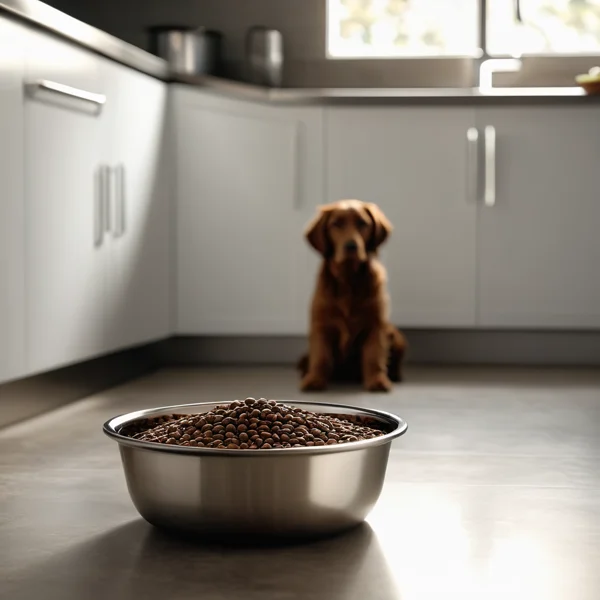
Kibble (dry food). The most common, the cheapest, the most convenient. Pros: easy to store, easy to measure, dental benefits from the crunch. Cons: highly processed, more carbohydrates than most dogs need, ingredient quality varies widely.
Wet food (canned). Higher in protein and moisture, lower in carbs. Pros: more palatable, good for senior dogs with bad teeth, helps with hydration. Cons: expensive, does not help with dental health, goes bad quickly once opened.
Raw (BARF, raw meaty bones, etc.). Unprocessed meat, bones, organs, and sometimes vegetables or fruit. Pros: shiny coat, smaller stools, enthusiastic eaters. Cons: expensive, time-consuming, requires careful handling to avoid bacterial contamination, not appropriate for all dogs (especially puppies, seniors, or dogs with compromised immune systems), and there is real debate about whether the long-term benefits match the cost and effort.
Your vet can help you decide which approach is right for your dog. There is no one right answer for every dog.
🚫 Grain-Free: The Fad That Would Not Die
A few years ago, “grain-free” was marketed as the healthiest option for dogs. It is not. The FDA linked some grain-free diets to a heart condition called dilated cardiomyopathy (DCM) in dogs, particularly larger breeds. The investigation is ongoing, but the current veterinary guidance is to avoid grain-free diets unless there is a specific medical reason for them.
If your dog has a grain allergy (rare, but real), your vet can help you find a grain-free food that is formulated to be nutritionally complete. If your dog does not have a grain allergy, save your money and feed a regular food that includes grains.
Dogs are not wolves. They have been living with humans and eating human-adjacent food for thousands of years. They digest grains just fine.
🦴 Treats: The Sneaky Calorie Bomb
Treats are the most overfed thing in most dogs’ diets. The bag says “feed 5 to 10 treats a day.” The owner feeds 30. The dog is now getting 30 percent of its daily calories from treats, and the owner is wondering why the dog is overweight.
Here is the rule. Treats should make up no more than 10 percent of your dog’s daily calories. For an average 30-pound dog, that is maybe 50 to 75 calories of treats a day. For a 60-pound dog, maybe 100 to 150 calories. That is a lot less than most owners think.
A few things that count as “treats” that owners do not always think about:
- Training treats used during the day
- Dental chews
- Table scraps
- Kong stuffings and lick mats
- Pieces of the kids’ snacks that fall on the floor
If you use a lot of treats for training, use low-calorie options. Plain cooked chicken, freeze-dried meat, baby carrots, or commercial training treats that are small (the size of a pea) and low calorie.
✨ The Ingredients That Matter for the Grooming Table
What your dog eats shows up in the coat. This is something I see every week in the van.
High-quality protein and fat = shiny coat. Dogs on a balanced, protein-rich diet have a glossier, healthier-looking coat. Dogs on cheap, low-protein food often have a dull, dry coat that does not reflect light.
Omega-3 fatty acids = less inflammation. Fish oil or omega-3 supplementation can reduce skin inflammation, which is a big deal for dogs with allergies. The change in the skin shows up within 6 to 8 weeks of starting supplementation. If your dog is itchy, ask your vet about omega-3s.
Too many fillers = more poop and more smell. Cheap food with lots of grain, fiber, or by-products produces more stool, and the stool is smellier. A higher-quality food produces less stool that is easier to pick up.
Food allergies show up in the skin. The most common food allergens in dogs are beef, chicken, dairy, and wheat. A food allergy usually shows up as chronic ear infections, itchy paws, hot spots, and skin infections, not as a digestive issue. If your dog has chronic skin or ear problems, your vet may suggest an elimination diet to find the trigger.
Food dyes and artificial colors = stained fur around the mouth. Brightly colored kibble (red, green, blue) can stain the fur around a white dog’s mouth and feet. Switching to a dye-free food often clears up the staining within a few weeks.
🦴 Raw Bones, Chews, and What Is Safe
This is a controversial topic. I am going to tell you what I have seen in the van and let your vet make the final call.
Raw bones (recreational bones like knuckles, marrow bones, lamb bones): Many dogs do well on raw bones. Some do not. Risks include broken teeth (especially on cooked bones, which splinter), blockages if the dog swallows a large piece, and bacterial contamination (Salmonella, E. coli). Always supervise.
Cooked bones: Do not feed. They splinter. The risk of perforation or blockage is real.
Antlers: Hard, long-lasting, but heavy chewers can fracture teeth on them. If you feed antlers, get the right size and hardness for your dog. Soft antlers are safer than hard antlers.
Bully sticks, trachea, tendons, pig ears: Most dogs love them. They are digestible but calorie-dense. A 6-inch bully stick is about 100 calories. They also stink. I have done grooms on dogs who came in smelling like beef jerky.
Dental chews (Greenies, etc.): Designed to reduce tartar. Most dogs do fine on them. A small number of dogs will swallow a large piece and have a blockage. Match the size to the dog. Supervise the first few chews.
Nylabones, Kongs, hard rubber toys: Safe for most dogs. Replace when they get chewed down to a size the dog could swallow. Heavy chewers can break them.
The simplest rule: supervise any chew the first 10 times the dog has it. If they try to swallow it whole, take it away. If they break pieces off, take it away. If they tolerate it and chew it gently, you can leave them alone with it.
☠️ What to Avoid
A few things I would not give any dog.
- Chocolate. Toxic. Especially dark chocolate and baking chocolate.
- Grapes and raisins. Cause kidney failure in dogs. Even small amounts.
- Onions, garlic, chives, leeks. Damage red blood cells. Toxic in any form (raw, cooked, powdered).
- Macadamia nuts. Cause weakness, vomiting, and hyperthermia.
- Xylitol (birch sugar). A sugar substitute found in sugar-free gum, peanut butter, and some baked goods. Causes a rapid, life-threatening drop in blood sugar and liver failure.
- Avocado. The flesh is technically not toxic to most dogs, but it is high in fat and the pit is a choking hazard. Best to skip.
- Raw bread dough. The yeast ferments in the stomach, producing alcohol and gas. The dog can bloat and become drunk.
- Cooked bones. Splinter.
- Fatty table scraps. Pancreatitis risk, especially in small dogs and seniors.
- Anything you are not sure about. When in doubt, do not feed it.
If your dog eats something on this list, call your vet or the ASPCA Animal Poison Control Center at 888-426-4435. There is a fee, but they will tell you whether you need to rush in or watch and wait.
📌 The Wrap
Food and treats are the foundation of your dog’s health, and they show up at the grooming table. A dog on a balanced, high-quality diet has a better coat, less itching, and easier-to-manage skin. A dog eating cheap food with a lot of fillers often has a dull coat, more inflammation, and more smell.
If you have a question about what to feed, ask your vet. If you have a question about how diet is affecting your dog’s coat or skin, ask me at the next groom. I see the same dogs every 4 to 6 weeks, and I can usually tell when something has changed.
Want to see what a healthy coat looks like in real time? Head over to vroomgrooms.com and click the Live button. We stream real appointments every week on Twitch at DogGroomerNicole. You will see the bath, the dry, the finished coat, the whole thing. Real dogs, real food, real talk.
Ready to book? The next step is the new client form on vroomgrooms.com. New clients are booking out a few weeks right now, and once you are on the schedule, you stay on it. Routine is built in. No chasing reminder texts. No last-minute cancellations from me.
Send the form, and let’s get your dog on the calendar.
Stay fresh and furry,
Nicole / Vroom Grooms LLC
Service area: Bowling Green, Haskins, Tontogany, Grand Rapids, Waterville, Monclova, Whitehouse, Maumee, Swanton, Holland, Perrysburg, Rossford. Limited availability for Toledo and Oregon. Proof of current vaccinations required at the time of service; clients are responsible for uploading and maintaining their own records. Mobile Dog Grooming. We come to you. No hook ups needed!