At Vroom Grooms, my goal is always the same: keep your dog healthy, comfortable, and stress‑free. Grooming isn’t just about looking cute — it’s about preventing pain, skin issues, and dangerous coat conditions that can seriously impact a dog’s wellbeing.
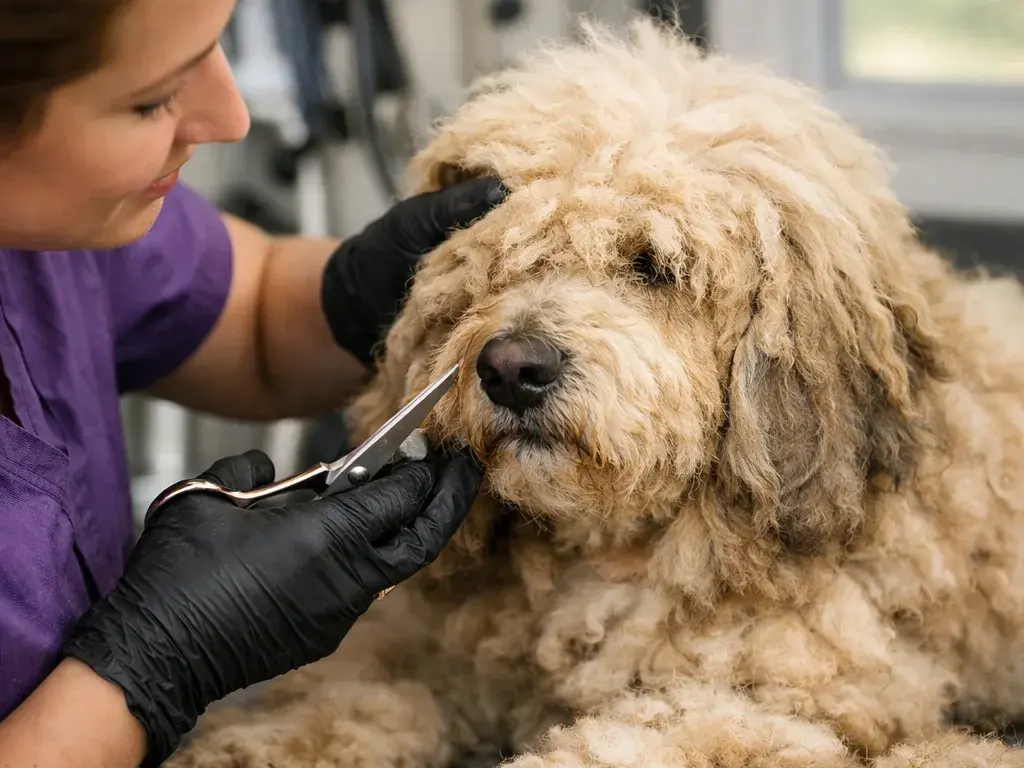
Every so often, a dog arrives at the van in a coat that is severely matted, knotted, and tangled from head to tail. The dog is uncomfortable, the coat hides what may be skin issues underneath, and the appointment stretches far beyond what a standard mobile session is designed for. When the same pattern repeats across visits, it stops being a one‑time slip and becomes a welfare concern that has to be addressed directly.
This blog isn’t about shaming anyone — it’s about education, transparency, and advocating for the dogs who can’t speak for themselves.
🪮 Understanding What Severe Matting Really Means
Matting isn’t just “tangled hair.” It can cause:
- Constant pulling on the skin
- Bruising and restricted blood flow
- Hidden sores, infections, and parasites
- Painful movement
- Extreme stress during grooming
- Increased risk of injury during removal
When a dog goes many months — or years — without grooming, the coat doesn’t just get messy. It becomes a welfare concern.
🚐 Why Mobile Grooming Isn’t Designed for Crisis Cases
Mobile grooming is built around:
- Predictable coat maintenance
- Regular schedules
- Low‑stress, one‑on‑one care
- Safe handling
- Humane grooming practices
When a dog arrives in a condition far beyond what was booked, the appointment becomes:
- Unsafe for the dog
- Unsafe for the groomer
- Unpredictable in time and difficulty
- Emotionally overwhelming for the dog
- Physically taxing for everyone involved
A severely matted dog requires extended, specialized care — often more than a mobile setup can safely provide.
📅 When a Client Declines a Proper Schedule
When a client continues to book appointments months apart, far beyond what the dog’s coat requires, the conversation has to shift from routine care to welfare. Many breeds, especially those with longer or curlier coats, need grooming every 4–8 weeks, depending on coat type and at‑home maintenance. Cost is a real concern for owners, and it is not my place to judge anyone’s budget. What I can do is be honest about the consequence: a dog who goes too long between grooms will eventually arrive in a state that a standard mobile appointment is not built to handle.
When a pattern of long intervals is established and the dog consistently arrives in crisis, the dog is the one who pays the price. That is where the line has to be drawn, on the dog’s behalf, even when no one involved wants it to be.