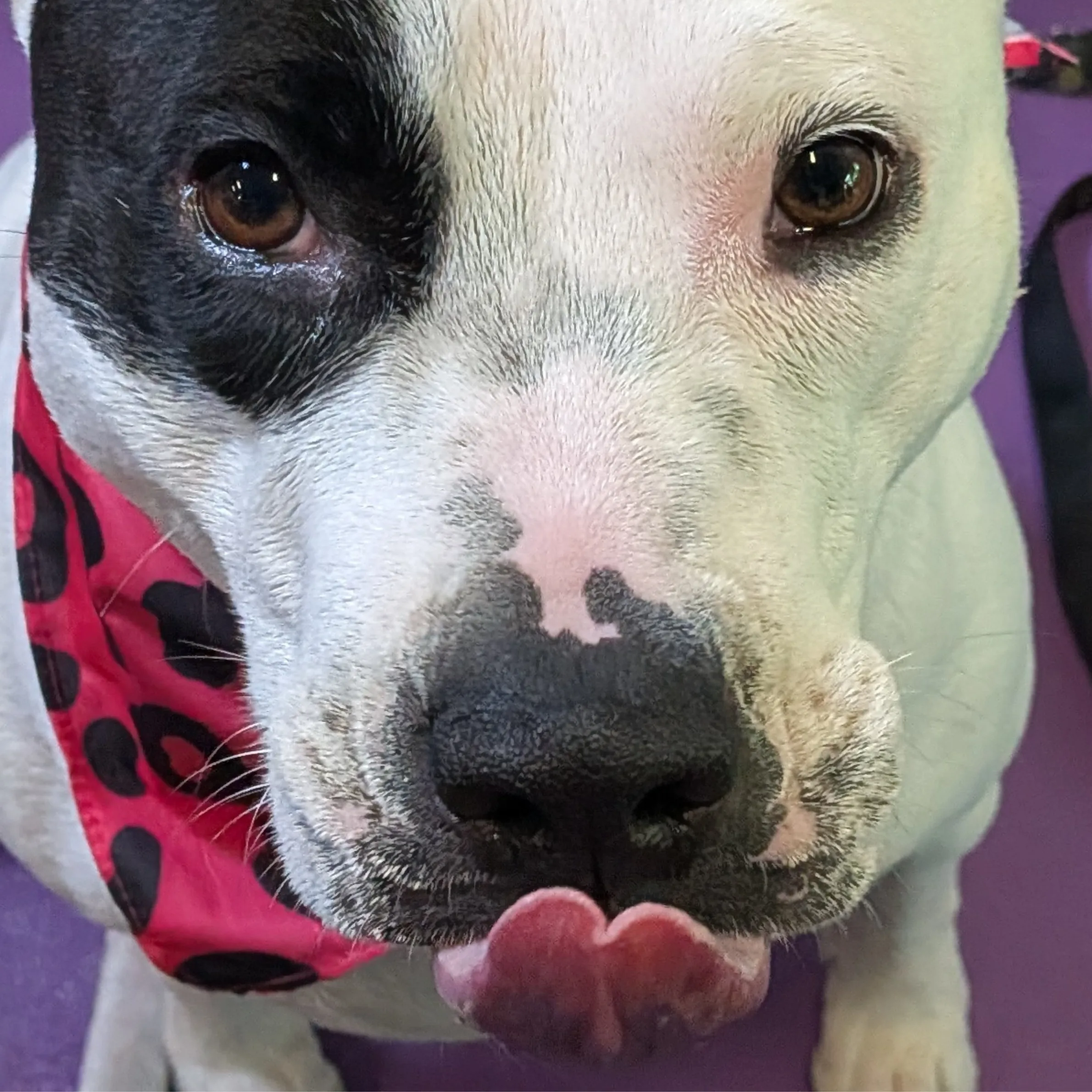
I have been allergic to dogs my entire life. And I have worked with them for years. People ask me all the time how that is possible, and the honest answer is that I do not know. I just love them too much to let a little itchy face stop me. But that is a different post. Today’s post is about what a dog’s nose can actually do, and the answer is going to blow your mind.
A dog’s sense of smell is not just “better than ours.” It is in a completely different universe. Humans have about 6 million scent receptors. Dogs have up to 300 million. The part of the brain dedicated to analyzing smells is proportionally four times larger in dogs than in humans. When a dog sniffs, they are not just smelling “dinner” or “grass.” They are reading a story. A whole, detailed, complicated story written in scent.
Dogs Can Smell Disease
This is the part that sounds like science fiction, except it is not. Dogs have been trained to detect cancer in breath, urine, and blood samples with accuracy rates that rival lab tests. We are talking lung cancer, breast cancer, prostate cancer, colon cancer, and melanoma. Some studies show trained detection dogs getting it right 90 to 99 percent of the time. That is not a typo.
How do they do it? Cancer cells produce different volatile organic compounds than healthy cells. We cannot smell those compounds. Dogs can. Their noses are sensitive enough to pick up concentrations in the parts per trillion. For comparison, if you imagine one drop of perfume in an Olympic swimming pool, a dog could still smell it.
Diabetes and Blood Sugar
Diabetic alert dogs are a real thing. They are trained to smell the chemical changes in a person’s breath or sweat when their blood sugar is dropping or spiking. These dogs alert their owners before the person even feels the symptoms, giving them time to grab a snack or take insulin. For families with a kid who has Type 1 diabetes, this dog is not a pet. It is a life-saving partner.
COVID and Infectious Disease
During the pandemic, researchers trained dogs to detect COVID-19 in sweat samples. In some studies, the dogs got it right over 90 percent of the time, and in some cases, they picked up positive cases that the PCR tests missed. Airports in some countries used dog screening as a fast pre-check. Imagine walking through a line and a dog sniffing your sweat through a cup and telling the medical team in seconds whether you need a test. That is where the science is heading.
Seizures and Medical Events
Some dogs naturally alert their owners before a seizure happens, and service dog organizations have been training dogs for seizure response for years. The exact mechanism is still being studied, but the leading theory is that dogs smell the subtle chemical changes that happen in the body right before a seizure. Same thing with narcolepsy. Dogs smell the shift and give their person a heads up.
Why This Matters for You and Your Dog
Here is the takeaway. When your dog is sniffing everything on the walk, they are not being weird or stubborn. They are reading the world. That fire hydrant is a community message board. That patch of grass has the scent of every dog who walked by in the last 12 hours. That rock has a mouse that ran under it three days ago. To your dog, the world is made of stories, and their nose is how they read them.
Next time your dog stops to sniff for what feels like forever, let them. They are doing something amazing. They are doing something you literally cannot do. And they are enjoying it more than almost anything else in their day.
Also, if you are curious, dogs can smell time. Not exactly, but their sense of smell tracks how a scent fades over time, which means your dog actually has a rough idea of how long you have been gone based on how much your scent has faded in the house. Pretty wild, right?
Stay fresh and furry, Nicole / Vroom Grooms LLC
About the Author
Nicole is the owner and certified groomer behind Vroom Grooms LLC, a mobile dog grooming service serving Northwest Ohio. She has been certified since 2020 after completing 640 hours of hands-on training, and has a particular interest in dog behavior and what our dogs are trying to tell us. You can catch her live on Twitch at DogGroomerNIcole, where she streams real appointments and answers questions about dog care.
This post was drafted with help from Nagini 🐍, her digital assistant, who keeps the blog running, handles the tech side of the website, and makes sure Nicole spends more time with dogs and less time wrestling with WordPress.