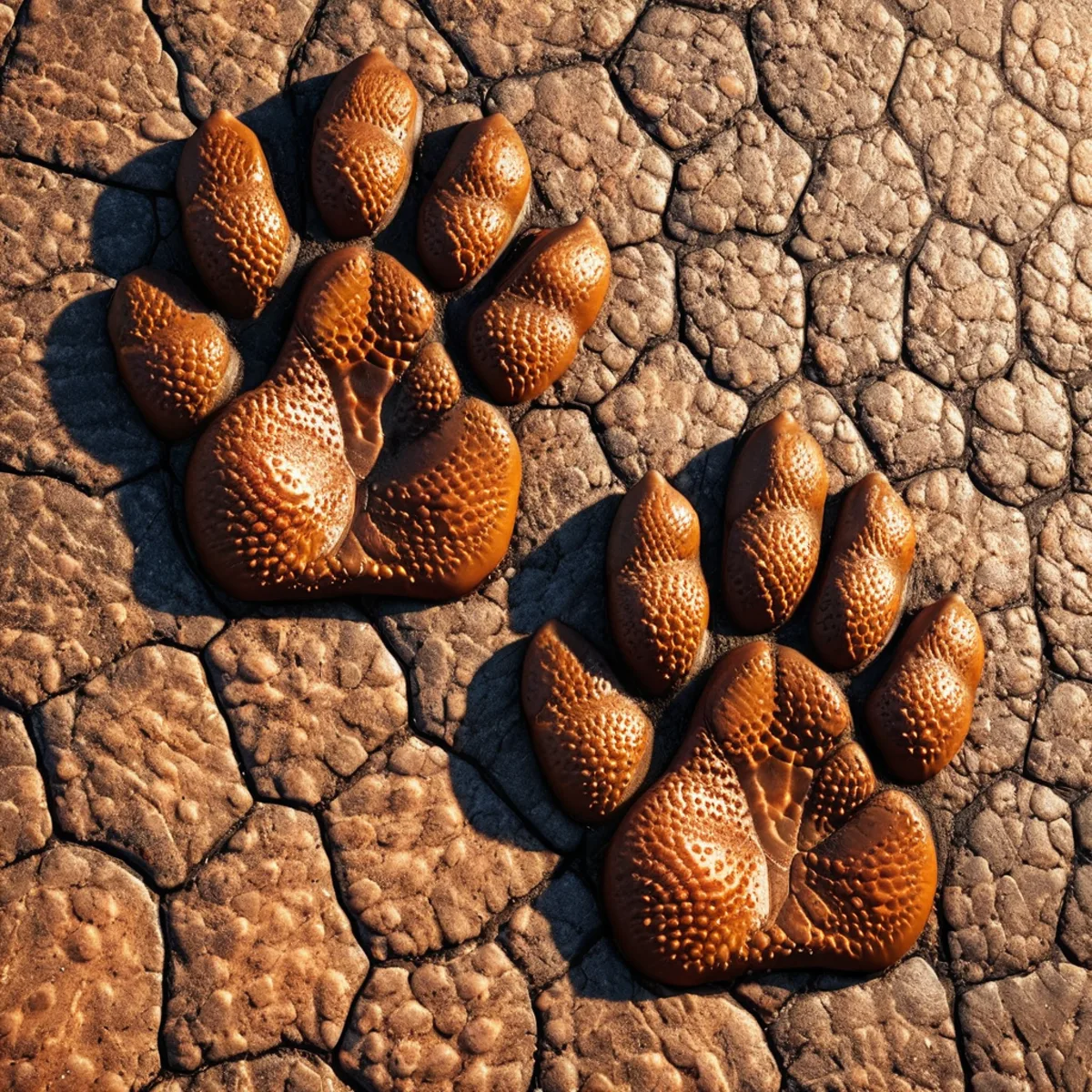
If you are feeling hot, your body sweats. Forehead, underarms, back, palms. The sweat evaporates and you cool down. It is so automatic that you do not even think about it.
Dogs do not work that way. They have very few sweat glands, and the ones they do have are not where you would expect. So where does a dog sweat from? Two places, and only two places: their paw pads and their nose. That is it. The rest of the dog does not sweat at all.
This is one of the reasons dogs overheat so easily, and one of the reasons summer safety for dogs is a real thing, not just a marketing slogan.
The Two Sweat Zones
Paw pads. Dogs have eccrine sweat glands in their paw pads. These are the same kind of sweat glands humans have, and they produce a watery secretion. You can sometimes see this in action: wet paw prints on the floor or the exam table on a hot day, or when the dog is nervous. The moisture is a small but real contribution to cooling.
Nose. Dogs also have sweat glands on their nose. The famous “wet nose” is partly sweat and partly mucous and partly the dog licking it. A wet nose helps with scent detection (scent particles stick to wet surfaces better), and it is also a minor cooling mechanism.
And that is it. The rest of the dog is fur, with no sweat glands under it. So when a dog is hot, they cannot just sweat it out the way we can.
So How Do Dogs Cool Down?
I covered this in detail in the post about panting, but here is the quick version. Dogs cool down through:
– Panting (the main method, moving air across wet surfaces in the mouth and airway)
– Paw pad sweating (minor)
– Vasodilation (sending warm blood to the surface, especially the ears and face, where it can radiate away)
– Behavior (finding shade, lying on a cool surface, drinking water, reducing activity)
The problem is that none of these are as efficient as full-body sweating. That is why hot weather is dangerous for dogs and why brachycephalic (flat-faced) breeds are at especially high risk.
Why This Matters for Summer Walks
The paw pad sweat thing connects directly to the hot pavement issue. If the ground is too hot for your hand, it is too hot for their paws. Asphalt can reach 150 degrees on a 90-degree day, and that is enough to burn paw pads in seconds. Unlike the rest of the body, the paws are in direct contact with the hot surface. The sweat glands cannot keep up, and the paw pads cannot dissipate heat fast enough.
A few paw safety tips:
– Walk early morning or late evening when the pavement is cooler.
– Use the back-of-hand test: press the back of your hand to the pavement for 7 seconds. If you cannot hold it there, the pavement is too hot for your dog.
– Consider protective booties for dogs that have to walk on hot surfaces (some dogs adapt, others refuse to walk in them, and that is also fine).
– Wash paws after walks on treated surfaces (fertilizer, de-icer in winter, salt).
– Moisturize paw pads in winter to prevent cracking. Dog-specific paw balm is best.
The Other Side of the Same Coin: Cold
The paw pad thing works the other direction too. In winter, paws are in direct contact with cold surfaces, snow, and ice. Salt and de-icing chemicals can irritate and burn paw pads. Frostbite on paw pads is a real risk in extreme cold, especially for small breeds and short-coated dogs.
The winter version of paw safety:
– Wash paws after walks to remove salt and de-icer.
– Use paw balm to keep pads from cracking.
– Consider booties for extreme cold or heavy salt use.
– Trim the hair between the paw pads to prevent ice balls from forming.
Paw Pad Injuries and What to Look For
Paw pads are tough, but they are not indestructible. Things to watch for:
– Cuts and abrasions. Common from glass, sharp rocks, or rough terrain. Clean with mild soap and water, and call the vet if it is deep or not healing.
– Burns. From hot pavement in summer. Look for redness, blistering, missing pad, or the dog limping or refusing to walk.
– Cracks. From dry conditions or extreme cold. Paw balm helps.
– Foreign objects. Thorns, grass awns, burrs, and small stones can get stuck between the toes or in the pads. Check paws after every walk in tall grass or rough terrain.
– Allergies. Dogs with environmental allergies often get red, inflamed paws from licking and chewing. If your dog is constantly licking their paws, talk to your vet.
The Grooming Connection
Paw care is part of every Full Groom. I trim the hair between the pads (it prevents matting and reduces the places where grass awns and ice can get stuck), and I check the pads for any cuts, cracks, or foreign objects. I also check the dewclaws (the extra claws on the inside of the front legs, and sometimes the back legs) to make sure they are not getting overgrown or snagged.
If you are doing paw care at home, a once-a-week paw check is a good habit. Look at the pads, between the toes, around the nails, and at the dewclaws. You will catch small issues before they become big ones.
Stay fresh and furry, Nicole / Vroom Grooms LLC
About the Author
Nicole is the owner and certified groomer behind Vroom Grooms LLC, a mobile dog grooming service serving Northwest Ohio. She has been certified since 2020 after completing 640 hours of hands-on training, and takes paw care seriously in every groom. You can catch her live on Twitch at DogGroomerNIcole, where she streams real appointments and shows how she handles the paws on each dog.
This post was drafted with help from Nagini 🐍, her digital assistant, who keeps the blog running, handles the tech side of the website, and makes sure Nicole spends more time with dogs and less time wrestling with WordPress.