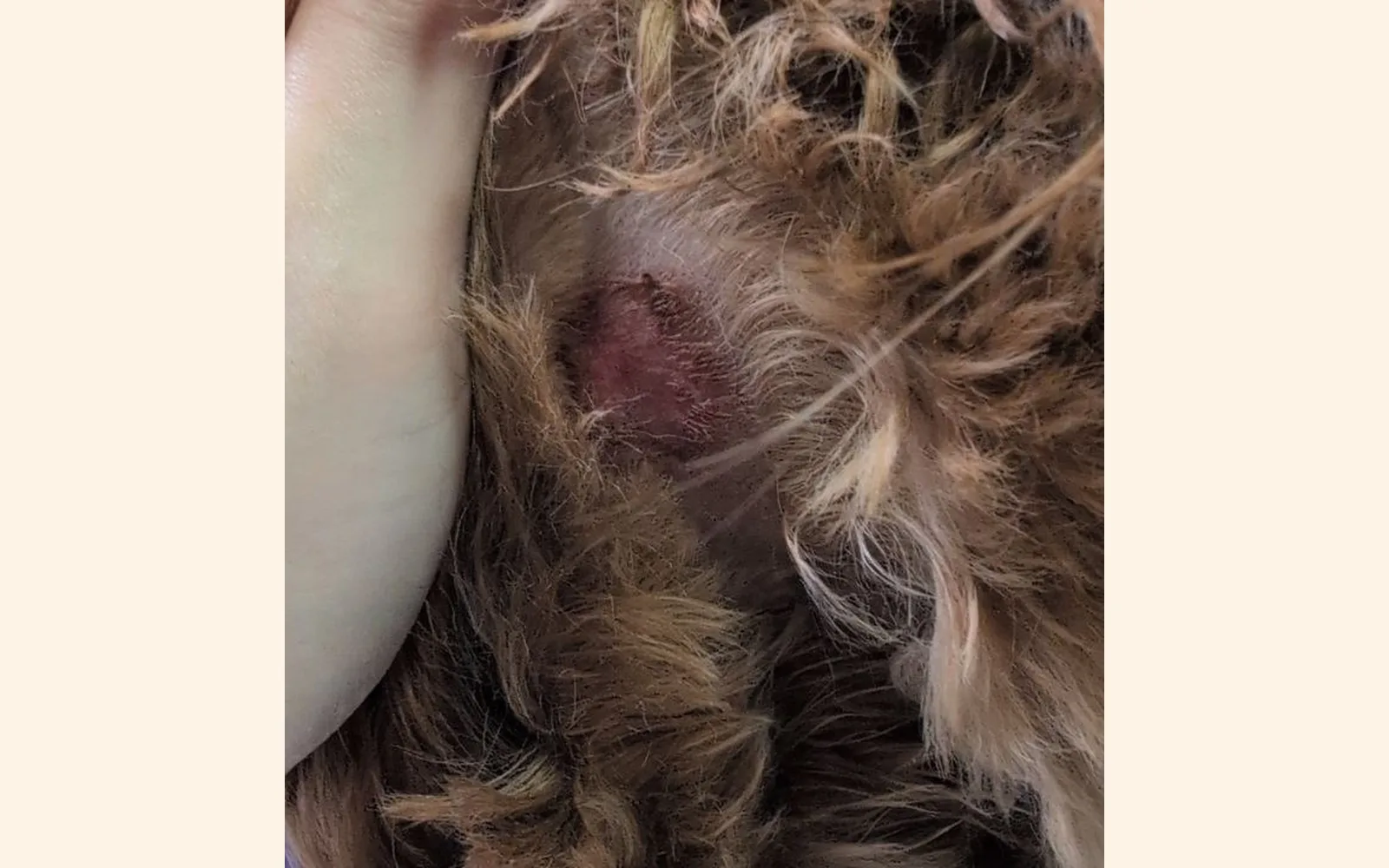
Hot spots are one of the most common skin problems I see in the van. They are also one of the most uncomfortable things a dog can go through. A hot spot can go from “barely noticeable” to “raw, bleeding, and the size of a silver dollar” in under 24 hours. Knowing what they are, why they happen, and what to do about them can save your dog a lot of pain — and save you a lot of money.
What Is a Hot Spot, Exactly
A hot spot is the common name for acute moist dermatitis — a fast-moving, painful skin infection that starts at the surface of the skin and spreads outward. The technical name tells you what is going on: the skin is inflamed, moist, and rapidly getting worse.
Hot spots look like this:
- A patch of wet, matted, or crusty hair on top of red, raw skin
- The area feels warm to the touch (that is where the name comes from)
- The dog cannot leave it alone — they lick, chew, scratch, and rub the spot relentlessly
- They often smell bad, sometimes yeasty, sometimes just “off”
The single biggest thing to understand about hot spots: they are self-perpetuating. The dog itches, the dog scratches, the scratching damages the skin, the damaged skin itches more, and the cycle spirals. That is why a small spot can turn into a quarter-sized wound overnight. The scratching is what makes it worse.
Why Dogs Get Hot Spots
Hot spots are almost always triggered by something that started the scratching in the first place. Once the dog breaks the skin with their teeth or claws, the normal bacteria that live on every dog’s skin move in, multiply, and turn a small itch into an infection. The most common triggers I see:
Fleas and flea allergies. A single flea bite on an allergic dog can set off days of scratching. This is the number one cause of hot spots in the summer.
Other allergies. Environmental allergens (pollen, grass), food allergies, and contact allergies all cause itching. The scratching leads to the hot spot.
Moisture trapped against the skin. This one is huge. Dogs who swim, get caught in the rain, get bathed and not fully dried, or have thick coats that hold water are prime candidates. The moisture softens the skin and creates the perfect breeding ground for bacteria.
Hot weather. High humidity plus a thick coat is a recipe. Dogs who are not groomed regularly through summer shed tend to develop hot spots in July and August.
Matting. Matted fur pulls at the skin, traps moisture, blocks airflow, and causes constant low-grade irritation. Dogs with neglected coats are hot spot magnets.
Ear infections, anal gland issues, and other sore spots. A dog in pain licks and chews at whatever hurts. If they lick one spot obsessively, that spot can turn into a hot spot even if the original problem was somewhere else.
Boredom or stress. Some dogs lick when they are anxious. The licking damages the skin, the skin gets infected, and now you have a hot spot on top of a behavioral issue.
Minor cuts, scrapes, or bug bites. Anything that breaks the skin can become a hot spot if the dog keeps licking it.
The Breeds That Get Them Most
Any dog can get a hot spot, but some breeds are more prone than others:
- Thick double-coated breeds: Golden Retrievers, Labradors, Bernese Mountain Dogs, Newfoundlands, Saint Bernards
- Long-haired breeds with feathering: Cocker Spaniels, Cavaliers, Setters
- Doodles and Poodle mixes: Especially if the coat is left long and not brushed through
- German Shepherds and other breeds with thick undercoats
The common thread: dense coats that trap heat and moisture. Grooming these breeds on a regular schedule is one of the best things you can do to prevent hot spots.
Where Hot Spots Show Up
Hot spots almost always appear somewhere the dog can reach with their mouth or paw. The most common locations:
- Hind end and tail base (very common — the dog turns around to chew at it)
- Hip and flank area
- Neck and chest
- Behind the ears
- Front legs and paws
- Lower back near the tail
If you see your dog suddenly focused on one of these areas, take a look.
What To Do When You Find One
Hot spots need treatment, and they need it fast. Here is what works and what does not.
Call your vet. This is the first step. Vets treat hot spots all the time, and they have the medications that actually work: oral antibiotics, anti-inflammatories, topical sprays or ointments, and in some cases a steroid shot to break the itch cycle. Do not try to tough it out at home.
Trim the hair around the spot. The matted, crusty hair over a hot spot traps moisture and bacteria. Carefully trimming the hair back — with clippers if you have them, or scissors if you are very careful — lets the area dry out and heal. This is also what we do in the van when we find one.
Gently clean the area. Use a mild antiseptic solution (chlorhexidine diluted to the right strength works well). Do not use hydrogen peroxide on open wounds — it damages healthy tissue and slows healing. Your vet can tell you exactly what to use.
Stop the dog from licking. This is the hardest part. An e-collar (the cone of shame) works. A bitterant spray can help. A t-shirt or snug wrap can block access to spots on the body. Whatever it takes — if the dog keeps licking, the hot spot will not heal.
Keep the area dry. After cleaning, dry it thoroughly. Moisture is what made the hot spot possible in the first place.
Recheck daily. Hot spots can look better in 24 hours with proper treatment, or they can spread fast if they are not responding. Stay on top of it.
What NOT To Do
A few things to avoid when you find a hot spot:
- Do not put Neosporin or other over-the-counter ointments on it without talking to your vet. Some dogs react to topical antibiotics. Let the vet decide.
- Do not try to “wait it out.” Hot spots do not heal on their own. They get worse.
- Do not let the dog keep licking it. Every minute of licking makes it worse.
- Do not skip the vet visit because the spot “looks small.” Small hot spots become big hot spots overnight.
The Grooming Connection
A lot of hot spot prevention happens in the grooming van, not at the vet’s office.
Regular brushing. Brushing spreads the skin’s natural oils, removes loose undercoat, and keeps air flowing to the skin. Dogs who are brushed regularly between grooms are less likely to develop hot spots in the first place.
Full drying after a bath. This is part of every Full Groom. A dog who gets a bath but is not fully blow-dried is a hot spot waiting to happen. The moisture sits against the skin, the skin softens, the bacteria move in, and within a day or two you have a problem.
De-shedding treatments. During heavy seasonal shedding, the undercoat that is supposed to come out holds water and heat against the skin. A de-shedding treatment removes that undercoat before it becomes a problem.
Catching them early. I find hot spots in the van that owners did not know were there. A dog with a thick coat can have a hot spot the size of a quarter hiding under the fluff without anyone noticing until the dog has been chewing at it for a week. Every Full Groom includes a body check — I am looking for things like this and flagging them to the owner right away.
Matting prevention. Matted fur is a hot spot waiting to happen. It pulls on the skin, traps moisture, and blocks airflow. Regular grooming keeps the coat in good shape and keeps the skin underneath healthy.
Prevention Checklist
The short version of how to keep hot spots from happening in the first place:
- Keep your dog on a consistent flea prevention plan (ask your vet what works best for your area)
- Brush regularly between grooms — especially for double-coated and long-haired breeds
- Make sure your dog is fully dried after baths, swims, and rain
- Stay on a grooming schedule that fits your dog’s coat (every 6–8 weeks for most breeds)
- Address allergies early — chronic scratching is what creates hot spots
- Check your dog’s skin weekly, especially in summer
- See the vet at the first sign of a sore that the dog will not leave alone
A Note From the Van
I will be honest with you: I see a lot of hot spots in the summer. Ohio humidity plus thick coats plus swimming plus a missed grooming appointment is a perfect storm. Most of the hot spots I see could have been prevented with one or two small things — regular brushing, fully drying after a swim, staying on the grooming schedule.
If your dog has had hot spots before, talk to me about the right grooming interval. Some dogs do better on a 4-week cycle during the summer. Some need a de-shedding add-on in spring and fall. We can put together a plan that fits your dog and your budget.
A Full Groom at Vroom Grooms includes every service your dog needs to keep the skin and coat healthy — bath, blow dry, brush-out, nail trim, ear cleaning, teeth brushing, and a full body check. You can see exactly what is included and what it costs at our pricing page, and if your dog is ready to get started, the New Client Form is the easiest way to reach me.
Stay fresh and furry, Nicole / Vroom Grooms LLC
—
About the Author
Nicole is the owner and certified groomer behind Vroom Grooms LLC, a mobile dog grooming service serving Northwest Ohio. She has been certified since 2020 after completing 640 hours of hands-on training, and checks every dog’s skin during every Full Groom. You can catch her live on Twitch at DogGroomerNIcole, where she streams real appointments and talks shop about the grooming world.
This post was drafted with help from Nagini 🐍, her digital assistant, who keeps the blog running, handles the tech side of the website, and makes sure Nicole spends more time with dogs and less time wrestling with WordPress.