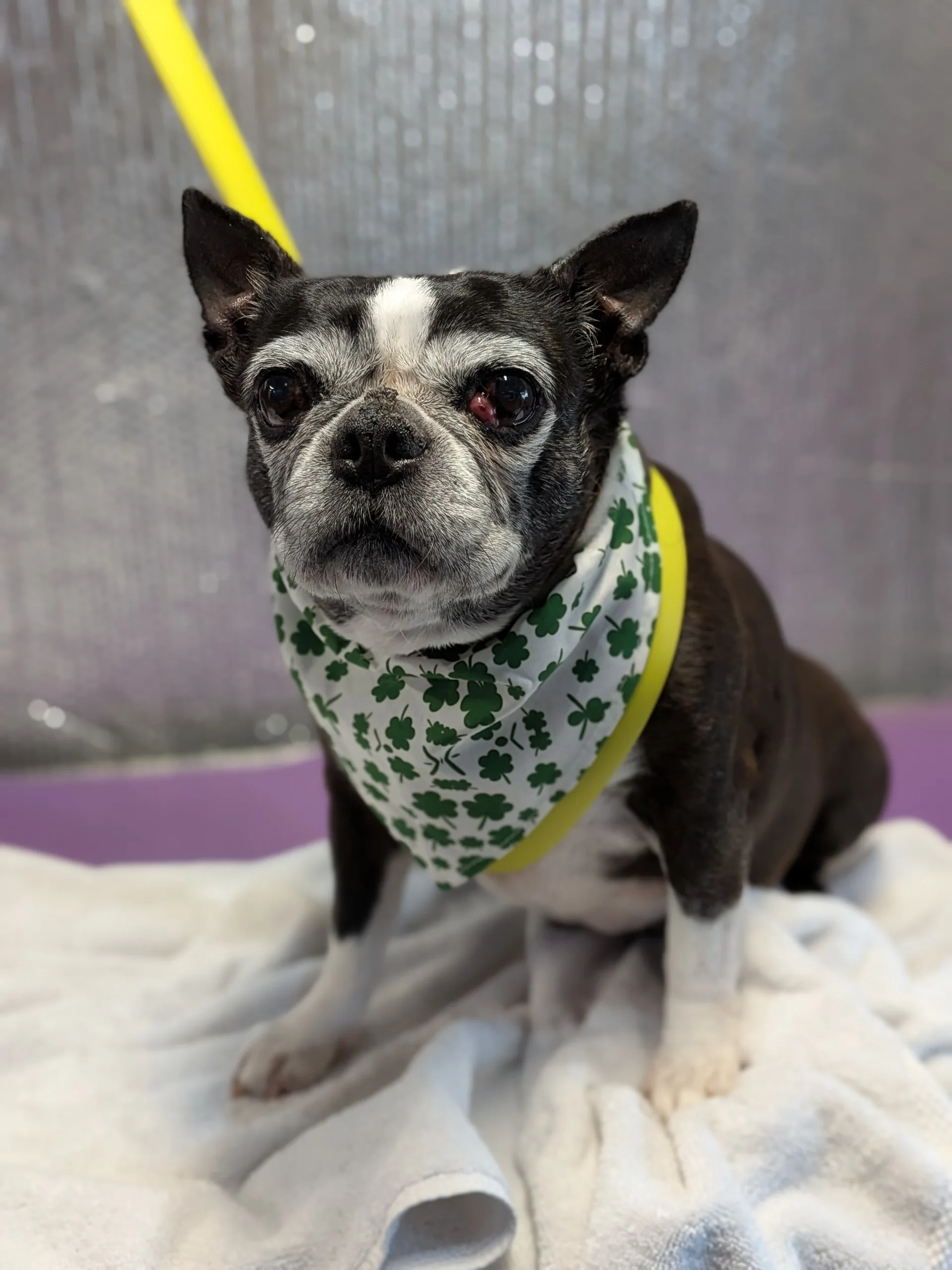
There is a pace change that happens with senior dogs, and if you have an older dog, you already know it. The sprint to the door becomes a dignified walk. The jump into the van gets a little help from me. The groom itself changes too, and I want to walk you through how.
Slow Down, Do Not Stop
Older dogs still need grooming. Some need it more than they used to, because senior dogs are worse at maintaining their own coats. Arthritic hips make twisting around to chew a tangle impossible. A coat that once stayed clean now picks up everything. Skipping grooms because the dog is old usually backfires: mats form, nails lengthen, and the next groom becomes harder instead of easier.
So the schedule stays. What changes is everything inside the appointment.
Adjusting the Groom for an Older Body
More breaks. A senior dog stands for a while, rests, and stands again. I let the appointment stretch rather than rush a tired dog through it. The clock bends for them.
Safer footing. Slick surfaces are hard on old joints. Non-slip surfaces, a steady hand for balance, and no asking the dog to hold poses young dogs barely notice.
Gentler everything. Water pressure, dryer speed, brushing pressure. Senior skin is thinner and older joints protest faster, so the whole groom runs at the gentle setting.
Nails matter more, not less. This is the one seniors skip the most and need the most. Long nails change how a dog walks, and a changed gait on arthritic legs means real strain. More grip on the floor, more stumble risk. Regular short trims are one of the kindest things you can do for an old dog’s daily comfort.
The Massage Effect
Something I see at every senior groom: about ten minutes in, the dog leans into the table and relaxes in a way young dogs never do. Gentle hands on stiff muscles feel good. The brush-out becomes something close to a massage, and plenty of my older clients doze through the second half of their spa day.
Watch Points I Keep an Eye On
Older dogs get lumps, bumps, and skin tags, and most of them are harmless. But I see your dog up close, in good light, every few weeks. If something looks new or changed, I will tell you, and you can take it to your vet. A groomer’s eyes are not a diagnosis. They are a second set of eyes between vet visits, which matters more the older a dog gets.
The Bottom Line
Senior dogs do not need less grooming. They need the same grooming, done slower, gentler, and with more breaks. The coat gets cleaned, the nails get short, the muscles get a kind touch, and the dog walks back to you standing a little taller. Old dogs deserve good spa days.
Stay fresh and furry, Nicole / Vroom Grooms LLC
Until next time, my furry friends!
Catch the Action Live! Want to see grooming transformations happen in real-time? Tune into the solo live stream over on Twitch at DogGroomerNicole. Whether we are tackling tricky coat conditions, working with different breeds and weight classes, or just enjoying some puppy cuddles, you can watch it all unfold straight from the van.
While you are watching from your laptop or desktop, please take a moment to click the link below the stream to learn more about Folds of Honor, a phenomenal charity we are incredibly proud to support.
See you all on the road!
About the Author
Nicole is the owner and certified groomer behind Vroom Grooms LLC, a mobile dog grooming service serving Northwest Ohio. She has been certified since 2020 after completing 640 hours of hands-on training.
This post was drafted with help from Nagini 🐍, her digital assistant, who keeps the blog running, handles the tech side of the website, and makes sure Nicole spends more time with dogs and less time wrestling with WordPress.
Sources
- akc.org — breed facts
- avma.org — health information
- leadingedgegroomingacademy.com — grooming technique