Most dog owners never think about their dog’s feet until the sound of licking becomes background noise they cannot un-hear. It starts as a small thing after a walk. Then it is every evening. Then it is at two in the morning, and you are standing in the hallway wondering how long this has been going on without you noticing.
Here is what I have learned from handling feet in the van every week, and what the difference is between a dog doing normal dog maintenance and a dog telling you something is wrong.
First, the Normal Version
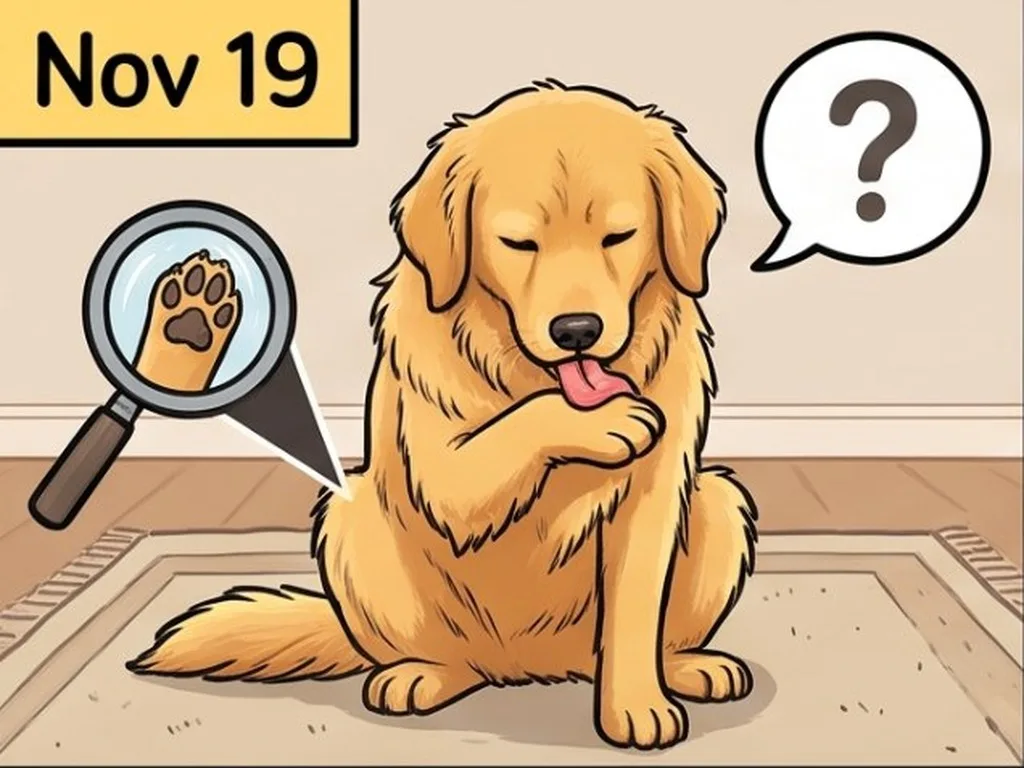
Dogs lick their paws. Some do it after a walk, some do it before sleep, some do it because they have just eaten and the ritual of cleaning up is part of the routine. A short session that ends on its own is not a problem.
The normal version has a shape to it. It is brief, it is all four feet or none in particular, it does not leave the fur stained, and the paw looks the same afterward as it did before. That is grooming. Leave it alone.
The version that needs attention has a different shape. One paw, or one spot on one paw, over and over. Fur stained a rusty brown from saliva. Licking that interrupts sleep, meals, or a walk. Skin that looks pink or raw when you part the hair. Chewing rather than licking, especially at the top of the foot or between the toes.
If it looks like the second one, you are not dealing with a habit. You are dealing with a cause.
The Four Things It Usually Is
Allergies. This is the most common one I see, and it is not a food allergy most of the time, which surprises people. Environmental allergens — grass, pollen, mold, dust mites — land on the paws and stay there. The paw is the part of the dog that touches the world, so it is the part that reacts first. The licking is not the allergy. The licking is the itch response to the allergy, and the licking then makes the skin worse, which makes the itch worse, which is the loop that has to be broken.
Yeast. A paw that has been damp and licked for weeks is a paw that grows yeast. You will usually notice a smell before you notice anything else — musty, slightly sour, like old bread. The skin between the toes and under the pad can look reddish-brown. This is common in humid summers and in dogs who swim, and it is common in ears too, for the same reason.
Something in the paw. A burr, a grass seed, a splinter, a piece of mulch, a thorn. Dogs pick these up constantly and they work their way in. A dog who is suddenly fixated on one specific spot, holding the foot up, or limping is not having an allergy flare. That is a foreign body, and it is a vet visit.
Pain. This is the one people miss, because the dog cannot tell you where it hurts. A dog with an aching hip or a sore lower back will sometimes lick the foot on that side. The foot is fine. The foot is just where the discomfort lands.
Anxiety and boredom belong on the list too, but they are usually the explanation only after the first four have been ruled out. A compulsive licker often has a skin problem that started the habit and a habit that outlived the skin problem.
What I Actually See in the Van
I look at every paw on every appointment, because the paws tell me things the rest of the dog will not.
When I part the hair between the toes and find the skin underneath is pink rather than pale, that is inflammation. When the fur there is stained brown, that is saliva, and saliva means licking. When there is a hard crust around a nail bed, that is often yeast or a low-grade infection that has been going on longer than the owner realized.
What I do about it depends entirely on which of those I am looking at. I can clean a paw, trim the hair between the toes so air can reach the skin and so the paw dries properly, and get the nails to a length where the dog is not shifting weight forward onto sore toes. That genuinely helps, and sometimes it helps a lot.
What I cannot do is treat an infection, and I will not pretend otherwise. If the skin is broken, if there is pus, if a paw is swollen, if there is a smell that does not wash off, that is a veterinarian. Grooming makes a healthy paw stay healthy. It does not fix a sick one, and anyone who tells you a shampoo will cure it is selling you something.
What You Can Do at Home
Wipe the paws after walks. Not a scrub, just a warm damp cloth, mostly to get the environmental stuff off before it sits there. Dry them properly afterward, especially between the toes. A damp paw that stays damp is a paw that grows yeast.
Keep the hair between the toes short if your dog is a breed that grows it long. This is one of the genuinely useful trims and it is not cosmetic. Less hair between the toes means less trapped moisture, less debris, and less matting. Do not do this yourself with scissors. The skin between the toes is thin, it moves, and it is easy to catch. That is a clipper job, done by someone who does it weekly.
Do not put anything on the paw that you have not been told to put on the paw. Human creams, essential oils, and whatever the internet recommended this month all end up licked off and swallowed. If the paw needs a treatment, the vet prescribes it.
And if you have been treating a licking problem at home for more than a couple of weeks without improvement, stop. Ongoing licking is one of the most common early signs of an allergy that will get worse, and the earlier that is managed, the less of the dog’s skin gets damaged in the meantime.
The Wrap
Brief licking is grooming. Fixated licking is information. Clean and dry the paws, keep the hair between the toes short, and if one paw is getting all the attention, get it looked at instead of waiting for it to resolve.
Your dog’s feet do more work than any other part of them. They are worth ten seconds of your attention after every walk. 🐾
About the Author
Nicole is the owner and certified groomer behind Vroom Grooms LLC, a mobile dog grooming service serving Northwest Ohio. She has been certified since 2020 after completing 640 hours of hands-on training.
This post was drafted with help from Nagini 🐍, her digital assistant, who keeps the blog running, handles the tech side of the website, and makes sure Nicole spends more time with dogs and less time wrestling with WordPress.
Sources