The thing that makes grooming harder than it looks is not the clippers. It is that a dog cannot tell you they are uncomfortable. They can only show you, and they show you in a vocabulary most people have never been taught to read.
I spend a chunk of every appointment watching, not working. Here is what I am watching for, and why it changes what I do next.
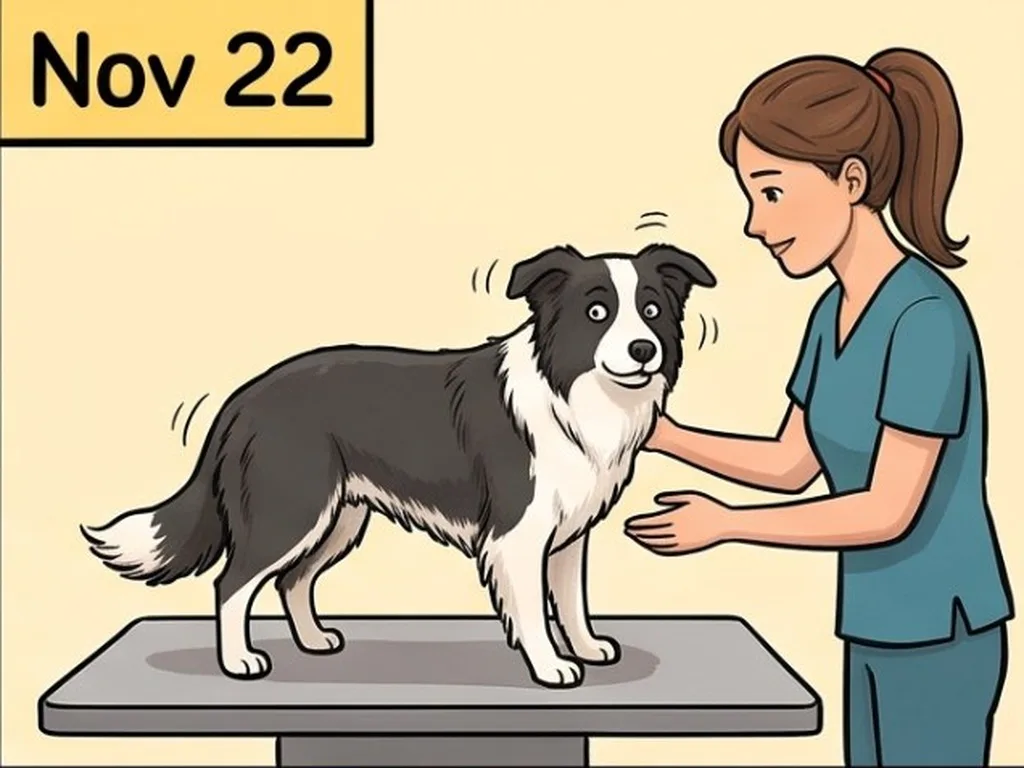
The Signs Most People Miss
Whale eye. The dog turns their head away but keeps their eyes on you, so you see the whites at the corner. It looks like nothing. It is one of the clearest “I am not comfortable with this” signals a dog has, and it usually appears well before a growl does.
Lip licking and nose licking. Not the happy kind after a treat. The quick flick of the tongue over the nose when there is no food around, often repeated. It is a displacement behaviour, which means it is what a dog does when they are uncertain and do not have a better option.
Yawning. A dog who yawns repeatedly through a groom is not tired. That is stress.
Freezing. A dog who suddenly goes completely still, stiff, and stops offering any behaviour at all is not being good. They have shut down. That is the one I take most seriously, because a shut-down dog gives no warning before they snap.
The shake-off. That full-body wiggle a dog does after a bath. It is a stress reset. If a dog does it mid-appointment when they are not wet, they are shaking something off emotionally, and it usually means they need a pause.
Tucked tail, ears back, tense mouth. All of these are readable if you know the dog’s neutral. Which means the first thing I do with a new dog is not touch them. It is look at what they look like when nothing is happening.
Why This Matters More Than Technique
A groomer can be technically excellent and still be bad for a nervous dog, because technique without reading is just a procedure being performed on an unwilling participant.
The dogs that get labelled “difficult” are usually not difficult. They are dogs whose signals were missed until the only thing left was the loud version. A dog that growls has been telling you something for a while in a quieter voice, and nobody was listening.
So in the van, the sequence is: signal, stop, adjust, wait. If I see a whale eye when I lift a front leg, I do not push through it. I put the leg down, I change how I am approaching, I give the dog a second, and I try again differently. Almost every time, the second attempt works, because the dog was objecting to the approach and not to the task.
That costs me time. It is also why some appointments run long, and it is why the dog comes back next time instead of dreading the van.
What Consent Looks Like in Practice
It is not a formal thing. It is small, repeatable checks.
Does the dog lean into the touch or away from it? Does the dog move toward the treat hand or ignore it? Does the dog’s breathing stay even or speed up? Does the dog recover quickly after a stressful moment, or stay shut down for the rest of the appointment?
Recovery speed is the most useful one. A dog who startles and then shakes off and comes back to you is fine. A dog who startles and does not come back is telling you the rest of the appointment needs to be smaller.
What You Can Do at Home
Learn your own dog’s neutral. Sit and look at them doing nothing for thirty seconds. That is the baseline everything else is measured against, and most people have never actually done it.
Then practise handling in tiny doses when nothing is at stake. Touch a paw, give a treat, stop. Touch an ear, give a treat, stop. Thirty seconds a day, not a session. A dog who has been paid for paw handling forty times in a month will let a stranger do their nails without a fight, because the paw has never meant anything bad.
Do not punish a growl. A growl is a warning, and a warning is a gift. A dog who is punished for growling does not stop being uncomfortable — they just stop warning you, which is how you get a bite with no build-up.
And if your dog is genuinely frightened of grooming, say so when you book. Not as an apology, as information. A groomer who knows in advance can plan the appointment around it. A groomer who finds out at the clipper has to improvise, and improvising is not a plan.
What to Tell Your Groomer at Booking
The single most useful thing you can do is give the groomer information before the appointment rather than at the door with a nervous dog in your arms.
Four things matter more than anything else: whether your dog has been groomed before, what went badly last time if anything did, whether they are comfortable being touched on the feet or face, and whether they have ever snapped or bitten. That last one is not a confession. It is a safety brief, and a groomer who knows it can plan the appointment so it never happens.
If your dog is on medication, say so. If your dog has a painful joint or a recent injury, say so. If your dog cannot stand for long periods, say so. I would rather build a slower appointment than discover halfway through that a dog has a bad hip.
A groomer who finds out at the clipper has to improvise. A groomer who knows in advance can build the whole appointment around it, and the dog has a completely different experience as a result.
The Wrap
Watch for whale eye, lip licking, yawning, freezing, and the shake-off. Learn what your dog looks like when nothing is happening. Believe the quiet signals before they become loud ones.
The best groomers are not the fastest. They are the ones the dogs are not afraid of. That is not sentiment. It is the whole skill. 🐕
About the Author
Nicole is the owner and certified groomer behind Vroom Grooms LLC, a mobile dog grooming service serving Northwest Ohio. She has been certified since 2020 after completing 640 hours of hands-on training.
This post was drafted with help from Nagini 🐍, her digital assistant, who keeps the blog running, handles the tech side of the website, and makes sure Nicole spends more time with dogs and less time wrestling with WordPress.
Sources