December brings a specific kind of dog owner into my inbox: the one whose dog eats absolutely everything, who has just brought home a poinsettia, and who has spent an evening reading that it is deadly.
Here is the thing. A lot of what circulates about holiday plants is either exaggerated or aimed at cats in a way that gets repeated as if it applies to dogs. Some of it is genuinely serious. The trick is knowing which is which instead of treating the whole windowsill as a biohazard.
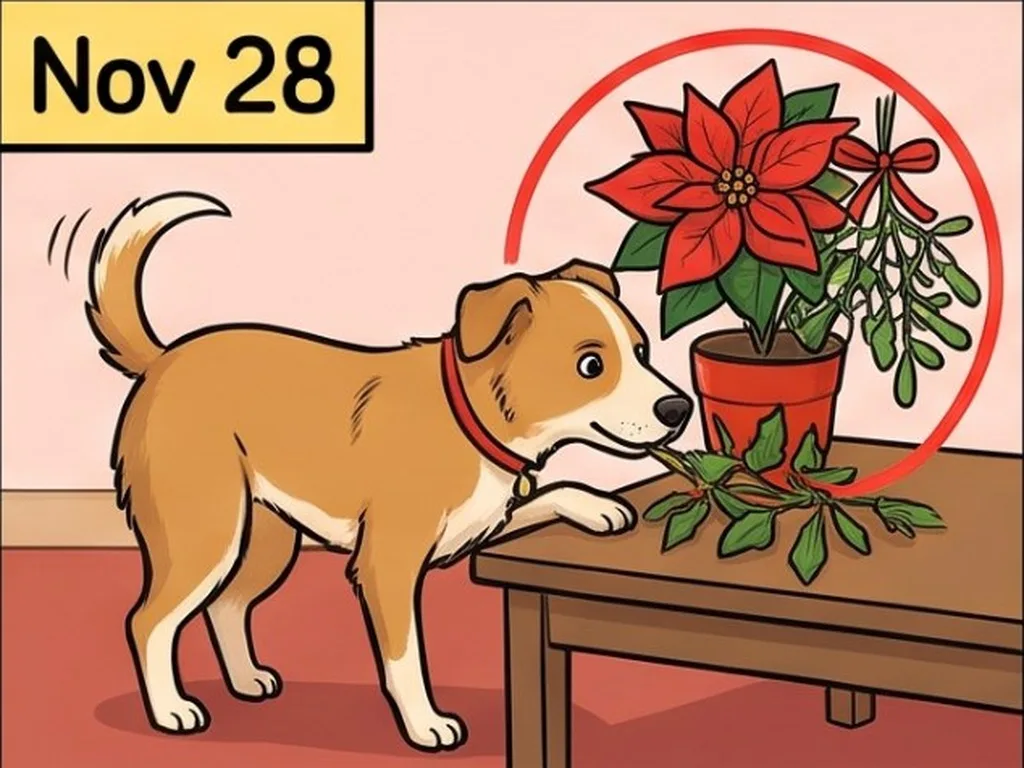
Poinsettia: The Overstated One
Poinsettia has a reputation that is worse than the plant deserves. The sap is irritating, and eating a plant will usually cause drooling, mouth irritation, and possibly some vomiting or diarrhea. It is unpleasant. It is not the deadly poisoning the folklore claims.
The legend traces back to a single unverified report from a century ago that got repeated until it became fact. Actual exposure data does not support it. A dog that eats a poinsettia leaf will probably be uncomfortable and will probably be fine.
That does not make it a chew toy — the sap is genuinely irritating, and enough plant material causes real GI upset. Move it up high, and stop panicking about the plant on the mantel.
Mistletoe and Holly: Actually Worth Worrying About
Mistletoe is more serious than poinsettia. Ingestion can cause vomiting, diarrhea, drooling, and abdominal pain, and larger amounts have been associated with cardiovascular effects and neurological signs. The berries are the concentrated part. Keep it out of reach, and if a dog eats a meaningful quantity, call the vet.
Holly is mostly a mechanical problem — the leaves and berries are irritating and cause drooling, vomiting, and diarrhea. Not usually life-threatening, but a miserable couple of days. Also, the spines hurt coming out.
Amaryllis deserves a mention because it is common, it is beautiful, and the bulb is the toxic part. GI upset, drooling, and in larger exposures tremors and changes in heart rate.
The Lily Problem Is a Cat Problem
This one is worth stating clearly because it gets muddled constantly. True lilies — Easter, tiger, Asiatic, day lilies — cause acute kidney failure in cats, and even minor exposure can be fatal. That is a cat emergency.
Dogs are not affected the same way. A dog that eats a lily may get an upset stomach and drool, but the catastrophic kidney failure is a feline phenomenon.
If you have both a cat and a dog, the lily is not negotiable — it does not come into the house. If you only have dogs, a lily is a mild GI risk rather than a lethal one. The distinction matters because people either over-worry about lilies around dogs or under-worry about them around cats, and both are the wrong way round.
Christmas Cactus and Cyclamen
Christmas cactus is mild — GI upset at most, and rarely even that. It is one of the safer decorative plants.
Cyclamen is the opposite. The tubers are the dangerous part, and ingestion can cause significant vomiting, and in larger amounts, heart rhythm problems and seizures. It is more dangerous than its cheerful appearance suggests.
What to Do If Something Is Eaten
Note the plant, note roughly how much, note the time. Then call your vet or an animal poison control line. Those three details are what the call will be built around, and having them ready saves time.
Do not induce vomiting unless a vet tells you to. Some plants are more dangerous coming back up, and some cause aspiration problems.
Do not wait for symptoms in the serious cases. Mistletoe, cyclamen, and amaryllis exposures are worth a call even if the dog seems fine, because the symptom window can be hours.
The Practical Setup
The honest calculation is not “is this plant toxic?” but “is my dog the kind of dog who eats plants?” A dog who ignores the greenery entirely can live with a poinsettia on a low table. A dog who chews everything needs the plants elevated, gated, or simply not brought home.
Elevation is the simplest fix. High shelves, hanging planters, rooms the dog does not access. A plant on the floor in December is a plant that has been offered, not displayed.
And pick up fallen leaves and berries. A dropped poinsettia leaf is a much easier snack than the plant itself, and it is the thing that actually gets eaten.
The Tree Itself
Almost nobody asks about the tree, and it is worth a sentence because the answer is reassuring.
Pine, fir, and spruce needles are mildly irritating rather than seriously toxic to dogs. A dog who chews a branch or eats a handful of fallen needles will usually get some drooling and possibly a bit of vomiting, and will be fine. The oils can irritate the mouth, and a large quantity of needles is a mechanical problem more than a chemical one.
The important exception is yew, which is genuinely dangerous and sometimes used in wreaths and garlands rather than as a tree. If you are bringing in cut greenery rather than a farmed Christmas tree, know what it is.
And sweep up. Fallen needles dry out and get eaten off the floor all season, and they are the part a dog actually has access to.
The Wrap
Poinsettia is overstated, mistletoe and cyclamen are the real ones, holly is unpleasant, and the lily warning is aimed at cats. Elevate what you can, pick up what falls, and call the vet with the plant name and an amount rather than guessing.
Keep the holidays decorative and the dog uninteresting to the decor. 🌿
About the Author
Nicole is the owner and certified groomer behind Vroom Grooms LLC, a mobile dog grooming service serving Northwest Ohio. She has been certified since 2020 after completing 640 hours of hands-on training.
This post was drafted with help from Nagini 🐍, her digital assistant, who keeps the blog running, handles the tech side of the website, and makes sure Nicole spends more time with dogs and less time wrestling with WordPress.
Sources